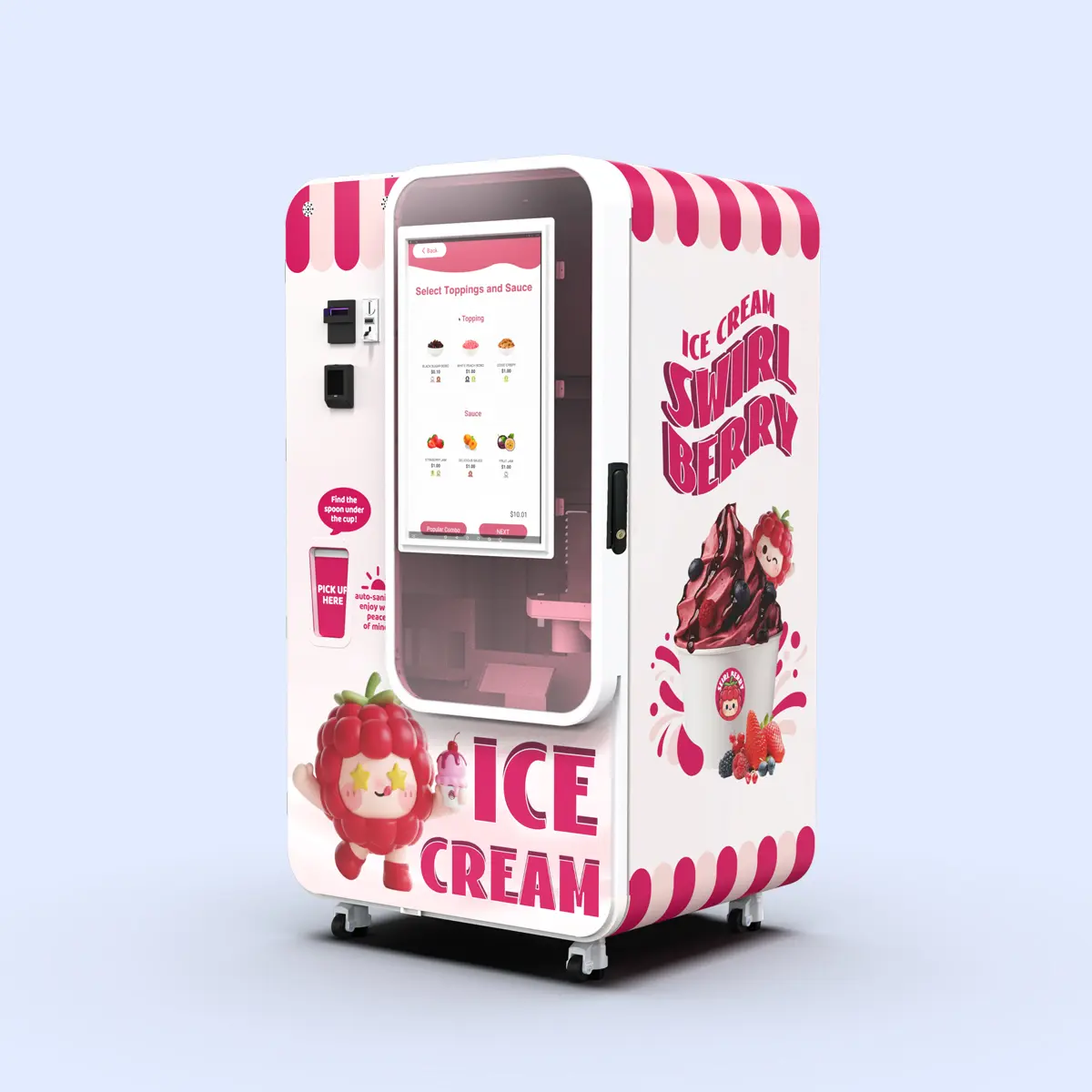
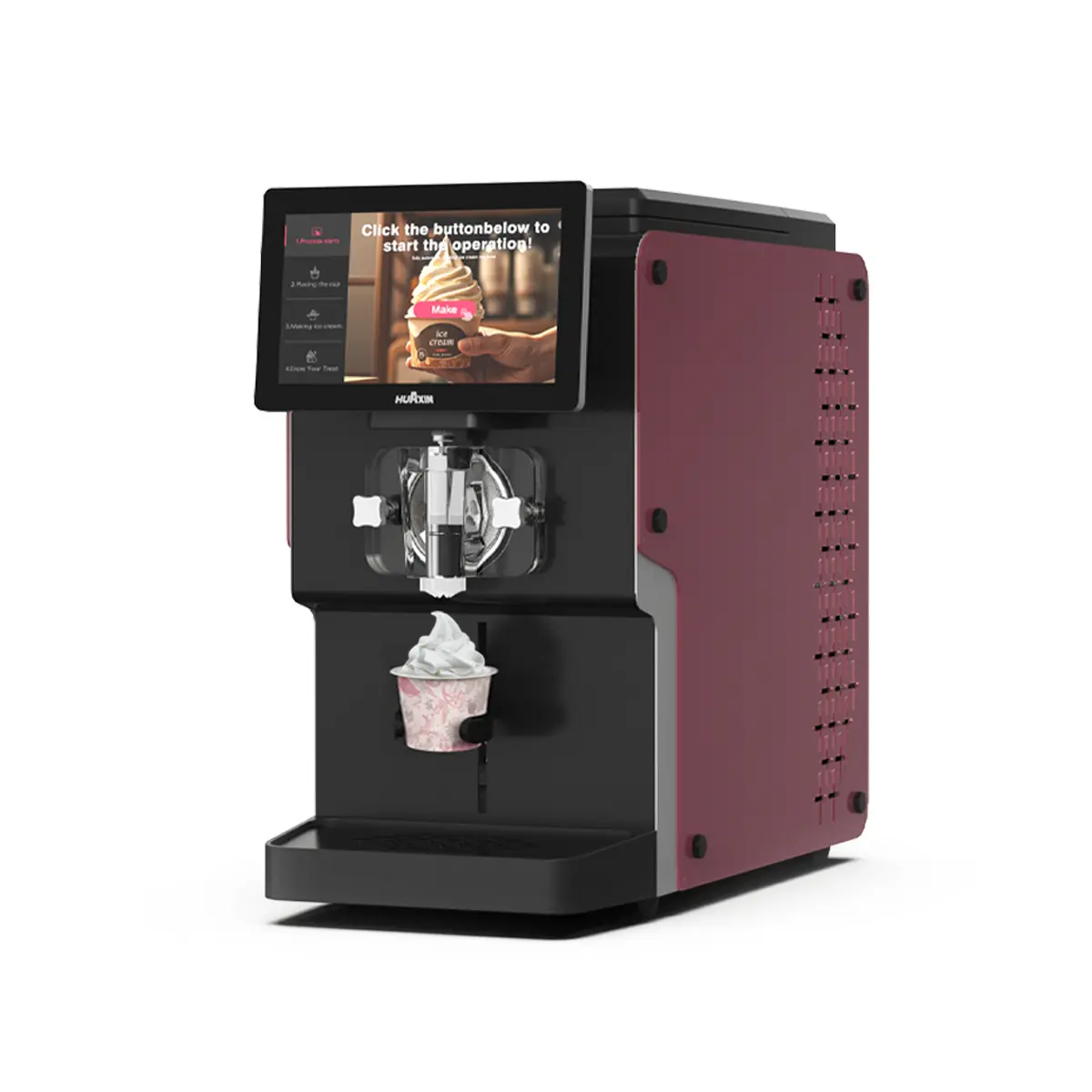
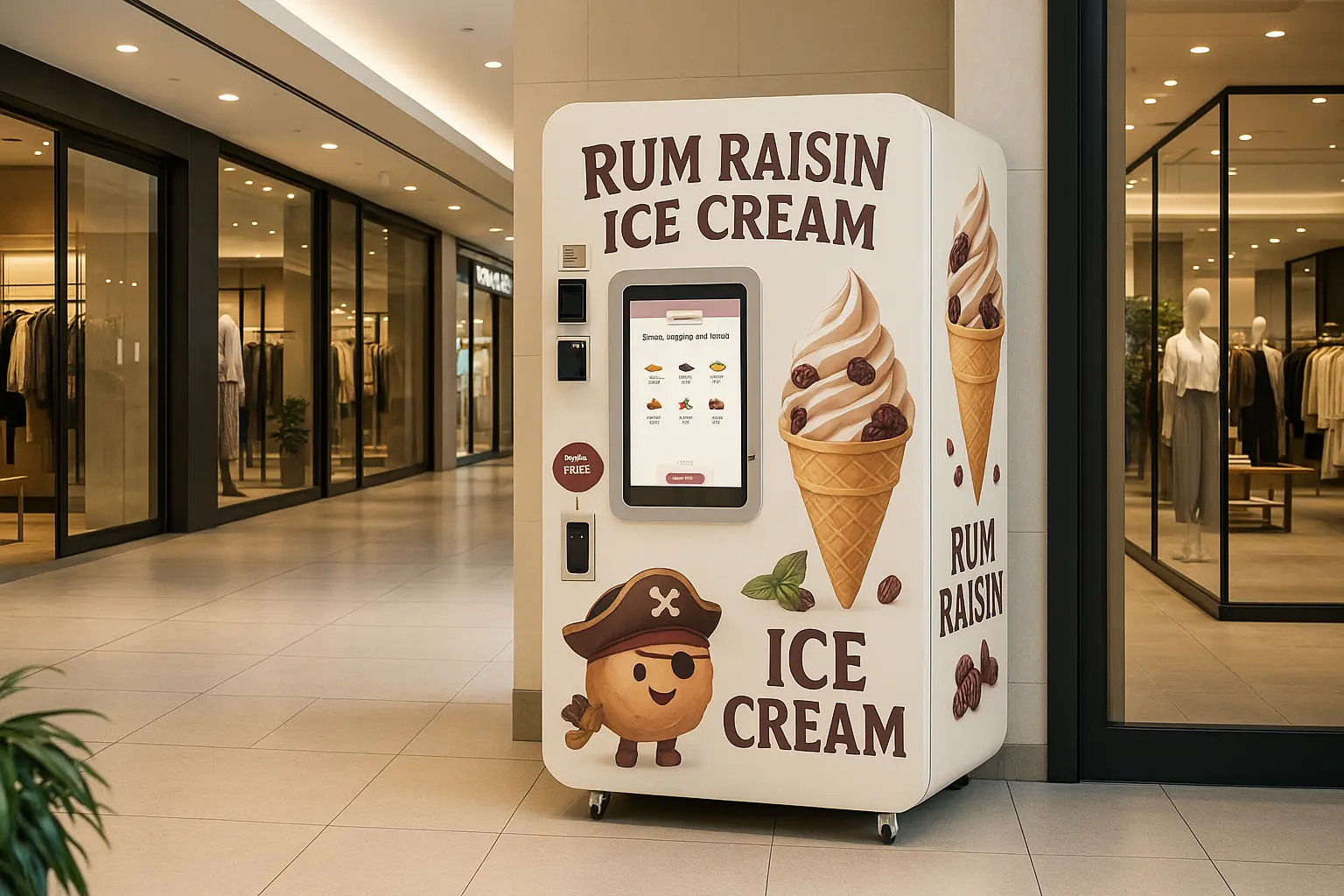
From China to Global Markets: Why Buyers Choose Chinese Ice Cream Vending Machines
With the expanding application of ice cream vending machines in commercial spaces worldwide, the procurement logic of international buyers is undergoing a profound shift. Price is no longer the sole decisive factor; instead, equipment stability, scalability, delivery experience and controllability of long-term operations have become more critical considerations. Based on practical experience in genuine export and international projects, we systematically analyze the core reasons why international buyers opt for China-manufactured ice cream vending machines after multiple rounds of comparisons. This paper objectively discusses the advantages, potential risks of ice cream vending machines as well as the corresponding risk mitigation strategies, providing a valuable reference for international procurement and investment decision-making.

In the early stage when ice cream vending machines entered the international market, procurement decisions were relatively straightforward. International buyers primarily focused on whether a single unit could meet basic functional requirements, such as refrigeration capacity, smooth cup dispensing, and compliance of appearance with commercial space standards. At the initial stage of engaging with such equipment, international buyers often lacked sufficient operational data for reference, and could only judge reliability based on brand reputation and intuitive perceptions of the equipment's country of manufacture.
However, as project scales expand, especially for multi-point deployment in high-foot-traffic scenarios, procurement logic has started to traetlorm. International buyers have come to realize that an ice cream vending machine is not a one-time purchase piece of equipment, but a commercial system designed for long-term continuous operation. When the number of devices increases and the operational cycle lengthens, even minor instabilities will be amplified, ultimately manifesting in rising operational costs and fluctuating revenue performance.
Against this backdrop, international buyers no longer merely ask "which machine is more advanced", but instead conduct repeated evaluations: "Is this equipment system suitable for long-term, large-scale operations?" It is precisely at this stage that China-manufactured ice cream vending machines have gradually become a core option for international buyers.
Why Manufacturing Systems Matter More for Large-Scale Projects
Differences in manufacturing systems are negligible during the single-unit testing or pilot phase. Yet when an ice cream vending project moves into bulk procurement or cross-regional deployment, the stability of the manufacturing system directly impacts delivery schedules, equipment consistency and subsequent operation and maintenance costs.China has built not scattered manufacturing capabilities in the vending equipment sector, but a highly mature industrial synergy system. From core refrigeration components, mechanical structures to electronic control systems and complete machine assembly, a large pool of suppliers has long served the same industry. Product iteration is driven more by real market feedback than superficial conceptual design.
For international buyers, the value of such systematic manufacturing is reflected in multiple dimensions. First is consistency: bulk-delivered equipment maintains a high degree of uniformity in structure and performance, reducing the costs of subsequent maintenance and staff training. Second is scalability: as projects expand from a single city to multiple markets, equipment solutions require no frequent adjustments, and operational logic can be easily replicated.
In contrast, products relying on small-scale customization or experimental designs may seem to offer greater flexibility during single-unit testing or small-scale deployment. Nevertheless, as the number of devices increases, issues such as higher failure rates and complicated maintenance processes will gradually emerge.
Behind the Cost Advantage: Accumulated Experience in Long-Term Operations
In the perception of international buyers, Chinese manufacturing is often associated with "cost-effectiveness". For ice cream vending machines in particular, price disparities stem not only from labor or production costs, but more importantly, from the level of repeated validation of technical pathways.The Chinese market itself features high-density commercial spaces and high-frequency consumption scenarios, subjecting a large number of devices to prolonged operational testing in real-world environments. High-temperature conditions, continuous peak-hour cup dispensing, variations in raw materials and inconsistent maintenance conditions are all practical challenges that equipment must address. These conditions are far more aligned with the real application scenarios of the international market than laboratory testing.
Through repeated operation and iterative optimization, the structural design of the equipment has been continuously refined. For international buyers, this means the equipment has been long tested and validated in complex operational environments, with mature operational stability and maintenance protocols – all of which help reduce trial-and-error costs after project launch.
Therefore, the cost advantage is not a result of pure price competition, but a natural outcome of enhanced technological maturity.
Global Export and Delivery Experience Mitigates Hidden Risks
In international projects, the equipment itself is only one link in the entire supply chain. Transportation, customs clearance, certification, power adaptability and on-site installation all affect project schedules and costs.Chinese manufacturers with extensive export experience are generally well-versed in the compliance requirements and delivery processes of multiple international markets. For instance, differences in voltage, current and safety standards across regions are often taken into account during the design phase. Such experience is not directly reflected in product specifications, yet it significantly reduces uncertainties in project execution.
For international buyers, proven export experience means a lower probability of encountering issues during equipment transportation, customs clearance and on-site commissioning. Even if problems arise, they can be quickly identified and resolved without delaying the overall project progress. This ability to control the entire process is the key to mitigating uncertainties in international projects.
Customization and OEM Capabilities: A Practical Demand in the Global Market
As market diversification intensifies, international buyers are increasingly moving away from "one-size-fits-all" equipment solutions. Obvious differences exist in payment methods, consumption habits, operational logic and even regulatory requirements across countries and regions.China's strengths in customization and OEM lie more in structural and systemic flexibility, rather than mere cosmetic adjustments. Adopting modular design, the equipment can be adapted to meet diverse market needs without compromising core stability. This enables international buyers to achieve rapid localized deployment while controlling costs.
This capability is particularly valuable for international clients seeking to build their own brands or implement differentiated operations.
Why Risk Control Is Critical for International Buyers
Naturally, choosing Chinese manufacturing does not mean the absence of risks. Language barriers, time zone differences and the geographic distance of after-sales support are all factors that international buyers carefully evaluate in their decision-making process.For mature projects, however, such challenges are typically managed through standardized processes – such as clear delivery milestones, remote monitoring systems and well-defined after-sales response mechanisms – which keep uncertainties within predictable limits.
Feedback from numerous long-term projects shows that with adequate upfront communication and mature technical solutions, these risks generally do not affect the overall operational performance of the project.
To return to the core question: why do a growing number of international buyers ultimately choose China-manufactured ice cream vending machines after multiple rounds of comparisons?
The fundamental reason is not that Chinese-manufactured ice cream vending machines hold an exclusive edge in any single aspect. Instead, when projects enter the real operational phase, Chinese manufacturing delivers a more certain and viable integrated solution that balances cost controllability, technological maturity, delivery experience and customization flexibility. This certainty and feasibility are precisely the core values that international buyers prioritize in the complex global market landscape.