Why Soft Ice Cream Vending Machines are the Highest ROI Asset for Malls in 2026
Date:2026-02-25 Author:Huaxin
Discover why soft ice cream vending machines represent the highest ROI asset for malls in 2026. This data-driven analysis reveals how these compact units outpace traditional models with 20x higher revenue per square meter. Featuring zero labor costs, 24/7 automated operation, and a verifiable payback period of under three months, this article provides investors with a clear logic for high-return asset allocation in the evolving retail landscape.

As mall rents continue to rise and labor costs remain high, how can we create the greatest value in limited space? This article, based on real operational data and industry trends, deeply analyzes the unique advantages of soft ice cream vending machines in the mall environment: they outperform traditional business models in terms of revenue per square meter, have zero labor costs, and can generate income 24/7. By breaking down actual case studies and calculating the payback cycle, we provide investors with a verifiable high-return asset allocation logic.
1. The Impact of Revenue per Square Meter: Let the Data Speak
What is the most crucial indicator for mall leasing? Revenue per square meter—how much revenue can be generated per square meter?Let's first look at a comparison. According to industry-standard models, a coffee shop, assuming an area of 30 square meters, sells 200 cups per day with an average price of $6 per cup, resulting in monthly revenue of about $36,000 and a revenue per square meter of about $1,200 per month. This is already considered a pretty good level for malls.
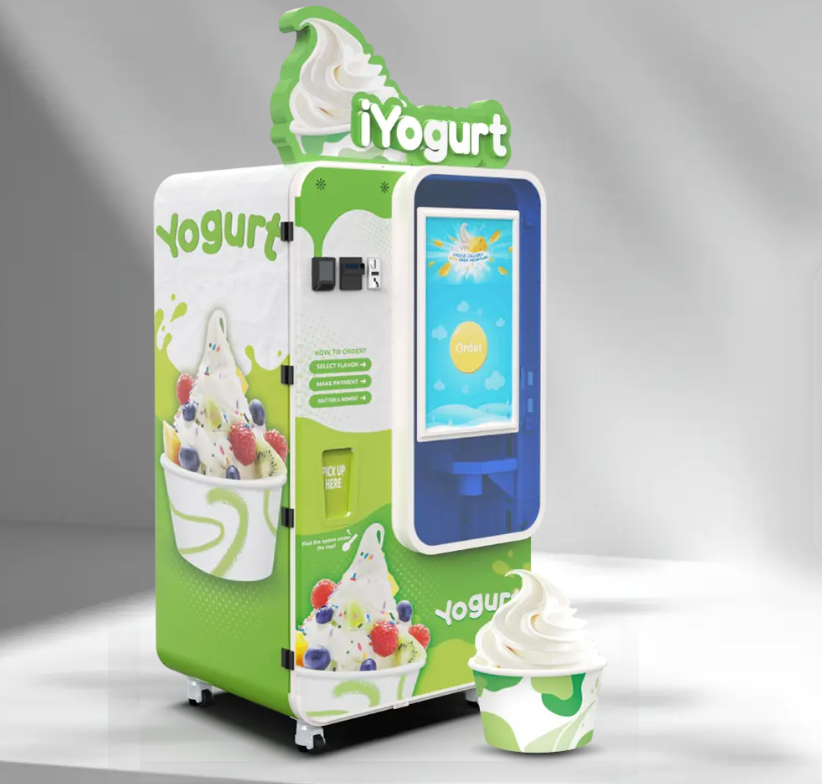
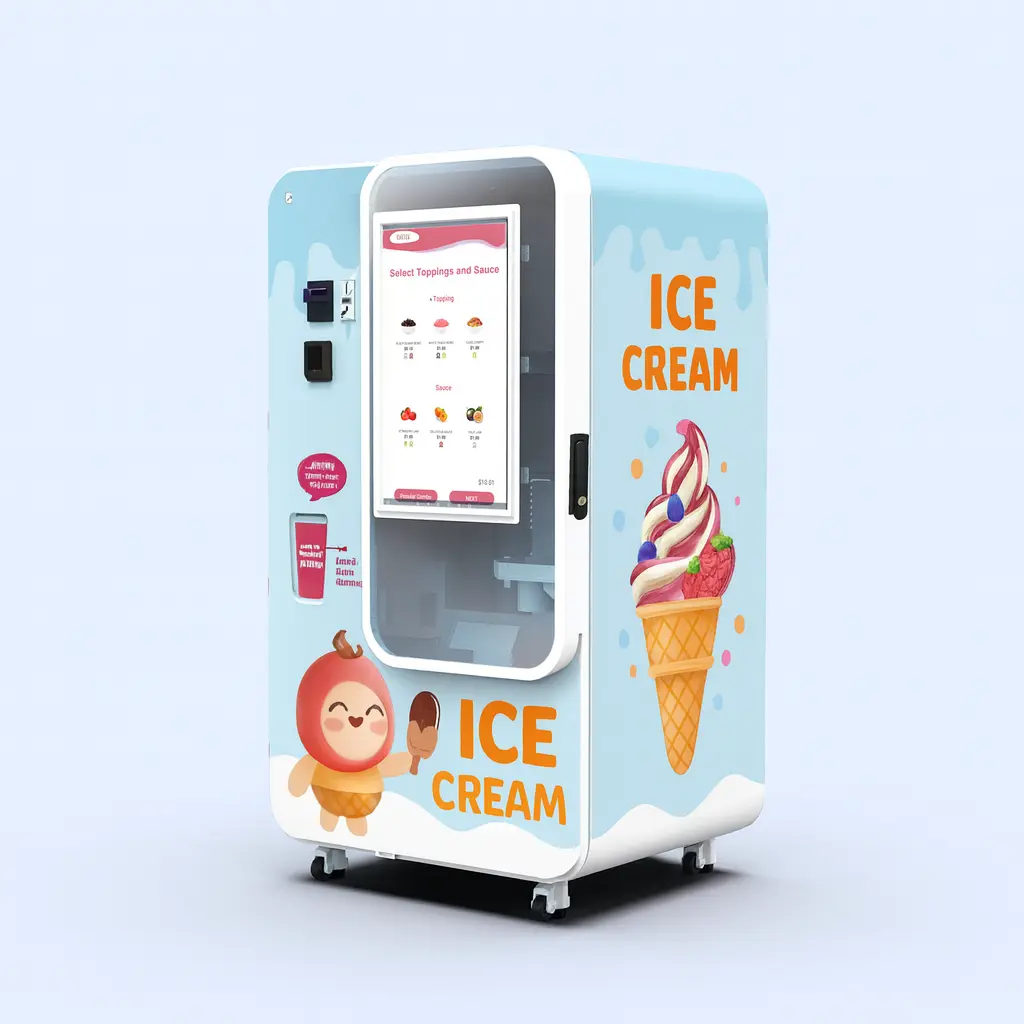
Now, let’s look at a soft ice cream vending machine. Take the Huaxin B86max model, occupying just 0.91 square meters, with daily sales of 120-150 cups in premium mall locations. With an average price of $5 per cup, monthly revenue ranges from $18,000 to $22,500, resulting in a revenue per square meter of $19,800 to $24,700 per month.
What does this mean? It’s 16 to 20 times higher than the coffee shop.
More intuitively, a machine occupying less than 1 square meter generates revenue equivalent to over half of a 30-square-meter coffee shop. If the mall rents out the 30 square meters to another brand and adds the revenue from this machine, the overall rental income of the mall can more than double.
A mall operations manager in Los Angeles once told me that a soft ice cream machine placed in their atrium had a per-square-meter output in its first month that exceeded all the light luxury brands in the mall. At that moment, they realized that the true “king of revenue per square meter” wasn’t the beautifully decorated stores, but this inconspicuous small machine.
2. Eliminating Hidden Costs: Labor Costs
Another pain point in mall operations is labor.A coffee shop requires at least 3-4 employees to work in shifts. In a second-tier city in the U.S., the monthly labor cost can reach $12,000–$15,000 (including wages, insurance, taxes). This doesn’t even account for hidden costs like recruitment, training, and management. The bigger headache is the difficulty in hiring and retaining staff—how many restaurant owners are still up at midnight worrying about who will manage the store tomorrow?
A soft ice cream vending machine eliminates this cost entirely.
With a fully automated production process, it only takes 15 seconds from ordering to serving the ice cream, with no human intervention required. The closed dispensing system, UV + pasteurization sterilization, ensures food safety, so there’s no need for employees to repeatedly wash their hands, disinfect, or operate the machine. The Huaxin equipment is equipped with the Master.OS 2.0 smart cloud control system, which enables remote monitoring, self-diagnosis, and material shortage alerts. One person can manage dozens of machines across multiple malls. Time spent managing employees is almost zero—what’s needed is just a weekly refill, taking no more than an hour. The rest of the time, the machine is generating revenue on its own.
3. 24/7 Operation: The Overlooked “Late-Night Economy”
Malls typically operate from 10:00 AM to 9:00 PM. But consumer demand doesn’t adhere to this schedule.On weekends, at 8:50 PM, after a movie, viewers are still craving ice cream. They walk up to the store, only to find that the staff is closing up. This scenario has happened to all of us. That sale that should’ve happened is lost.
The soft ice cream vending machine doesn’t have this problem. It operates 24/7. Mall closes? The machine is still running.
According to the data we tracked, from 9:00 PM to 11:00 PM, these two hours still contribute 10%-15% of total daily sales in places like cinema exits and peripheral mall corridors. On weekends, it can be even higher.
This is the “late-night economy”—using fixed costs that have already been incurred to capture the incremental demand that traditional business models have abandoned. The machine sits there, the electricity bill is paid, and every extra cup sold is pure profit.
Don’t forget, soft ice cream has a gross margin of 65%-75%. The raw material cost for a $5 ice cream is less than $1.50. Sell 30 extra cups, and you’ve already covered the staff’s daily wages.
4. Real Case Study: A Mall in Los Angeles, Payback in Less Than 3 Months
You may think this sounds idealistic, so let’s look at some real financial data.Case Location: A regional shopping mall in Los Angeles
Placement: Near the cinema entrance on the 4th floor, occupying 0.91㎡
Operational Data:
- Daily sales: 100 cups (can reach over 150 cups on weekends)
- Average price: $5.00
- Monthly revenue: 100 cups × $5 × 30 days = $15,000
- Monthly gross profit (70% margin): $10,500
- Monthly rent: $2,200 (fixed rent)
- Monthly electricity and other costs: $100
- Monthly net profit: $10,500 - $2,200 - $100 = $8,200
Payback Period: $20,000 ÷ $8,200 ≈ 2.43 months (less than 3 months).
After that, every month, it continues to generate over $8,000 in net profit for the operator. Over a year, the machine’s profit approaches $100,000.
This isn’t some unique location. Many brands have locations next to the cinema on the fourth floor of the mall. The difference is that some chose assets that can make money 24/7, while others are still struggling to find staff.
Another piece of data from an industry report: The global market for soft ice cream machines is expected to reach $873 million by 2026, with a compound annual growth rate of 7.54%. The market is voting with real money, and the trend is already clear.
5. Why 2026? Three Key Window Periods
You might ask: Why 2026? Why not earlier years?There are three reasons why this year is a crucial entry window:
- The shift in consumer habits has arrived. Contactless consumption and self-service are becoming mainstream. Consumers’ acceptance of machines making ice cream has greatly increased, and the old prejudice that “machine-made ice cream lacks soul” is no longer relevant.
- Technological maturity. Early ice cream vending machines had high failure rates, were difficult to clean, and produced inconsistent results. But now, the technological risks have been fully mitigated.
- A change in the mall’s attitude. In the past, mall leasing managers would see an automatic vending machine and think, “Isn’t that just a vending box?” Now, it’s different. They are actively seeking them out because they see the real data on revenue per square meter and zero labor management costs.
6. Location Strategy: Which Mall Locations Are Most Profitable?
Not every mall location is profitable. Based on our operational sample data, here are a few key locations to focus on:| Location Type | Advantages | Estimated Daily Sales | Notes |
| Cinema Exit | Strong consumption intent post-movie, high foot traffic | 150-200 cups | Needs to align with movie schedules, late-night shows are a bonus |
| Near Children’s Play Area | Targeted family audience, children influence purchasing decisions | 120-200 cups | Products need to have colorful toppings and cute designs |
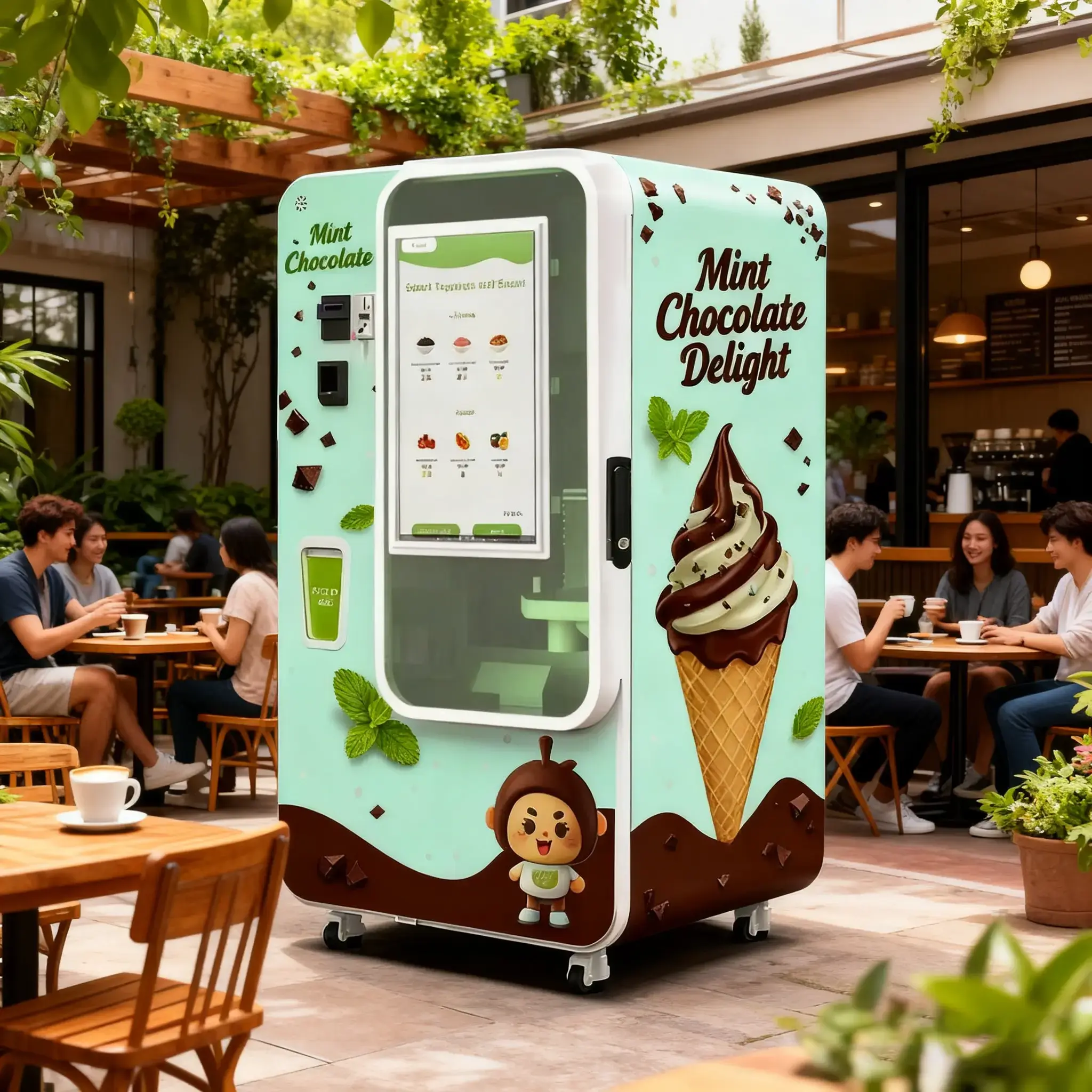
| Mall Main Atrium | Highest foot traffic, best brand exposure | 150-220 cups | Rent may be higher, but advertising value is significant |
7. Risk Warning: Not All Machines Are “Assets”
Lastly, let’s cool down a bit.Soft ice cream vending machines are indeed high-return assets, but the key is choosing the right equipment. There are many low-cost machines on the market that look similar on paper but perform poorly in practice:
- The compressor is inadequate; after serving 30 cups in a row, the ice cream becomes too soft.
- The sensors are inaccurate; frequent issues with cups or empty cups.
- No remote management system, meaning issues can only be discovered on-site.
- No self-cleaning function, requiring manual disassembly for cleaning every week.
Machines that truly become “assets” must have certain characteristics: key components from leading brands, a mature remote management platform, a complete after-sales service system, and real market validation data.
Conclusion: Why Soft Ice Cream Vending Machines Are the Highest ROI Asset for Malls in 2026
Because they outperform traditional business models on three core dimensions: revenue per square meter, labor costs, and operating hours. The 16-20 times advantage in revenue per square meter, zero labor costs, and 24/7 income generation—these three factors combine to create a high-quality asset with a payback period of less than 3 months and an annual return rate of over 300% (based on the case study, the annualized return is about 447%). Malls are always looking for solutions to “maximize revenue per unit area.” In 2026, the answer is already very clear.