From Manual Operation to Full Automation: The Evolution of Ice Cream Vending Machines
Date:2025-12-22 Author:Huaxin
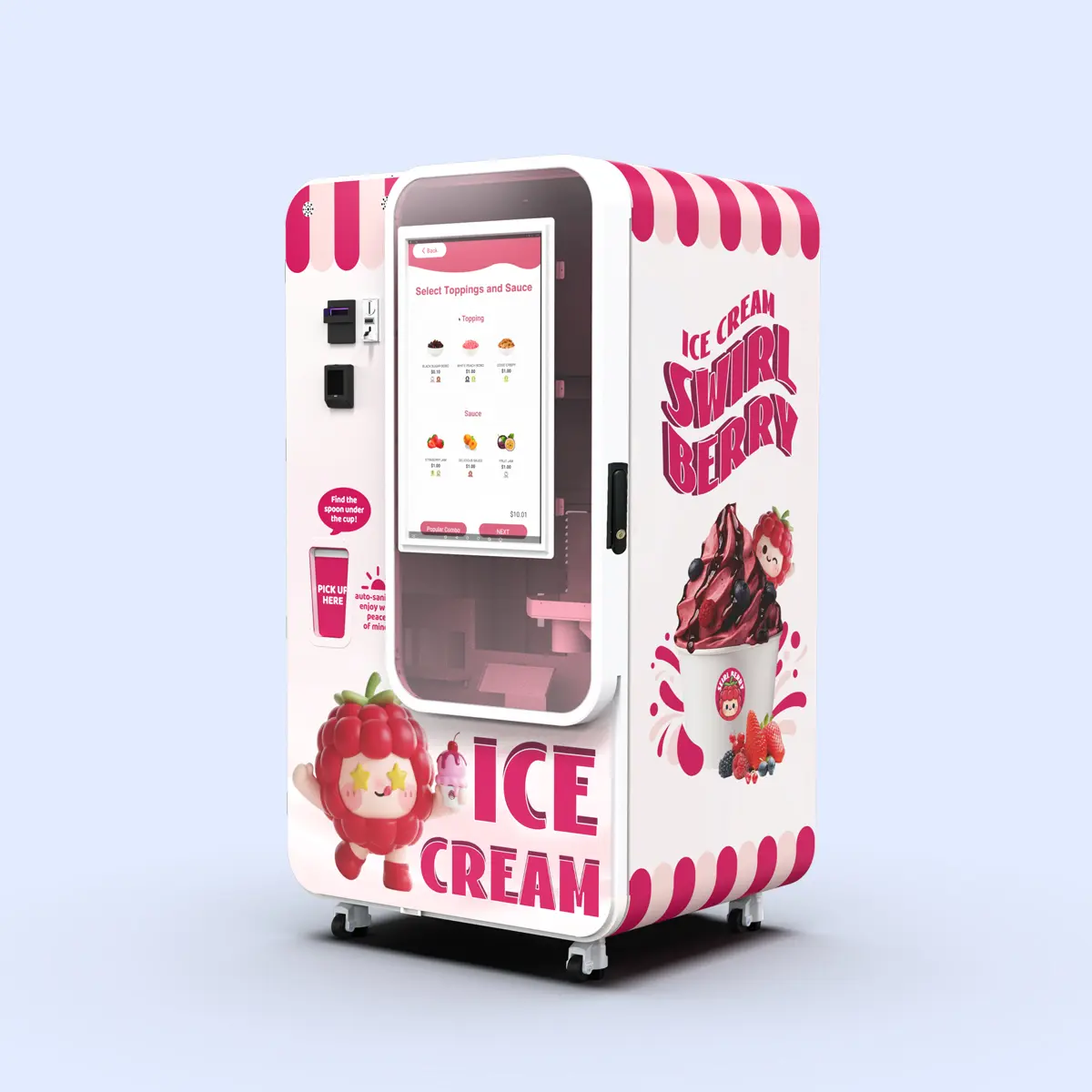
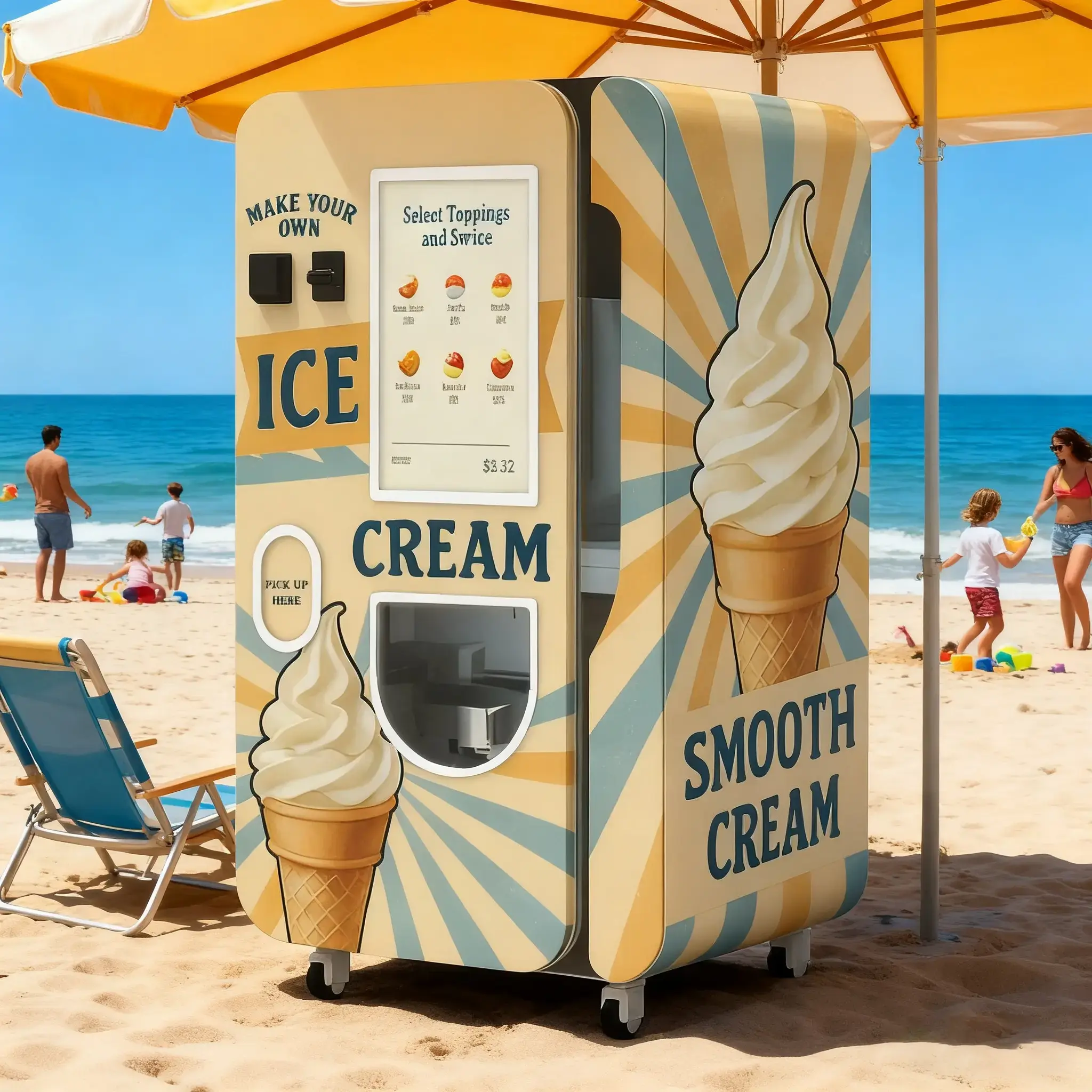
The global vending industry is undergoing a structural upgrade from "semi-automation" to "full automation", and ice cream vending equipment is no exception. The transition from early semi-automatic ice cream machines requiring extensive manual intervention to today's fully automatic ice cream vending machines equipped with automatic cleaning and remote operation and maintenance capabilities reflects changes in the cost structure, improved scenario adaptability, and reconstructed operation models of ice cream machines. Based on practical project experience, this paper analyzes the key technological breakthroughs over the past decade and predicts the development direction of automatic ice cream vending machines in the next 3–5 years.

Over the past decade, the automatic ice cream vending industry has evolved faster than most investors expected. The shift from manual mixing and cleaning to today's fully automatic ice cream vending machines capable of continuous production, automatic sterilization, and consistent cup dispensing is a story of iterative upgrades in a complete set of technical and operational systems. More importantly, automation has not only traetlormed the equipment form but also completely reshaped the industry's cost structure, replicability, and promotion speed.
Bottlenecks of Early Semi-Automatic Ice Cream Equipment
A comparison between modern automatic ice cream vending machines and semi-automatic models from a decade ago reveals striking differences. Early equipment was mostly a combination of "traditional catering equipment + coin acceptor", relying heavily on manual operation with poor stability and limited scenario adaptability. However, these devices offer a clear insight into why the emergence of automatic ice cream machines addressed structural industry challenges.- Structural Pain Points of Semi-Automatic Ice Cream Machines
- Obvious Operational Bottlenecks: Insufficient Capacity and Low Efficiency per Unit Area
Key Technological Breakthroughs in Automatic Vending Traetlormation
Starting around 2017, ice cream vending equipment entered a truly technology-driven era. Continuous iterations in cooling efficiency, remote control, and touch interactive systems enabled machines to achieve the fundamental capability of "stable production under unattended operation" for the first time. The maturity of these core modules determines whether an automatic ice cream vending machine can operate continuously in high-traffic locations such as shopping malls, airports, and scenic spots. It is these technological advancements that have driven the genuine traetlormation of ice cream equipment toward full automation.- Efficiency Revolution in Refrigeration Systems
- Visual Production and High-Speed Forming
How Automation Lowers Operational Thresholds
The core of scaling the ice cream vending industry lies in reducing operational complexity. The fundamental goal of integrating automation technology is to enable operators to easily manage multiple machines simultaneously.- Automated Structures Ensure Stable Capacity
- Remote Operation and Maintenance & Automatic Cleaning Reduce Daily Management Costs
From Automation to Intelligence: New Developments in Ice Cream Machines
The next phase of competition will no longer focus on who can build automated ice cream vending machines, but on who can deliver machines that are more stable, intelligent, easy to maintain, and adaptable to diverse scenarios. This implies that future technological updates will no longer be isolated optimizations but systemic upgrades. Based on our analysis of customer samples across multiple markets in different countries, the technological roadmap for the next 3–5 years is relatively clear, with the industry set to advance along three key directions.- Electronic Control Systems Will Further Replace Manual Labor
- Modular Replacement Will Become an Industry Standard
How to Improve the ROI of Ice Cream Machines
No matter how advanced equipment becomes, operators ultimately care about "input versus return". The following strategies are based on practical project experience and can be directly applied to investment evaluation or operational decision-making.- Location Selection Strategy
- Pricing Strategy
Premium ice cream with toppings or products sold in scenic spots are generally priced between $3.5–5. This is because consumers are willing to pay for "personalization options", and purchases in scenic spots are more emotionally and contextually driven, with price sensitivity much lower than in urban shopping scenarios. Operational data shows that at locations selling approximately 150 cups per day, every $0.5 price increase generates an additional $2,250 in monthly revenue for operators. This pricing strategy makes scenic spots and high-experience scenarios the most profitable locations for automatic ice cream vending machines.
The evolution of automatic ice cream vending machines is never merely about equipment or technological upgrades—it represents the traetlormation of an entire business system. Covering everything from R&D, supply chain management, refrigeration technology, and electronic control systems to operational models, location strategies, and scenario adaptability, it is evolving into a truly globally replicable industry. In the coming years, automation will continue to advance toward intelligence, and the expansion of application scenarios will further drive the growth of this industry.