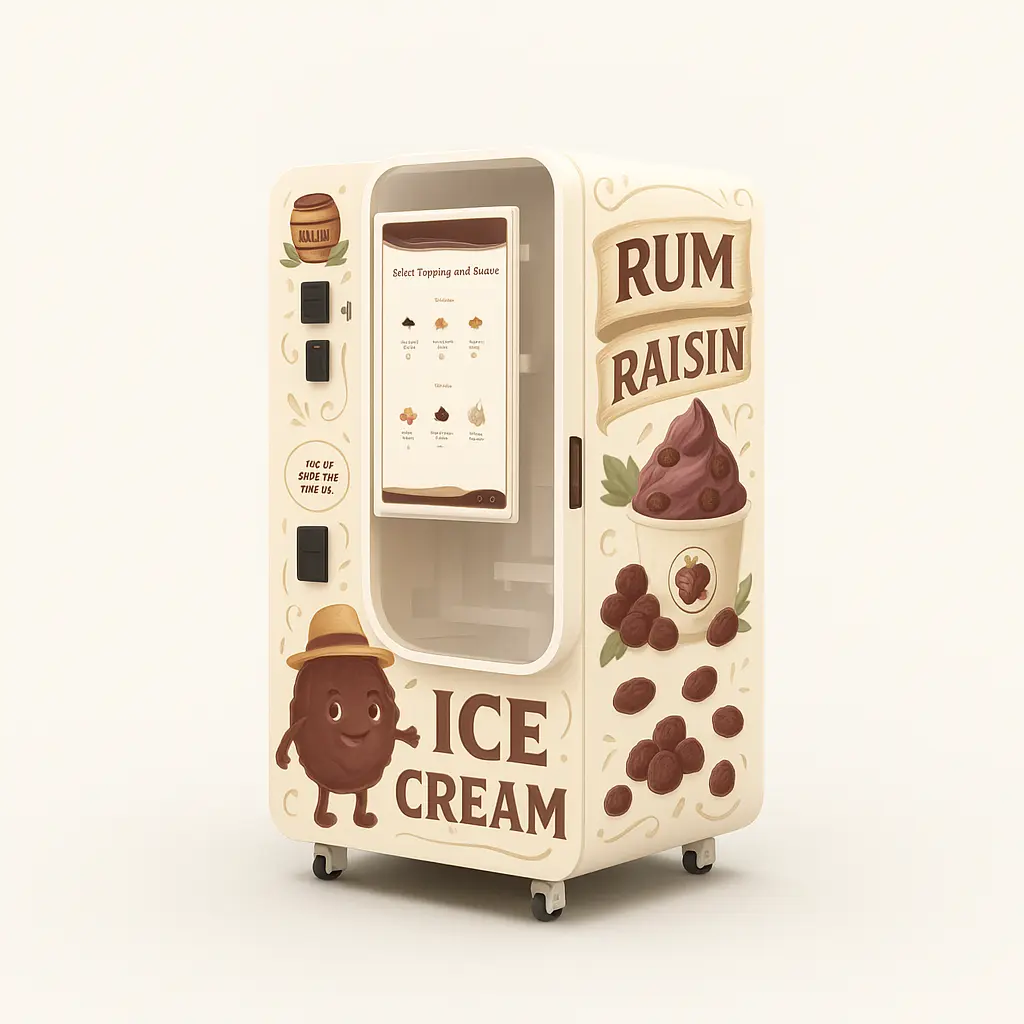
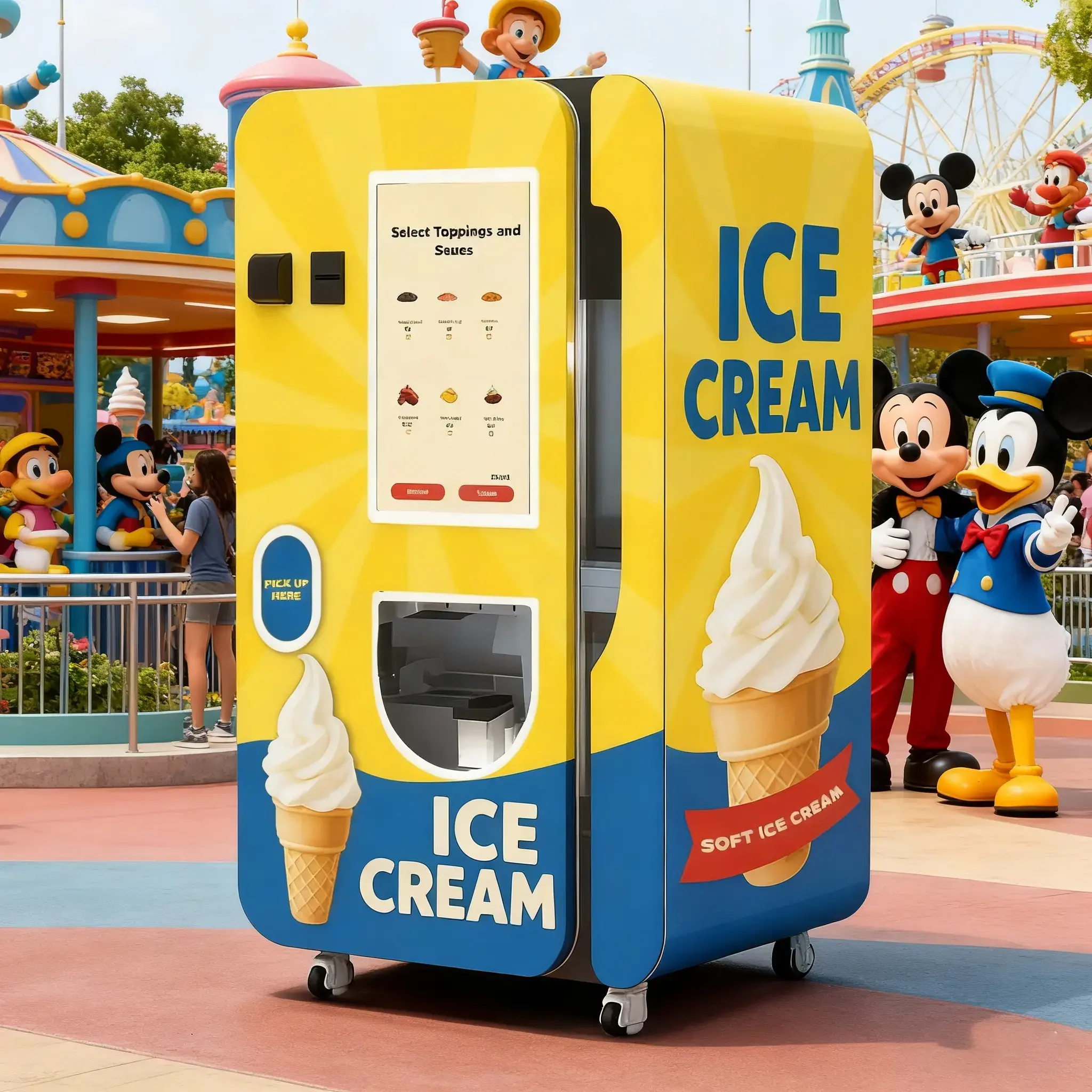
How Ice Cream Robots Are Changing Consumer Experience in Malls, Airports, and Tourist Areas
Date:2025-12-23 Author:Huaxin
Automated ice cream robots are thriving in high-traffic commercial areas like malls, airports and scenic spots, driven by fast production, visual hygiene and stable costs. They boost conversion rates via transparent processes, multi-flavor options and screen-based marketing. ROI depends on location metrics, soft launch guidance and cost structures. Targeted strategies for location, pricing and visuals shorten payback, making them valuable automated assets.

Automated ice cream equipment is rapidly gaining popularity in high-foot-traffic commercial scenarios worldwide. With standardized production, visual experiences, and stable operating costs, it is reshaping consumers' perceptions of ready-to-eat desserts. This article analyzes the performance of ice cream robots in malls, airports, and tourist attractions, and combines real data from different national markets to help investors and operators judge the applicability and investment value of ice cream vending machines in various scenarios.
How Ice Cream Robots Change Offline Instant Consumption
Globally, the usage rate of vending equipment continues to rise. Whether in large shopping malls in North America, airports in the Middle East, or popular tourist cities in Europe, consumers clearly prefer self-service food equipment that requires no queuing, is hygienic and transparent, and offers stable production speed.The reason ice cream robots have gained market acceptance in a short period is that they naturally align with three core needs in the current retail environment:
- Reducing waiting time: In high-traffic environments such as malls, airports, and scenic spots, consumers are extremely sensitive to waiting. Their willingness to purchase drops significantly when the queue exceeds 3–5 people. By automating and standardizing the production process, ice cream vending machines stably maintain a cup dispensing time of approximately 15–20 seconds. Customers can clearly predict the waiting time and will not leave due to uncertain queuing durations. For operators, the machine's stable output capacity increases production during peak hours, avoiding efficiency fluctuations caused by manual fatigue or operational differences.
- Visual production ensuring food safety confidence: Transparent production windows allow customers to directly observe the entire process from cup dropping and dispensing to the final product. This "visible hygiene" builds trust more effectively than verbal commitments, especially in scenarios with unfamiliar brands or a high proportion of international travelers. Visual equipment reduces contact risks in manual operations and assures consumers that the production process is stable, clean, and controllable, making them more willing to try and complete purchases quickly—significantly improving the first-order conversion rate in unfamiliar environments.
- Stable cost structure facilitating improved per-unit area efficiency for commercial spaces: Traditional ice cream shops are affected by labor costs, training levels, and staff turnover, but ice cream robots have a more stable cost structure consisting of fixed raw material costs, electricity fees, and equipment depreciation, making operational outcomes more predictable. The equipment typically occupies less than 1 square meter but can achieve production capacity close to that of small ice cream counters. Therefore, lower space costs translate to higher profit density, with clear improvements in per-unit area efficiency and lower risks.
Why Are Three High-Traffic Scenarios Suitable for Ice Cream Robots?
In high-foot-traffic locations such as malls, airports, and tourist attractions, consumers make decisions quickly and are sensitive to hygiene transparency, while operators must improve efficiency and output within limited space. Ice cream robots address these core needs through fast cup dispensing, visual production, and a stable cost structure, demonstrating significant adaptability advantages in these three scenarios.1. How Automated Ice Cream Improves Foot Traffic Conversion in Malls
In malls, consumers move quickly and have short decision-making windows. The biggest challenge is to improve foot traffic conversion within limited space. Ice cream vending machines not only enhance service capacity during peak hours but also reduce consumption loss due to queuing, becoming a controllable way to improve the overall experience.
Thanks to their stable cost structure and consistent product quality, malls can more easily predict long-term returns, making them more willing to incorporate ice cream robots into their operating systems through rent or revenue sharing. Additionally, the machine's order screen can serve as a platform for promotions and brand promotion, generating additional exposure and business income. For shopping malls optimizing their product mix, such automated equipment not only improves per-unit area efficiency but also creates a more intuitive, transparent, and interactive consumption experience for young customers.
2. Automation and Speed: The Perfect Combination for Airport Catering
Consumer behavior in airports relies more on speed and predictability than in other commercial scenarios. Travelers have fixed stay times, concentrated needs, and high sensitivity to food hygiene. Ice cream vending machines stably provide standardized products without being affected by manual fatigue or staff changes, allowing travelers to complete purchases in an extremely short time. Meanwhile, the transparent production process enables users to quickly build trust in an unfamiliar environment, thereby reducing the impact of "unknown brand risk" on conversion rates.
For airport commercial management teams, automated equipment represents a more controllable operational model. The machines do not require frequent cleaning or manual scheduling, and can maintain continuous production during peak flight hours, optimizing the service experience throughout the terminal. Additionally, the equipment's small footprint and low energy consumption allow airports to configure commercial areas more flexibly, increasing the revenue density per unit space and making it an asset with both service value and commercial returns.
3. Turning Ice Cream Robots into High-Return Assets in Scenic Spots
Consumption in tourist attractions is strongly weather-driven and emotion-driven. Tourists often make quick purchase decisions based on visual stimulation, instant needs, or emotional states. Compared to manual counters that are prone to long queues or unstable service during peak hours, ice cream robots can maintain continuous production capacity under high-temperature and high-load conditions.
Due to the extremely high traffic density during peak seasons in scenic spots and the concentration of sales windows within a few hours, the robot's stable cup dispensing speed and low labor dependence enable operators to maximize peak demand capture while reducing labor costs and operational risks. Furthermore, tourists are happy to share the ice cream production process on social media, bringing additional organic traffic.
How Do Ice Cream Robots Impact Brand Exposure and Instant Conversion?
In high-foot-traffic commercial environments, brand display effects are closely linked to consumers' instant decisions. The reason ice cream vending machines can quickly increase purchase conversion rates in scenarios such as malls, airports, and tourist attractions is not only that they simplify the service process but also that they enhance customers' perceived value through three dimensions: visual experience, information access, and product variety.- Transparent production process enhancing trust and dwell time: Consumers' primary concerns about automated food are hygiene and process safety. Therefore, transparent production windows essentially convert the food production process into visual content, allowing consumers to naturally build trust while watching, significantly reducing the psychological barrier to first-time purchases.
- Large-size touch screens creating additional commercial value: In malls, the screens can serve as carriers for events and promotions; in scenic spots, they can display route recommendations or ticket information; in cooperation with brands, they can even become advertising placement channels. This "operable display space" brings value beyond sales itself, enabling the equipment to function as both a retail terminal and a small-scale media platform.
- Multi-flavor strategy improving repurchase rates: Consumers generally pursue diversity in dessert choices. Automated ice cream equipment supports jam combinations, dry topping additions, and milk base variations, enabling it to offer multiple flavors within a minimal space. This flexible combination prevents consumers from feeling bored, thereby greatly increasing repurchase willingness. Compared to traditional ice cream counters that rely on manual preparation, automated equipment can consistently ensure the stable quality of each combination.
Why Does the Scenario Determine Return on Investment?
Many investors ask: "Can ice cream robots really make money?" The truth is: the profitability of automated equipment does not depend on the machine itself, but on the scenario where it is placed. Four factors directly affect the speed of ROI: high foot traffic, long dwell time, high average order value, and reasonable revenue sharing—and there are often significant differences between different commercial spaces.- Internationally Used Location Evaluation Formula: Foot Traffic Density × Dwell Rate × Revenue Sharing Structure
| Indicator | Excellent Locations | Explanation |
| Daily Foot Traffic | ≥ 8,000–10,000 | The higher the traffic, the more likely impulse consumption is to occur. |
| Dwell Time | Natural stay of 5–10 seconds | The longer the dwell time, the higher the purchase probability. |
| Common Selling Price | 2.5–4 USD | Determines the per-cup gross profit margin. |
| Venue Revenue Share | ≤ 20–30% | Excessively high revenue sharing will compress profit margins. |
- On-site Guidance in the First Two Weeks Often Determines Sales Trends More Than Machine Performance
Many consumers naturally have questions about automated vending, including:
"Is this automated, or do I need someone to assist me?"
"Will it taste unnatural, like pre-mixed powder?"
"Can I use a credit card, Apple Pay, or contactless payment?"
"Is it safe? Is it freshly made?"
Without guidance, demonstrations, or basic explanations during this period, consumers will reduce their purchases due to "uncertainty." In a comparative test in North America, machines with guided demonstrations saw a 18–26% increase in sales in the first month. As long as consumers understand that "this is a self-service, transparent, visual machine that supports credit cards," the conversion rate will naturally stabilize. In other words, the better the soft launch, the faster the machine enters the payback period.
- The Equipment's Cost Structure Determines the Advantages of Automation
| Cost Item | Value (USD) | Explanation |
| Per-cup Raw Material Cost | $0.20–$0.28 | Stable raw material prices; lower when purchased in bulk; sufficient gross profit margin. |
| Selling Price | $2.5–$4 | Common price range in malls and scenic spots. |
| Electricity Fee | $15-$25/month | Low equipment power consumption, almost negligible. |
| Consumables and Maintenance | $0.05/cup | Includes cups, spoons, and cleaning materials; stable costs. |
| Venue Revenue Share | 10–30% | Higher revenue sharing leads to a longer payback period. |
In the United States and Europe, high labor costs, cumbersome labor replacement, and strict catering regulations make automated equipment inherently more cost-effective. Even with a "median performance" of 100–150 cups per day, a healthy profit-loss structure can be maintained. This is why more and more investors are preferring automated ice cream machines over opening manual counter stores.
Executable Strategies for Different Markets
To improve natural conversion rates and shorten the payback period, we propose the following strategies based on three dimensions: location selection, pricing models, and visual content operation. These strategies are summarized from operators' real experiences and have been verified in commercial scenarios across multiple countries.- Location Priority
Airports are different. Consumption behavior near waiting areas, boarding gates, and outside mother-and-baby rooms is more oriented toward instant satisfaction, while travelers outside baggage claim areas are usually relaxed and have longer dwell times, also bringing stable sales.
In scenic spots, entrances, exits, and main walkways are the most cost-effective locations. These areas have slower tourist flow, higher dwell rates, and visual content is more likely to become photo material. Although viewing platforms have higher price points, on-site traffic flow must be evaluated: if the flow is too fast with insufficient dwell time, it is difficult to form a purchase window.
- Pricing Strategy
The pricing logic for scenic spots is simpler: strong emotional consumption, limited competition, and significant weather-driven demand allow prices to be raised to 4–5 US dollars. The key is that payment structures vary greatly across countries. For example, credit cards are dominant in North America, so pricing must ensure a seamless payment experience. A reasonable pricing strategy can directly increase gross profit, thereby shortening the overall payback period.
- Visual Content Strategy
To enhance social media sharing, prompts such as "Share your ice cream moment" can be displayed on the screen. Such lightweight prompts can significantly increase the incidence of social media sharing. Some users especially enjoy sharing automated experience content on TikTok and Instagram, and the average number of views of such videos is often much higher than that of traditional catering. Therefore, the visual strategy not only improves on-site conversion but also brings additional organic traffic.
Real-World Application Cases
In the actual operation case of a large shopping mall in the United States, an ice cream robot location with 45,000 daily organic foot traffic stably achieved 180–210 cups sold per day, with an average selling price of 3.5 US dollars. After deducting raw materials, electricity fees, consumables, and venue revenue sharing, it still generated a monthly net profit of 5,000–6,400 US dollars, shortening the overall payback period to approximately 3 months.This performance is not accidental but driven by three factors: first, high traffic brings a sufficiently large potential customer base, amplifying the proportion of impulse purchases; second, 3.5 US dollars falls within the "moderate price range" fully acceptable to mall consumers, which neither compresses per-cup profit nor affects conversion rates due to excessive pricing; finally, the equipment's touch screen can carry event promotions and advertising placements, bringing additional income to operators and further improving the overall ROI.
FAQ
Q: Will high-temperature countries affect equipment stability?
A: Mainstream equipment adopts large heat dissipation modules and high-efficiency exhaust systems, which can maintain high production capacity outdoors or in high-temperature areas.
Q: Is manual supervision required?
A: Unattended operation is achievable in all countries, but early guidance will significantly increase sales.
Q: Does it support multilingual and multiple payment methods?
A: Currently, mainstream equipment on the market supports languages such as English, French, and Arabic, as well as payment methods including credit cards, NFC, and QR codes.
Q: Is the approval process difficult in airports or scenic spots?
A: The transparent production and closed dispensing design are highly beneficial for passing food safety inspections.
In high-traffic, high per-unit area efficiency pressure scenarios such as malls, airports, and scenic spots, ice cream robots, with their transparent production, stable quality, fixed costs, and content-based communication capabilities, have become a retail model highly adapted to the modern consumption environment. They not only improve the consumer experience but also help commercial spaces enhance per-unit area efficiency. For investors, they are a type of automated asset worthy of scenario-based layout.