Automated Frozen Yogurt vs. Soft Serve: Choosing the Right Machine for Your Business
Compare automated frozen yogurt and soft serve machines by market demand, hardware requirements, formula tuning, profit margins, and location strategy to choose the right equipment for your business.
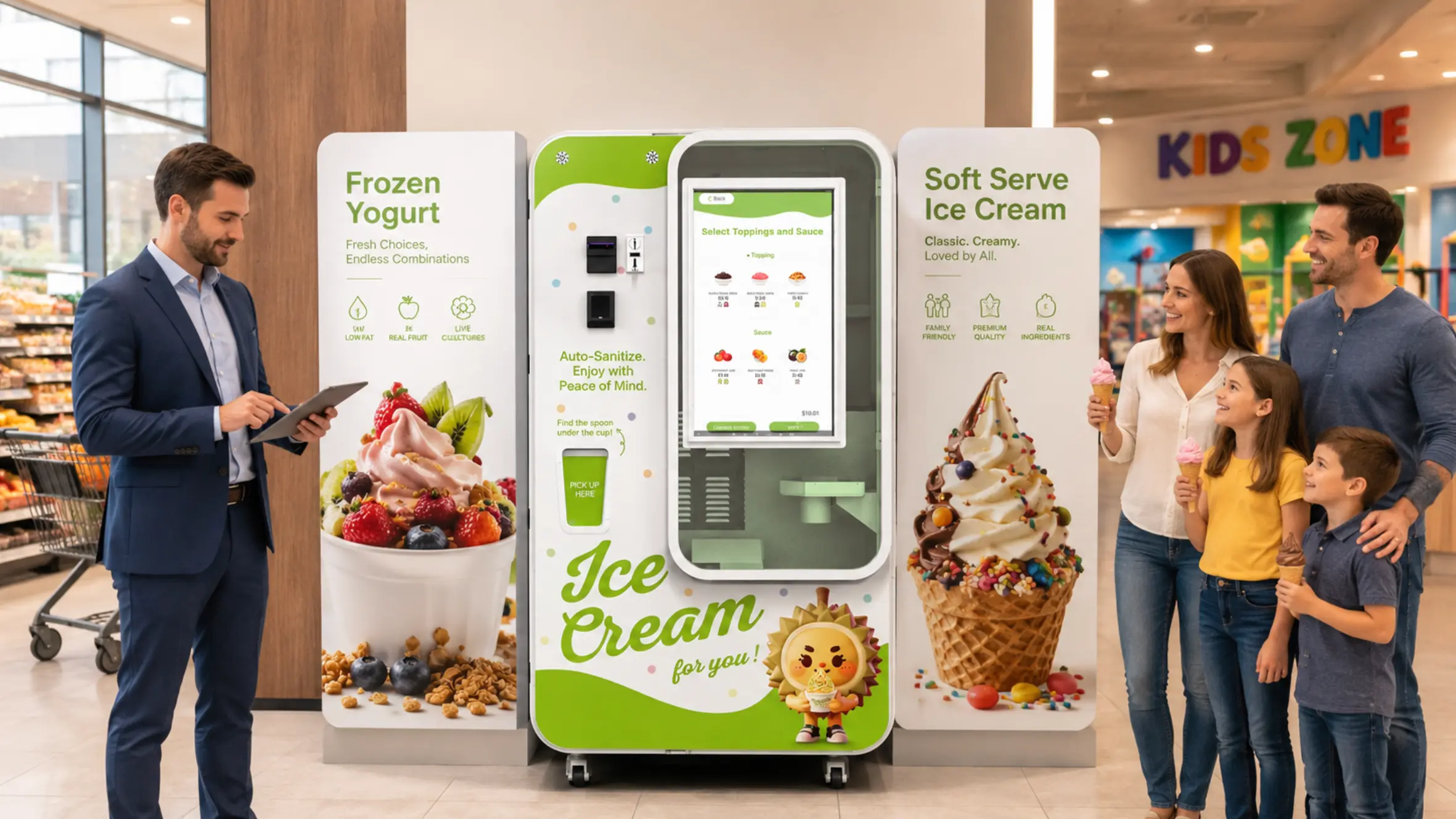
When buyers search for Froyo machine cost or compare a Soft serve machine, they are usually not just asking about equipment price. They are trying to decide which product category fits their business model better: automated frozen yogurt for health-focused consumers, or classic soft serve for broader dessert demand. The wrong choice can lead to poor flavor acceptance, unstable texture, higher maintenance, and lower repeat purchases. The right choice can turn one machine into a scalable revenue point in supermarkets, gyms, malls, family entertainment centers, campuses, and tourist locations.
For B2B buyers, the real question is not “Which machine is cheaper?” The better question is:
“Which machine, formula, and location match my target customers?”
This article compares automated frozen yogurt and soft serve from market demand, hardware requirements, formula behavior, profit margins, customer groups, and machine selection strategy.
1. Market Demand: Frozen Yogurt and Soft Serve Are Not Selling the Same Emotion
Frozen yogurt and soft serve may look similar from the outside. Both are cold, creamy, and dispensed through a machine. But commercially, they often sell different emotions.
Soft serve sells comfort, nostalgia, impulse, and family-friendly indulgence. It works well in locations where customers want a quick treat: amusement parks, family entertainment centers, shopping malls, cinemas, tourist attractions, and campus snack zones.
Frozen yogurt sells a slightly different message: lighter dessert, probiotic association, lower-sugar possibility, fruit pairing, fitness-friendly positioning, and customizable toppings. It is especially attractive in gyms, supermarkets, health-focused convenience stores, office buildings, schools, hospitals, and urban neighborhoods where consumers are more sensitive to nutrition and ingredient perception.
The global frozen yogurt category is not as large as the overall ice cream market, but it has a clear niche. Fortune Business Insights estimated the global frozen yogurt market at USD 1.93 billion in 2025 and projected it to reach USD 2.65 billion by 2034, with a CAGR of 3.6%. By comparison, The Business Research Company estimated the global ice cream market at USD 43.9 billion in 2025 and projected it to reach USD 59.13 billion by 2030.
This tells operators something important: soft serve has a broader market base, while frozen yogurt has a more specific positioning advantage. One is not automatically better than the other. They solve different demand problems.
Maeve Webster, President of Menu Matters, was quoted by the National Restaurant Association saying that desserts can provide “excitement, inspiration, and optimism” for customers. That insight matters for both product types. Soft serve creates excitement through familiar indulgence. Frozen yogurt creates excitement through a lighter, more personalized dessert experience.
2. The Hidden Difference: Formula Behavior and Hardware Requirements
Many new operators think frozen yogurt and soft serve can always run on the same settings. Technically, some machines can support both categories if the formula is properly tested. But that does not mean the two mixes behave the same inside the machine.
A commercial Soft serve machine typically works with a dairy or non-dairy mix designed for smooth freezing, stable overrun, and consistent dispensing. Soft serve formulas often focus on sweetness, creaminess, fat balance, stabilizers, and air incorporation.
Frozen yogurt is more complex because yogurt-based mixes are usually more acidic. The FDA standard of identity for yogurt states that yogurt has a pH of 4.6 or lower measured on the finished product within 24 hours after filling. While frozen yogurt formulas may vary by region and supplier, yogurt-style mixes generally require more attention to acidity, protein behavior, stabilizers, and texture control.
For automated vending applications, this affects three technical areas.
1. Pumping and Flow Stability
Frozen yogurt mix can have different viscosity from standard soft serve mix. A tart yogurt formula, a protein-rich formula, or a low-sugar formula may flow differently through the feeding system. If the mix is too thick, the machine may dispense slowly or inconsistently. If it is too thin, the finished product may collapse quickly or feel watery.
For this reason, formula testing is not optional. Operators should test:
-
Mix viscosity
-
Freezing point
-
Dispensing speed
-
Texture after standing for 2–3 minutes
-
Product shape stability
-
Cleaning behavior
-
Residue inside tubes and dispensing parts
2. Material Contact and Cleaning
Because yogurt-style formulas are acidic, food-contact parts, seals, tubes, and dispensing components should be suitable for repeated use with dairy and acidic ingredients. Stainless steel, food-grade tubing, and proper cleaning cycles are important not just for durability, but also for hygiene.
The technical risk is not that frozen yogurt “cannot” be used. The risk is using a machine and cleaning routine that were never tested for that formula.
3. Refrigeration and Overrun Control
Soft serve profitability is closely tied to overrun, which refers to the air incorporated into the product. Taylor, a major soft serve equipment manufacturer, explains that maintaining steady overrun helps improve serving yield and profit margin; higher overrun can increase the number of servings per mix, while too much air reduces body and flavor.
For frozen yogurt, overrun still matters, but the operator must balance it with tartness, mouthfeel, and perceived quality. A health-oriented frozen yogurt cup should not feel like low-quality foam. A classic soft serve cup can usually tolerate a richer, sweeter, more indulgent texture.
This is where machine tuning becomes a business decision, not just a technical setting.
3. Profit Margin Analysis: Health-Oriented vs. Traditional Dessert
When evaluating Froyo machine cost, many buyers focus only on the equipment price. That is too narrow. The more useful calculation is contribution margin per cup and repeat purchase potential.
The cost structure usually includes:
-
Base mix
-
Cups and spoons
-
Toppings
-
Sauces
-
Electricity
-
Cleaning supplies
-
Payment fees
-
Rent or revenue share
-
Maintenance
-
Delivery or restocking labor
Soft serve often has a strong cost advantage because the formula can be simple, stable, and widely accepted. It works well when the goal is volume. In a family entertainment center, for example, parents may buy multiple cups for children because the product is familiar and easy to understand.
Frozen yogurt can support a higher perceived value when positioned correctly. A cup with yogurt, granola, fruit, nuts, honey, or low-sugar toppings can be priced as a healthier snack rather than just a dessert. This can improve average order value, especially in gyms, supermarkets, office buildings, and wellness-oriented locations.
A simplified model:
| Category | Soft Serve | Frozen Yogurt |
|---|---|---|
| Customer motivation | Indulgence, impulse, family treat | Health, customization, lighter dessert |
| Typical buyer | Children, families, tourists, students | Young adults, office workers, gym users, health-aware consumers |
| Formula focus | Creaminess, sweetness, stable texture | Tartness, probiotics perception, lower sugar options |
| Topping strategy | Sprinkles, chocolate, syrup, cookies | Fruit, granola, nuts, honey, dry fruit |
| Volume potential | High in entertainment and tourist locations | Strong in wellness and lifestyle locations |
| Pricing strategy | Mass-market impulse pricing | Premium healthy snack positioning |
| Main risk | Too generic if branding is weak | Too niche if location is wrong |
The most profitable choice depends on location, not just product category.
A soft serve vending machine placed near an amusement park entrance may outperform frozen yogurt because the customer mood is fun, fast, and indulgent.
A frozen yogurt vending machine placed inside a premium gym may outperform soft serve because the customer mindset is health, protein, light snacks, and post-workout recovery.
4. Machine Matching: B83 Max, B-Series Flagship Models, and Power7
For Huaxin buyers, machine selection should start with business format.
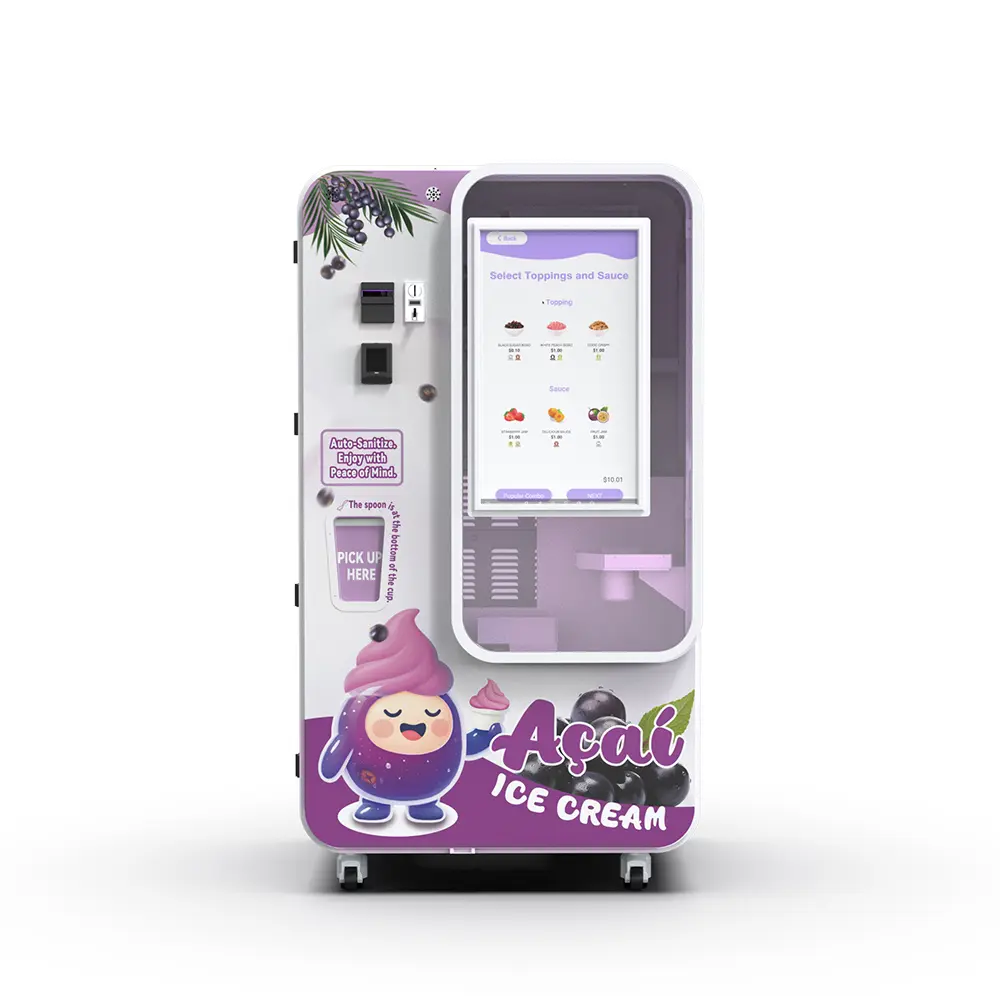
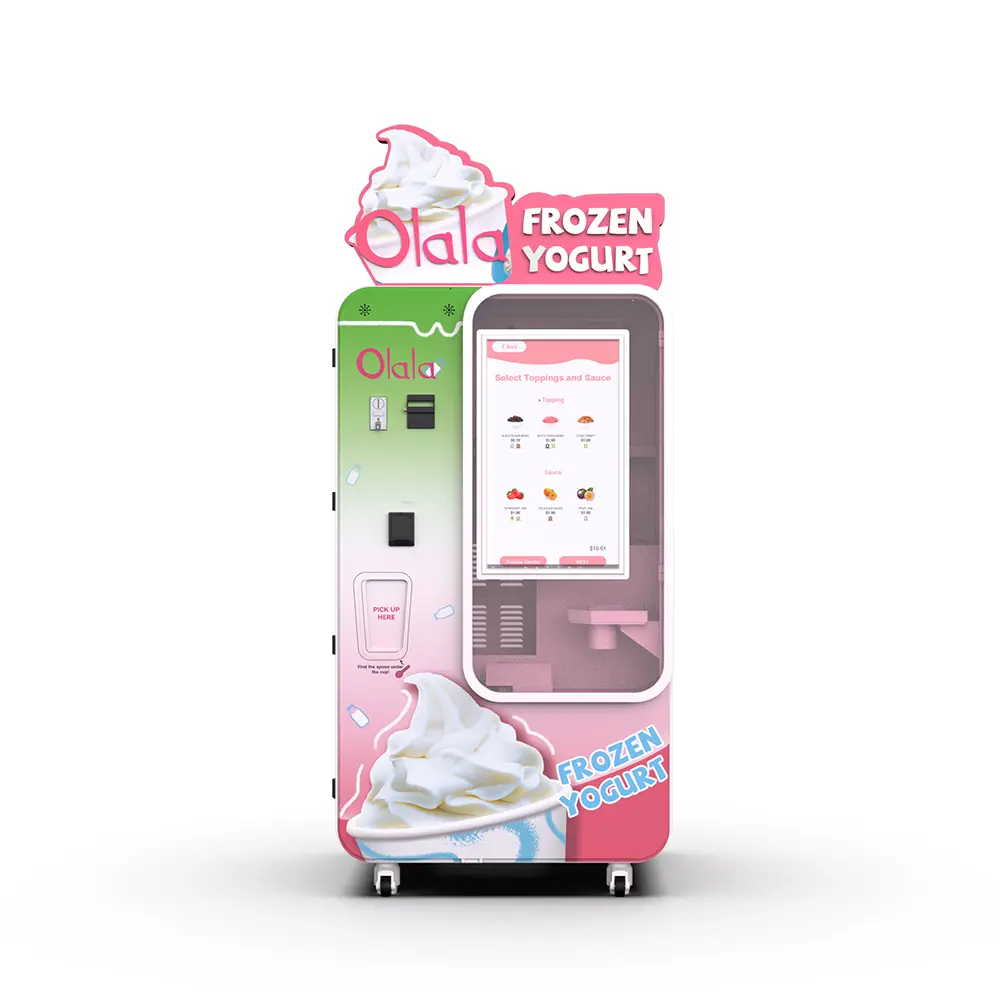
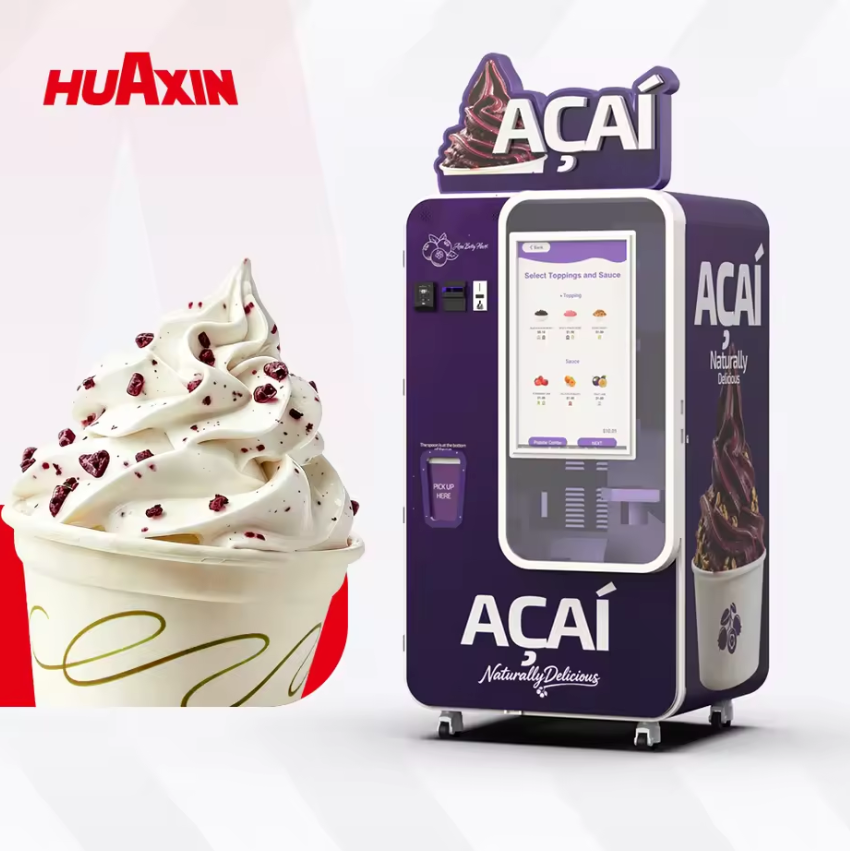
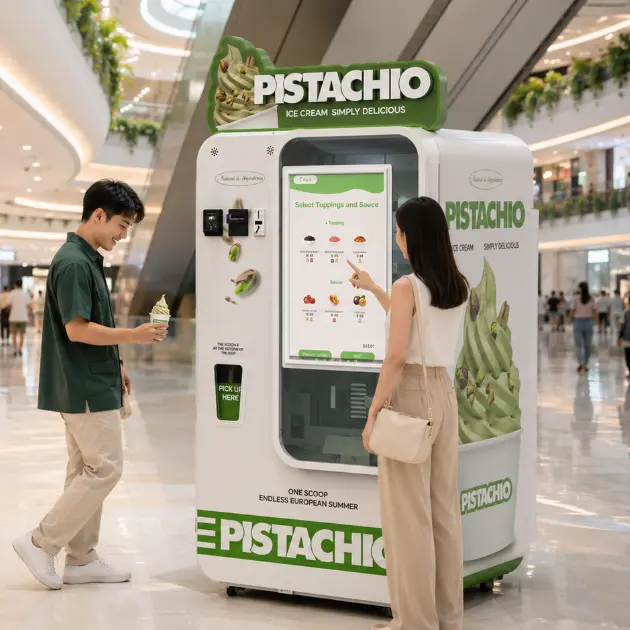
Huaxin’s B-series flagship models, including B83 Max, B84, B85, and B86, are designed as full-size automatic ice cream vending machines. Their core functions and internal configuration are positioned for commercial unattended operation, while the main differences are exterior door style and visual presentation.
Power7, on the other hand, is a desktop ice cream vending machine. It supports vending operation, and customers can scan to pay before the machine automatically makes the product. It is better suited for smaller indoor spaces, store counters, hotel lobbies, compact cafés, and controlled commercial environments where a full-size floor-standing machine may not be necessary.
When B83 Max or a Flagship B-Series Model Makes Sense
A full-size flagship automatic vending machine is more suitable when the operator needs:
-
Higher visibility in public locations
-
Larger screen presentation
-
Stronger standalone branding
-
Multi-payment integration
-
Remote management
-
Longer unattended operation
-
Higher daily cup potential
-
Better suitability for malls, FECs, campuses, and tourist sites
For frozen yogurt, the B-series is useful when the operator wants to build a branded “healthy dessert station” with fruit, granola, nuts, and premium topping combinations. For soft serve, it works well when the operator wants a 24/7 automated dessert point in a high-traffic leisure location.
When Power7 Makes Sense
Power7 is better for:
-
Countertop deployment
-
Existing cafés or convenience stores
-
Hotels and lounges
-
Small supermarkets
-
Office pantry areas
-
Trial projects with limited floor space
-
Locations where staff can assist with restocking if needed
Power7 can be a smart choice when the operator wants to test demand before deploying full-size machines. It can also work as an add-on revenue point for an existing business.
Formula Tuning Matters More Than the Model Name
Whether using B83 Max or Power7, buyers should not assume that one default setting will produce the best result for both frozen yogurt and soft serve.
The operator should test:
| Parameter | Frozen Yogurt Focus | Soft Serve Focus |
|---|---|---|
| Mix viscosity | Avoid clogging or watery output | Maintain smooth dispensing |
| Freezing level | Prevent icy texture | Maintain creamy structure |
| Sweetness | Balance tartness and customer acceptance | Support familiar dessert flavor |
| Overrun | Avoid weak body | Improve yield without losing texture |
| Topping match | Fruit, granola, nuts, honey | Chocolate, cookies, sprinkles |
| Cleaning cycle | Watch acidic dairy residue | Manage dairy and sugar residue |
| Portion size | Premium snack positioning | Family impulse pricing |
This is where supplier support becomes important. A professional supplier should not only ship the machine; it should help the buyer test formula behavior, payment setup, temperature control, and cleaning routines before commercial launch.
5. Scenario-Based Purchasing Advice
The right machine depends on where the machine will operate. Below are practical recommendations for different scenarios.
Supermarkets
Supermarkets are strong locations for frozen yogurt because customers are already thinking about food, freshness, and family consumption. A frozen yogurt machine near the entrance, checkout waiting area, or fresh food section can work well if the product is positioned as a healthy snack.
Recommended setup:
-
Full-size B-series model for strong visibility
-
Frozen yogurt formula with fruit or granola toppings
-
Clear nutritional messaging on the screen
-
Card, NFC, and QR payment
-
Promotion bundles with supermarket traffic
Soft serve can also work in supermarkets, but it should be positioned as an impulse dessert rather than a wellness product.
Gyms and Fitness Centers
Gyms are usually better for frozen yogurt than classic soft serve. Customers may be open to a cold post-workout snack, but they are more likely to accept it if the product feels lighter, lower-sugar, or protein-compatible.
Recommended setup:
-
Power7 for compact gym cafés or reception counters
-
B-series for premium large gyms or fitness clubs
-
Low-sugar yogurt-style formula
-
Granola, nuts, dry fruit, or honey toppings
-
Membership or QR payment integration
-
Avoid overly sweet visual branding
For this scenario, the buyer should not only ask about Froyo machine cost. They should ask whether the formula can match the gym’s health positioning.
Amusement Parks and Family Entertainment Centers
Soft serve is usually stronger in amusement parks and family entertainment centers. Children understand it immediately, parents see it as a treat, and the visual dispensing process can attract attention.
Recommended setup:
-
Full-size B83 Max or another flagship B-series model
-
Bright screen interface and family-friendly menu
-
Classic vanilla, chocolate, strawberry, or seasonal flavors
-
Colorful toppings
-
Fast cashless payment
-
High-visibility placement near waiting areas, not only entrances
Frozen yogurt can work in these locations, but it should not be too “serious” or overly health-focused. A fun frozen yogurt menu with fruit toppings may perform better than a strict low-sugar positioning.
Schools and Hospitals
Frozen yogurt has an advantage in schools and hospitals because the health message matters. Low-sugar formulas, closed production, temperature monitoring, and clear ingredient communication can help operators pass internal approval discussions.
Recommended setup:
-
Frozen yogurt or lighter soft serve formula
-
Low-sugar or controlled-sugar positioning
-
Clear cleaning and hygiene SOP
-
Remote temperature monitoring
-
Payment method adapted to the institution
-
Smaller menu to simplify management
Tourist Attractions
Tourist attractions can support both categories, but soft serve is usually easier for impulse purchases. Frozen yogurt can work if the site attracts young adults, wellness tourists, or premium lifestyle consumers.
Recommended setup:
-
B-series full-size model
-
Strong visual branding
-
Multi-language interface
-
Card, NFC, and QR payment
-
Weather-protected indoor or semi-indoor placement
-
Fast refill process for peak periods
6. Anonymized Case Model: Two Locations, Two Product Strategies
A buyer tested two machines in different location types.
Location A: Family Entertainment Center
The operator used a soft serve formula with classic flavors and colorful toppings.
| Metric | Result |
|---|---|
| Machine type | Full-size flagship vending machine |
| Product | Classic soft serve |
| Average daily sales | 86 cups |
| Weekend daily sales | 130+ cups |
| Main buyers | Parents with children |
| Best time period | 2 p.m.–8 p.m. |
| Main advantage | Strong impulse demand |
The soft serve menu worked because the location was emotional and family-driven. Children did not need to understand the health benefit. They saw ice cream and wanted it.
Location B: Premium Gym Lobby
The operator used a tart frozen yogurt formula with granola, nuts, and fruit-based toppings.
| Metric | Result |
|---|---|
| Machine type | Compact vending setup |
| Product | Frozen yogurt |
| Average daily sales | 42 cups |
| Weekend daily sales | 58 cups |
| Main buyers | Young adults and gym members |
| Best time period | 5 p.m.–10 p.m. |
| Main advantage | Health-compatible positioning |
The gym location sold fewer cups than the family entertainment center, but the average order value was higher because customers selected premium toppings.
This case shows why equipment selection must follow location strategy. A Soft serve machine is not automatically better because it sells more cups in one location. A frozen yogurt machine is not automatically better because it can be positioned as healthier. The best product is the one that matches customer intent.
7. How to Evaluate Froyo Machine Cost Correctly
Many buyers ask about Froyo machine cost as if the number alone can decide the project. In reality, machine cost should be evaluated across five layers:
-
Equipment price
-
Formula compatibility
-
Topping system and packaging
-
Payment and software integration
-
Maintenance and remote support
A cheaper machine that cannot handle the formula, maintain texture, or support stable unattended operation may become expensive after launch.
For frozen yogurt, buyers should ask:
-
Has the machine been tested with tart yogurt-style formulas?
-
Can it support low-sugar or protein-enriched mixes?
-
Does the cleaning system handle dairy residue properly?
-
Can the screen present nutritional and ingredient information?
-
Can the operator change menu images remotely?
For soft serve, buyers should ask:
-
Is the texture stable during peak demand?
-
Can overrun be controlled?
-
How fast is production?
-
Can the machine support high-volume family locations?
-
Are payment and remote alerts reliable?
Only after answering these questions does the quoted equipment price become meaningful.
FAQ
Is frozen yogurt more profitable than soft serve?
Not always. Frozen yogurt can support premium pricing in health-focused locations, especially with fruit, granola, nuts, or low-sugar positioning. Soft serve can generate higher volume in family entertainment centers, amusement parks, malls, and tourist locations. Profit depends on location fit, ingredient cost, pricing, and repeat purchases.
Can one machine make both frozen yogurt and soft serve?
Some commercial machines can support both categories if the formula, freezing settings, cleaning process, and dispensing system are properly tested. However, operators should not switch formulas casually without supplier guidance. In practice, one machine usually runs one main product category at a time for stable operation.
Why does frozen yogurt require more formula testing?
Frozen yogurt-style mixes may be more acidic, have different viscosity, and behave differently during freezing and dispensing. This affects pump flow, texture, cleaning, and product stability.
Which machine is better for gyms?
Frozen yogurt is usually better for gyms because it can be positioned as a lighter, health-oriented snack. Power7 may work well in compact gym cafés or reception areas, while a full-size B-series model is better for large premium clubs.
Which machine is better for amusement parks?
Soft serve usually performs better in amusement parks and family entertainment centers because children and families immediately understand it as a fun treat.
What should buyers consider besides Froyo machine cost?
Buyers should consider formula compatibility, target customers, payment methods, remote management, cleaning requirements, after-sales support, and whether the machine can support the desired business model long term.
Conclusion: Choose the Product Before You Choose the Machine
Automated frozen yogurt and soft serve are not just two flavors of the same business. They represent two different customer promises.
Frozen yogurt is stronger when the business needs a health-oriented, customizable, premium snack concept. Soft serve is stronger when the business needs broad appeal, fast impulse conversion, and family-friendly dessert demand.
For buyers comparing Froyo machine cost and a Soft serve machine, the smartest approach is to start with the location and customer group, then select the machine and formula around that strategy.
If the target location is a gym, supermarket, hospital, or wellness-oriented campus, frozen yogurt may provide stronger positioning. If the target location is a family entertainment center, amusement park, mall, or tourist site, soft serve may generate faster volume.
The real B2B decision is not frozen yogurt vs. soft serve. It is matching machine, formula, customer, and location into one operating model. That is where a professional supplier like Huaxin can provide more value than simply quoting equipment price.
Data Sources
-
Fortune Business Insights — Frozen Yogurt Market Size, Share & Industry Analysis
https://www.fortunebusinessinsights.com/industry-reports/frozen-yogurt-market-100799 -
The Business Research Company — Ice Cream Global Market Report
https://www.thebusinessresearchcompany.com/report/ice-cream-global-market-report -
eCFR — 21 CFR 131.200 Yogurt Standard of Identity
https://www.ecfr.gov/current/title-21/chapter-I/subchapter-B/part-131/subpart-B/section-131.200 -
National Restaurant Association — Dessert: A Sweet Addition to the Dining Experience
https://restaurant.org/education-and-resources/resource-library/dessert-a-sweet-addition-to-the-dining-experience/ -
Taylor Company — What Is Soft Serve Overrun and Why Does It Matter?
https://www.taylor-company.com/what-is-soft-serve-overrun-and-why-does-it-matter/ -
ICSC — Frozen Yogurt Chains Are Expanding Again
https://www.icsc.com/news-and-views/icsc-exchange/froyo-chains-are-expanding-again -
Fortune — The Froyopocalypse Is Over: Gen Z Is Swarming Frozen Yogurt Again
https://fortune.com/2026/06/17/why-does-gen-z-love-frozen-yogurt-froyo-comeback/ -
Grand View Research — Dairy-Free Ice Cream Market Size and Share Report
https://www.grandviewresearch.com/industry-analysis/dairy-free-ice-cream-market
References / Sources