Brand Expansion: Achieving Rapid Scalability with Automated Ice Cream Vending Machines
Date:2026-04-07 Author:Huaxin
For chain restaurant brands, the biggest bottleneck in expansion is often not capital—but people: hiring is difficult, training is time-consuming, and management is complex. Automated ice cream vending machines offer a new path to expansion: zero labor, standardization, and replicability.

For chain restaurant brands, the biggest bottleneck in expansion is often not capital—but people: hiring is difficult, training is time-consuming, and management is complex. Automated ice cream vending machines offer a new path to expansion: zero labor, standardization, and replicability.
In 2024, a coffee chain with 20 stores across the Middle East faced a classic challenge. They wanted to add an ice cream product line to each store, but their headquarters was in Dubai, while stores were spread across Abu Dhabi, Doha, and Riyadh. Hiring an ice cream maker for each location would be costly and nearly impossible to standardize.
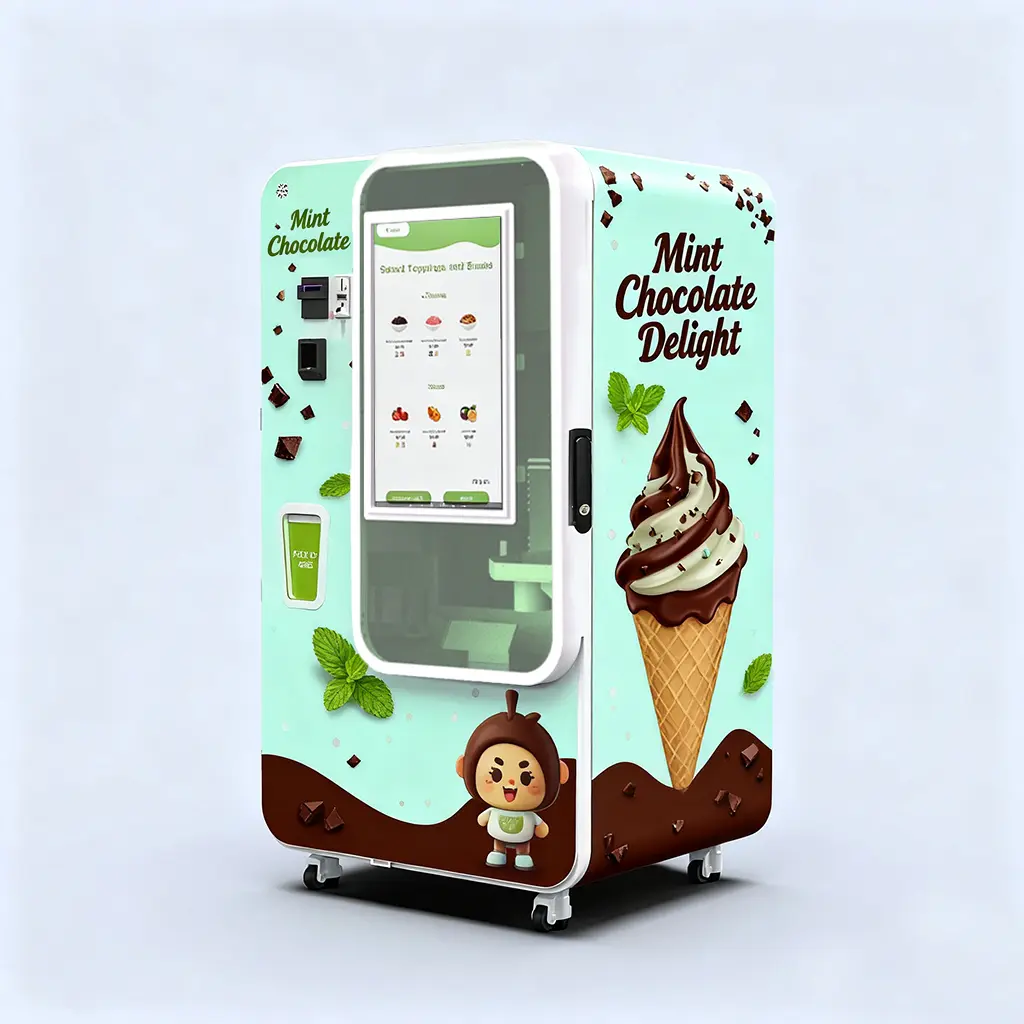
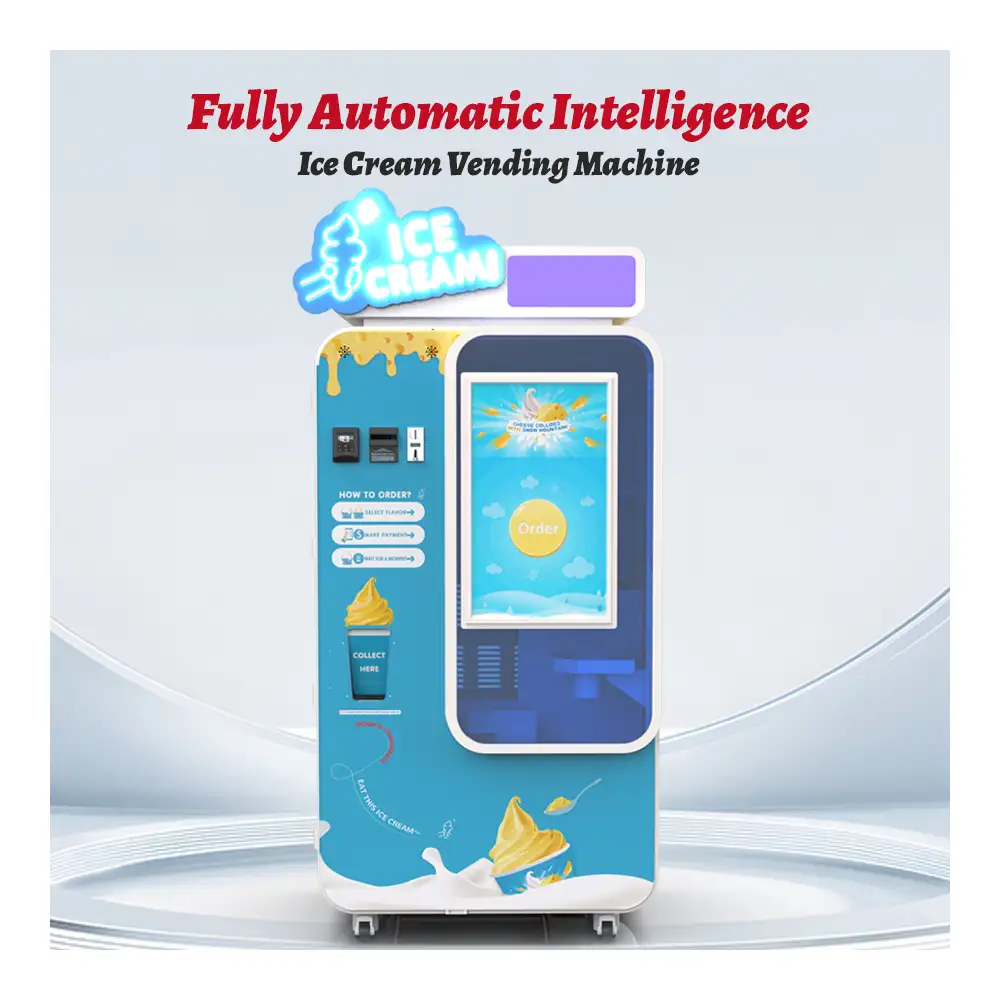
Their solution: install a Huaxin B86max machine in each store. Headquarters remotely set recipes and parameters, while local staff only handled restocking. Within three months, ice cream sales exceeded expectations, with almost zero additional labor costs.
This case reflects a growing trend: for chain brands, vending machines are no longer a “side business,” but a standardized expansion tool.
1. Three Major Bottlenecks of Traditional Expansion
1. Labor Constraints
If you operate 10 stores and want to add ice cream, you need to:- Hire 10 employees (or train existing staff)
- Pay salaries, benefits, and leave
- Handle turnover and scheduling
- Ensure consistent product quality
2. Management Constraints
With stores across multiple cities, how do you ensure consistent taste? Through inspections? Training? Mystery shoppers?Building a full quality control system takes significant time and cost—often more than the equipment itself.
3. Expansion Speed Constraints
Opening a new store typically takes 3–6 months, including location selection, renovation, hiring, and training. Expanding to 20 stores in a year means managing multiple complex projects simultaneously.How Vending Machines Solve These Problems
| Bottleneck | Traditional Model | Vending Machine Model |
| Labor | 1–2 staff per store | 0 (centralized control) |
| Management | Inspections & training | Remote cloud management |
| Expansion Speed | 3–6 months/store | 1–2 months (site only) |
| Quality Control | Human-dependent | Parameter-based consistency |
| Setup Cost | Renovation + hiring | Equipment + materials |
2. Zero-Labor Replication Model
“Zero labor” doesn’t mean no human involvement—it means no dedicated staff per location.Core Logic:
- Centralized control: all machines managed via cloud system
- Local restocking: handled by existing staff
- Remote maintenance: 95% of issues solved remotely
Case insight: A Middle Eastern chain deployed machines across 20 stores in 3 months. One operator managed all machines remotely, while local staff handled daily restocking. Nearly all additional revenue became profit.
3. Brand Consistency: Every Cup the Same
Consistency is critical for chain brands.How Machines Ensure Consistency
| Dimension | Traditional Model | Vending Machine Model |
| Recipe | Human judgment | Precisely controlled parameters |
| Temperature | Manual adjustment | Digital control & monitoring |
| Presentation | Skill-dependent | Automated replication |
| Portion | Inconsistent | ±5% accuracy |
| Hygiene | Staff-dependent | Auto-cleaning + UV sterilization |
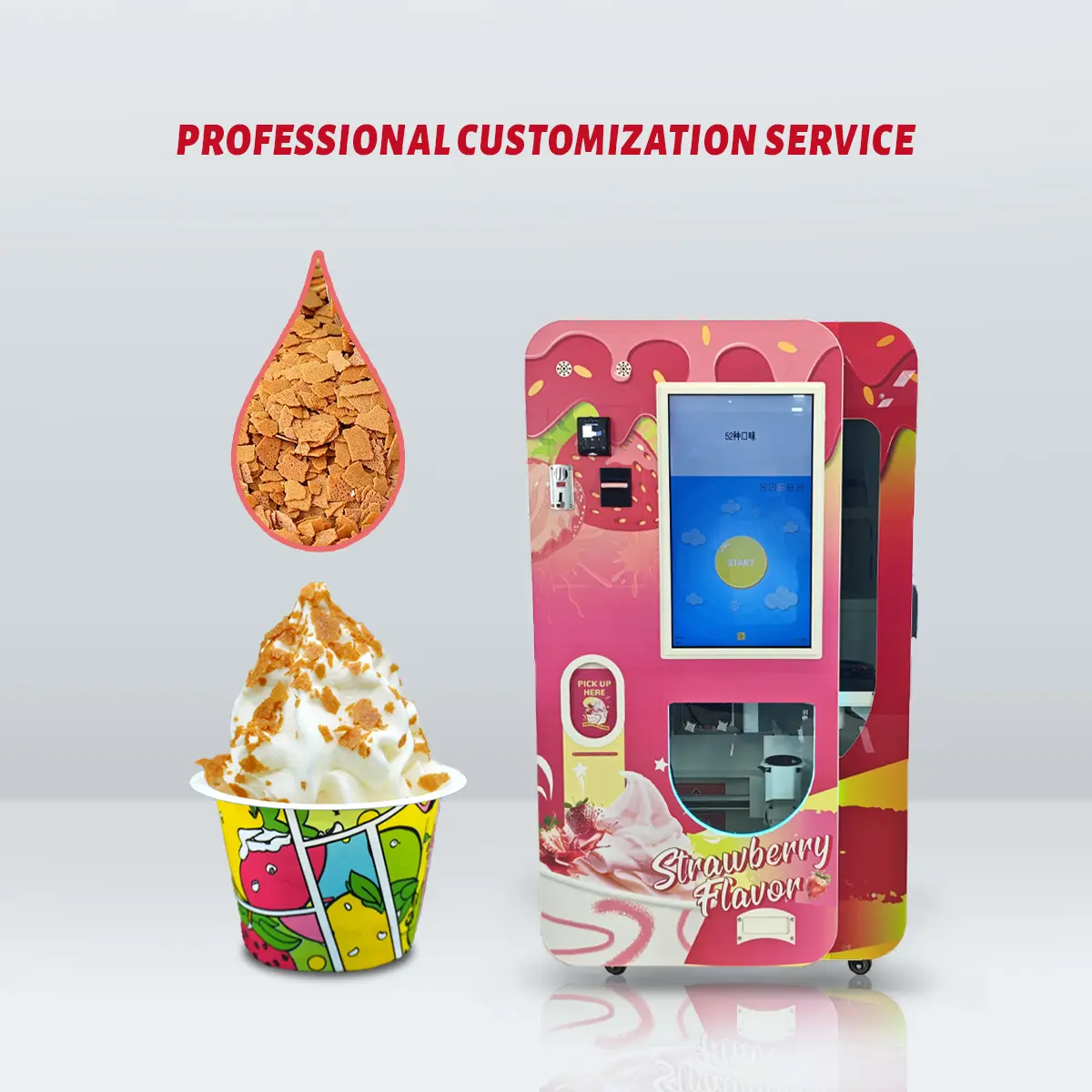
- Exterior customization (magnetic panels, lightboxes, stickers)
- UI customization (startup screen, menu, logo)
4. Remote Cloud Management at Scale
Managing 10, 50, or 100 machines requires more than spreadsheets.Essential System Features:
| Feature | Function | Value |
| Real-time monitoring | Temp, inventory, faults, sales | Early warnings |
| Remote control | Power, pricing, promotions | No onsite work |
| Data analytics | Location, time, product | Data-driven decisions |
| Revenue sharing | Automated settlements | Saves labor |
| Access control | Role-based permissions | Security |
- 40% improvement in operational efficiency
- Faster fault response (within hours)
- Inventory loss reduced to <1%
5. Case Study: From 1 to 50 Machines
In 2023, a U.S. chain introduced automated ice cream vending machines using Huaxin B86max.Phase 1: Pilot (3 months)
- Deploy in 5 stores
- Collect data (sales, pricing, margins)
- Optimize recipes
Phase 2: Regional Expansion (6 months)
- Expand to 25 stores
- Establish restocking SOP
- Implement remote management
Phase 3: Full Deployment (12 months)
- Expand to 50 stores
- Standardize branding (appearance + UI)
- Launch exclusive toppings
Results:
- Payback period: 14 months
- Annual profit increase: $500,000+
- Enhanced brand visibility
6. Actionable Expansion Strategy
Phase 1: Pilot (1–3 months)
- Test 1–2 locations
- Validate performance & demand
- Optimize operations
Phase 2: Regional Test (3–6 months)
- Expand to 5–10 locations
- Build remote monitoring
- Train local staff
Phase 3: Scale (6–12 months)
- Expand to 20–50 locations
- Build service network
- Introduce exclusive offerings
Phase 4: Nationwide Expansion (12+ months)
- Standardize model
- Optimize operations
- Explore new channels
7. Cost-Benefit Analysis
Scenario: 20 Stores
Traditional Model:- 20 employees → $600,000+/year
- High management complexity
- Equipment: 20 × $9,500 = $190,000
- Annual operating cost: ~$15,000
- 80 cups/day × $5 × 65% margin
- Total annual gross profit ≈ $1.9M
Conclusion: vending machines are not just labor replacement—they are a high-efficiency revenue engine.
FAQ
Q: Which businesses are suitable?A: Restaurants, convenience stores, cafes, hotels, cinemas, malls, and retail brands with steady traffic.
Q: How to ensure consistency across locations?
A: Use cloud monitoring systems for real-time control and parameter alignment.
Q: What about remote area maintenance?
A: 95% of issues can be solved remotely; local service partners handle the rest.
Q: Can this work with franchising?
A: Yes. HQ manages equipment and pricing; franchisees handle operations. Revenue sharing can be automated.
Q: Will rapid expansion cause loss of control?
A: No. With proper systems and processes, managing 1 or 100 machines is nearly the same.
In the past, expansion meant more stores, more employees, and more complexity.
Automated ice cream vending machines change that equation. They remove labor as a bottleneck, enabling faster, leaner, and more scalable growth.
If your brand is looking for a new growth curve, consider this:
use one machine to open a “store” that never closes, never takes leave, and never makes mistakes.

PREVIOUS ARTICLE
5 Technical Specifications You Must Check Before Buying an Ice Cream Vending Machine
NEXT ARTICLE