Commercial Ice Cream Vending Machine Cost: What Operators Should Budget For
Understand the real commercial ice cream vending machine cost, including equipment configuration, payment systems, shipping, duties, consumables, location fees, spare parts, and after-sales support.
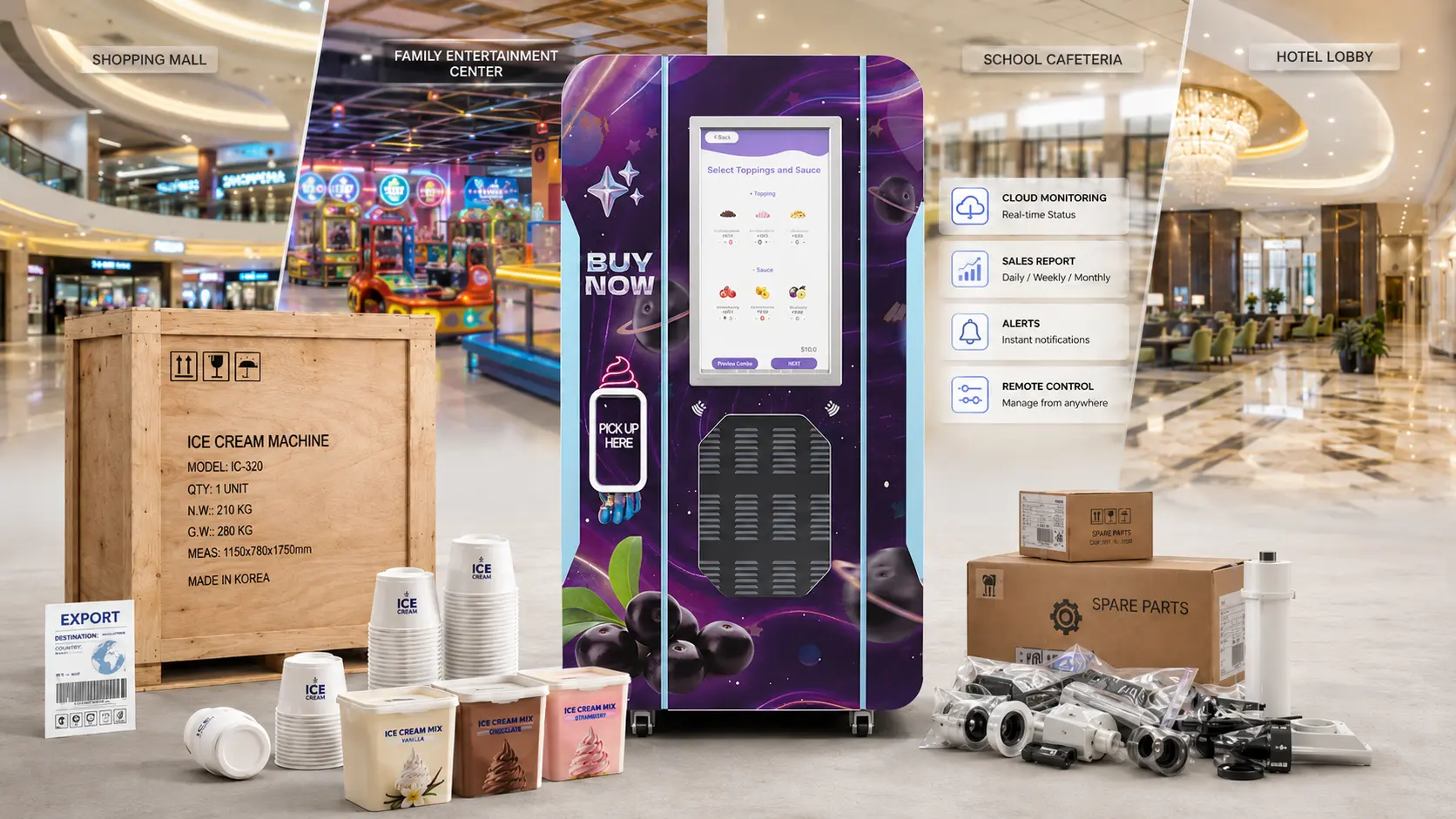
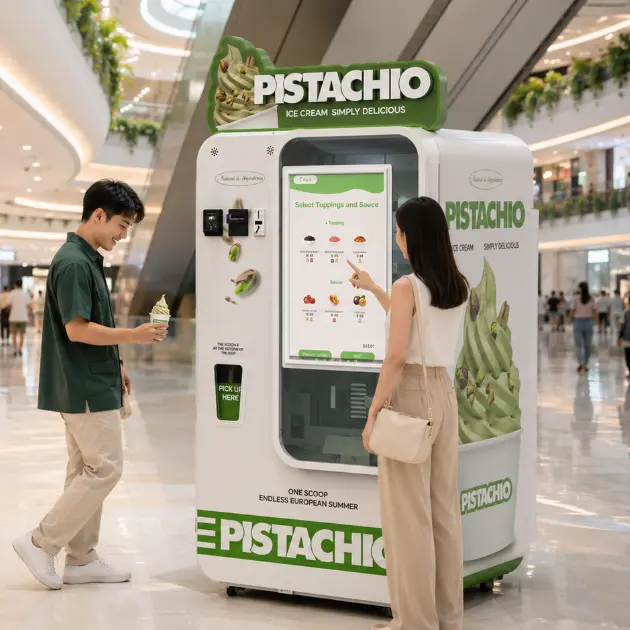
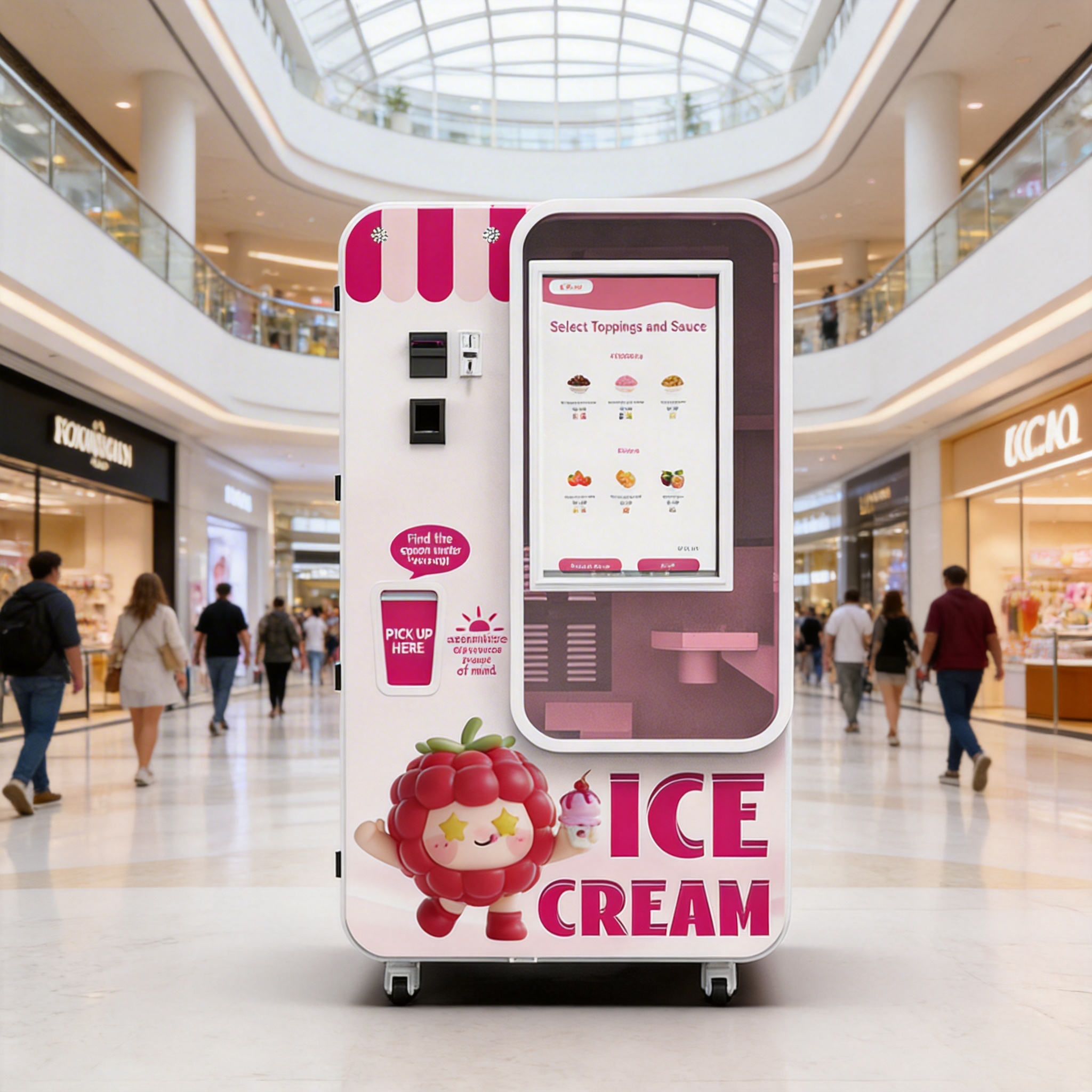
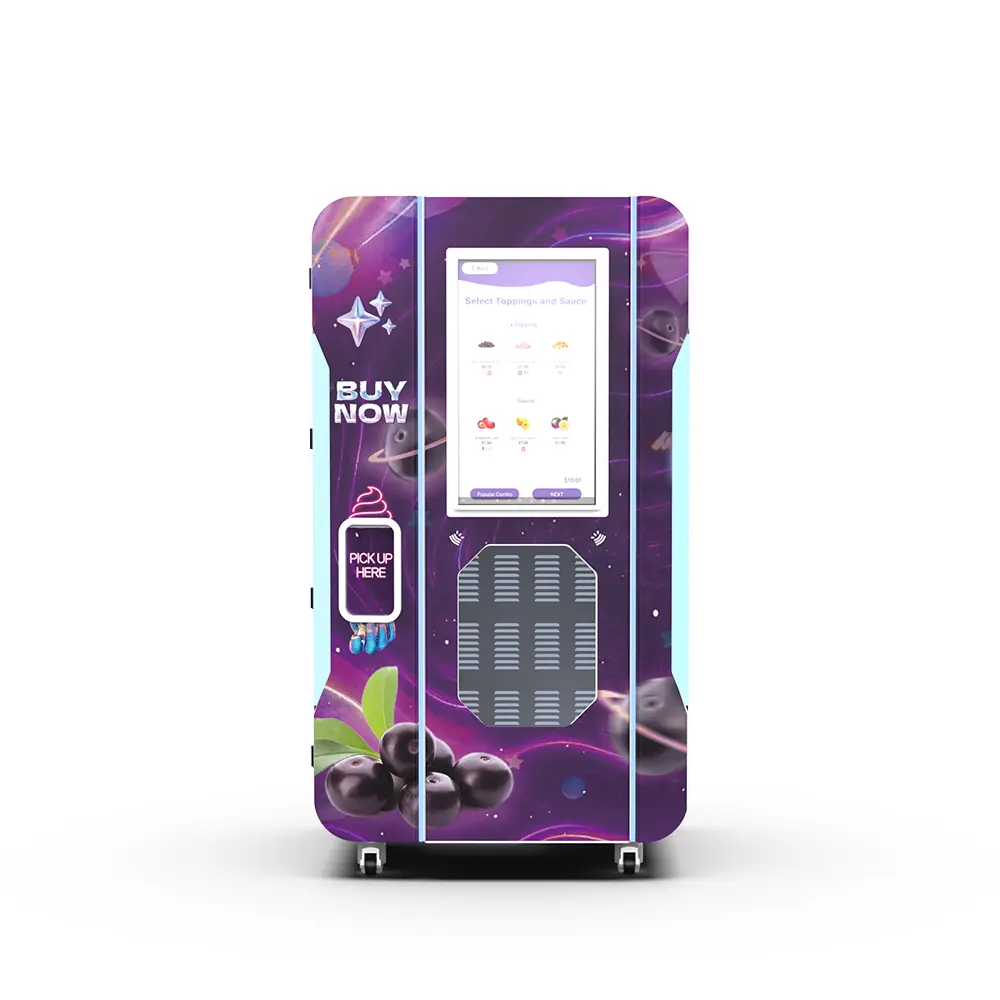
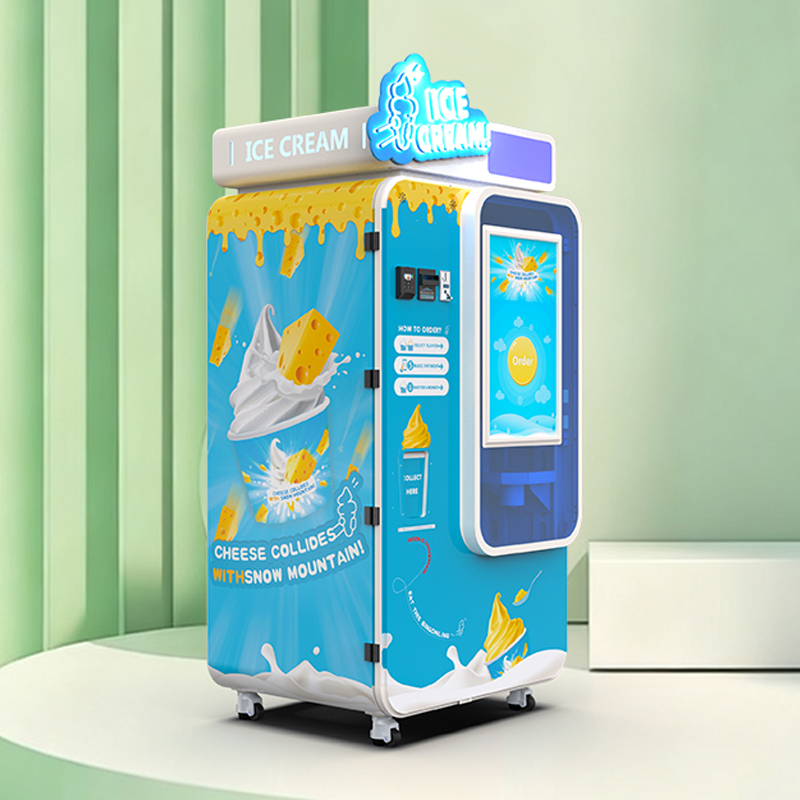
Understanding commercial ice cream vending machine cost requires more than asking for the price of one machine. A serious commercial project includes the equipment, payment integration, shipping, import expenses, ingredients, cups, spare parts, location fees, cleaning, and ongoing technical support. Two machines that appear similar in photos may have very different refrigeration systems, production capacity, payment compatibility, software, and long-term operating requirements.
For commercial operators, the lowest purchase price is not always the lowest-cost solution. A cheaper machine may need more frequent refilling, lack remote alerts, reject common local payment methods, or create longer downtime when a small component fails.
The right budgeting question is therefore not:
“How much is the machine?”
It is:
“What will it cost to install, launch, operate, and support this machine in my target location?”
1. Why Commercial Buyers Cannot Compare Only the Unit Price
A commercial ice cream vending machine is not simply a refrigerated cabinet. It combines several systems in one unattended retail point:
- Ingredient refrigeration
- Product freezing and dispensing
- Automatic cup handling
- Touchscreen ordering
- Payment processing
- Temperature and fault monitoring
- Customer pickup guidance
- Cleaning and maintenance procedures
- Remote operating data
The unit price reflects the quality and capability of these systems.
A basic quotation may cover only the machine body. A more complete commercial quotation may include the payment module, software access, exterior customization, export packaging, technical documentation, spare parts, training, and remote support.
This is why two supplier quotes should never be compared from the bottom-line number alone.
Operators should compare:
| Comparison Area | Questions to Ask |
|---|---|
| Product type | Does the machine make fresh soft serve or only sell packaged products? |
| Automation | Does it automatically dispense the cup and complete production? |
| Refrigeration | Can it maintain stable operation during peak hours? |
| Payment | Are card, NFC, QR, coin, or local wallets included? |
| Capacity | How many cups can it serve before refilling? |
| Software | Does it provide sales, temperature, and fault data? |
| Packaging | Is export-grade packaging included? |
| Support | Are training, warranty, spare parts, and remote assistance included? |
A machine that costs less but omits several of these items may require additional spending after the order is placed.
2. Equipment Configuration: The Largest Part of the Budget
The machine configuration is usually the most visible part of the investment. However, operators should understand which specifications actually affect commercial performance.
Touchscreen and Ordering Interface
The touchscreen acts as the machine’s menu, salesperson, and customer guide.
A large commercial screen can display:
- Product photos
- Flavor and topping choices
- Prices
- Payment instructions
- Multilingual menus
- Promotional videos
- Pickup guidance
- Brand advertising
For a shopping mall or family entertainment center, a larger screen may improve visibility and help first-time customers understand the ordering process. For a small hotel, office, or café, a compact interface may be sufficient.
The buyer should not pay for a large screen simply because it looks impressive. The screen should match the location, viewing distance, menu complexity, and branding strategy.
Refrigeration and Production System
Fresh soft serve and frozen yogurt require stable temperature control. The refrigeration system affects:
- Product texture
- Ingredient safety
- Continuous production
- Peak-hour output
- Compressor workload
- Cleaning reliability
- Machine downtime
The FDA Food Code is used as a model for retail food safety in the United States. Its vending provisions include automatic controls that prevent the sale of temperature-sensitive food when required conditions cannot be maintained.[1][2]
For commercial operators, this means refrigeration should not be evaluated only by rated power. Buyers should ask how the machine responds to power failure, mechanical failure, high room temperature, and repeated production during busy periods.
Payment System
Payment requirements vary significantly by country and location.
Possible options include:
- Credit or debit card reader
- NFC and contactless payment
- Apple Pay or Google Pay through a compatible terminal
- QR code payment
- Local mobile wallets
- Coin acceptor
- Bill validator
- Campus or employee payment systems
MDB/ICP is an established vending communication protocol used to support communication between a vending controller and peripheral equipment such as coin mechanisms, bill validators, and cashless devices.[3]
MDB compatibility does not automatically guarantee that every payment terminal will work in every country. The supplier and payment provider still need to confirm hardware, software, network, processor, and local certification compatibility.
Operators should decide the target payment methods before production rather than trying to retrofit an unsuitable payment module after delivery.
Cup, Mix, and Topping Capacity
Capacity changes both the equipment cost and the daily operating workload.
A high-traffic family entertainment center may require:
- Larger cup storage
- More ingredient capacity
- Faster production
- More topping options
- Fewer refill interruptions
A hotel lobby or office location may have lower daily volume and may not need the highest capacity.
Operators should estimate expected daily cup sales before selecting a machine. Paying for unused capacity increases the initial investment, but choosing insufficient capacity increases refill labor and risks losing sales during peak periods.
Remote Management
Remote management is especially important for operators planning more than one location.
Useful remote functions may include:
- Daily and monthly sales data
- Machine online status
- Ingredient or cup alerts
- Temperature monitoring
- Fault codes
- Payment records
- Cleaning reminders
- Remote menu or price updates
NAMA’s recent industry census describes continued growth in convenience services and highlights the importance of self-service retail and technology-enabled operations.[4]
For one machine, remote monitoring reduces unnecessary site visits. For a multi-location route, it becomes part of the core operating system.
3. Shipping, Import, and Installation Costs
The quoted factory price is not the same as the landed project cost.
Commercial buyers should normally budget for:
| Logistics Item | Budget Consideration |
| Export packaging | Wooden case, moisture protection, internal fixing |
| China inland transport | Factory-to-port or factory-to-warehouse movement |
| Export declaration | Customs and documentation at origin |
| Ocean freight | LCL or full-container transport |
| Insurance | Cargo loss or damage protection |
| Destination charges | Port handling and local service fees |
| Import duty | Based on local customs classification |
| VAT or GST | Depends on the importing country |
| Customs broker | Import documentation and clearance |
| Local delivery | Port or warehouse to final location |
| Site installation | Power, network, positioning, and commissioning |
A common Huaxin full-size export reference is approximately:
- Packing dimensions: 1180 × 1100 × 2130 mm
- Weight: approximately 500 kg
- Volume: approximately 2.76 CBM
- HS Code reference: 8476810000
For container planning, approximately 10 full-size machines may be considered for a 20-foot container and approximately 22 for a 40-foot high-cube container, subject to final packaging and loading confirmation.
This creates different logistics economics:
- One machine is usually shipped as LCL and has a relatively high freight cost per unit.
- Three to five machines can share some documentation and handling costs.
- Ten or more machines may justify full-container planning.
- Distributor orders can spread spare parts, training, and logistics costs across more units.
Import duty, VAT, destination fees, and local delivery should always be confirmed separately for the destination country.
4. Consumables and Ongoing Operating Costs
The first commercial budget should cover more than delivery and installation. Operators also need enough working capital to run the machine after launch.
Ingredients and Packaging
Typical consumables include:
- Soft serve or frozen yogurt mix
- Paper cups
- Spoons
- Sauces
- Dry toppings
- Granola, nuts, or fruit ingredients
- Cleaning chemicals
- Food-safe lubricants
- Replacement seals and tubes
The direct cost per cup depends on the recipe, cup size, topping quantity, supplier pricing, and local transport.
A premium frozen yogurt cup with fruit, nuts, and granola will have a different cost structure from a basic vanilla soft serve cup. Operators should calculate the product cost before setting the selling price.
Payment Processing
Cashless payment may involve:
- Terminal purchase or rental
- Payment gateway fees
- Transaction fees
- SIM card or network fees
- Monthly software fees
- Refund and settlement procedures
A payment terminal with higher fees may still be commercially worthwhile if it improves transaction completion and reduces cash-collection labor.
Cleaning and Refilling
Automatic does not mean maintenance-free.
Commercial operators still need to budget time or labor for:
- Ingredient refilling
- Cup replenishment
- Cleaning
- Waste removal
- Topping replenishment
- Exterior cleaning
- Routine inspection
- Customer issue handling
In the United States, the median hourly wage for food and beverage serving and related workers was reported at USD 14.92 in May 2024, while food preparation workers had a median hourly wage of USD 16.45.[5][6] Actual labor costs can be substantially higher after payroll costs, insurance, scheduling, supervision, and regional wage differences are included.
The value of automation is not eliminating all labor. It is allowing one operating team to support more selling points than a traditional staffed dessert shop.
Maintenance Reserve
Operators should maintain a reserve for:
- Wear parts
- Emergency service
- Payment terminal replacement
- Refrigeration maintenance
- Sensor replacement
- Local technician visits
- International spare-part shipping
A recommended spare-parts package is particularly important for overseas buyers. A low-cost seal or sensor should not cause several weeks of downtime while the operator waits for international delivery.
5. How Location Type Changes the Required Budget
A machine should be configured for its operating environment.
Shopping Mall
A mall machine usually needs:
- High visual impact
- Large screen
- Cashless payment
- Good branding
- Higher capacity
- Strong weekend reliability
- Remote monitoring
Mall rent or revenue share may also become one of the largest ongoing expenses.
Family Entertainment Center
An FEC machine may experience concentrated demand during weekends, holidays, and birthday events.
Budget priorities include:
- Fast production
- Larger cup capacity
- Easy customer flow
- Family-friendly menu
- Frequent refill planning
- Strong fault alerts
Airport or Station
Travel locations generally require:
- Card and contactless payment
- Multilingual interface
- High uptime
- Simple ordering
- Clear pickup instructions
- Strong local service planning
Local coins or QR-only payment may not be suitable for international travelers.
School or Factory
Closed locations may need:
- Simple and durable configuration
- Coin, card, employee, or campus payment
- Controlled menu
- Easy cleaning
- Moderate capacity
- Predictable refill schedule
A large advertising screen may be less important than durability and payment accessibility.
Hotel, Gym, or Supermarket
These locations require product-positioning decisions.
A gym may favor frozen yogurt, açaí-style products, granola, nuts, or lower-sugar recipes. A hotel may value quiet operation and late-night convenience. A supermarket may benefit from strong family visibility and integration with existing food traffic.
The correct commercial ice cream vending machine cost depends on matching the configuration to the location—not selecting every available feature.
6. How Purchase Quantity Changes the Budget
One Unit: Pilot Project
A one-machine project should budget for:
- Machine
- Payment setup
- Export packaging
- LCL shipping
- Import costs
- Initial consumables
- Basic spare parts
- Training and remote support
The purpose of the pilot is to test the location, pricing, product, and customer response.
Three to Five Units: Small Operating Route
At this level, the buyer should add:
- Centralized remote monitoring
- Larger spare-parts kit
- Standard cleaning procedures
- Route planning
- Refill scheduling
- Location performance comparison
- Consistent branding
The project should now be evaluated as an operating network, not as several independent machines.
Ten or More Units: Multi-Location or Distributor Project
Larger projects should consider:
- Volume pricing
- Container loading
- Local spare-parts inventory
- Technical training
- Local payment adaptation
- Branding and UI standards
- Installation procedures
- Distributor after-sales capability
- Long-term supplier cooperation
The cheapest unit price is less important if the supplier cannot support repeat orders, training, payment integration, and local customer service.
7. What to Send a Supplier Before Requesting a Quote
A useful quotation requires more information than “Please send price.”
Commercial buyers should provide:
| Required Information | Why the Supplier Needs It |
| Country | Voltage, certification, payment, and import planning |
| Destination city or port | Freight calculation |
| Purchase quantity | Unit pricing and shipping method |
| Location type | Machine and capacity recommendation |
| Expected daily sales | Cup and ingredient capacity |
| Product type | Soft serve, frozen yogurt, sorbet, or açaí-style |
| Payment requirements | Card, NFC, QR, coin, bill, or local wallet |
| Indoor or outdoor use | Installation and protection requirements |
| Customization | Branding, language, menu, and UI |
| Certification requirements | Market-entry documentation |
| Preferred trade term | FOB, CIF, or DDP |
| Planned launch date | Production and shipping schedule |
| Expansion plan | Pilot, operating route, or distribution project |
Quote Request Template
Country:
Destination city or port:
Purchase quantity:
Business type: Operator / Distributor / Investor / Mall / School / Hotel
Target location:
Indoor or outdoor:
Product type: Soft serve / Frozen yogurt / Sorbet / Açaí-style
Expected daily sales:
Payment methods required:
Brand or UI customization required:
Certification required:
Preferred trade term: FOB / CIF / DDP
Initial cups or ingredients required:
Spare-parts package required:
Expected launch date:
Future expansion plan:
This information allows the supplier to recommend an appropriate configuration instead of sending a generic price.
FAQ
What is included in commercial ice cream vending machine cost?
The total commercial budget may include the machine, payment terminal, branding, packaging, shipping, import charges, local delivery, initial consumables, spare parts, location fees, cleaning, maintenance, and technical support.
Why do similar-looking machines have different prices?
The internal refrigeration, compressor, sensors, screen, payment system, cup capacity, automation level, software, certifications, and after-sales service may be different even when the exterior appearance looks similar.
Does the machine price include shipping and import duty?
Not necessarily. An FOB quote, CIF quote, and DDP quote cover different logistics stages. Buyers should confirm freight, destination charges, customs clearance, duty, VAT, and final delivery separately.
How much should an operator reserve for consumables?
The amount depends on expected daily sales, recipe, topping strategy, refill frequency, and local ingredient supply. Operators should prepare enough cups, mix, toppings, and cleaning materials for the initial operating period.
Is one machine enough to test the project?
Yes. One machine can test location demand and customer acceptance. It cannot fully prove the efficiency of a multi-location refill, maintenance, and spare-parts system.
Which configuration is suitable for a high-traffic location?
High-traffic locations usually need faster production, larger capacity, stable refrigeration, cashless payment, remote alerts, and reliable after-sales support.
Is the cheapest commercial machine the best investment?
Not always. The lowest purchase price can lead to higher operating cost if the machine needs frequent service, lacks local payment compatibility, has insufficient capacity, or causes extended downtime.
Conclusion: Budget for the Operation, Not Only the Equipment
A realistic commercial ice cream vending machine cost calculation should include everything required to move from factory order to stable daily operation.
The machine is the largest visible investment, but it is not the only one. Commercial buyers must also consider shipping, import charges, payment processing, ingredients, cups, location fees, refilling, cleaning, spare parts, and after-sales support.
The right budget also depends on the project:
- A one-machine pilot needs a controlled launch package.
- A three-to-five-machine route needs remote management and operating procedures.
- A distributor or multi-location project needs training, spare-parts inventory, payment adaptation, and long-term supplier support.
Before requesting a quotation, provide the supplier with your country, destination, target location, expected quantity, payment needs, product type, and expected daily sales.
That allows the supplier to recommend a commercially suitable configuration rather than simply offering the lowest machine price.
References / Sources
-
U.S. Food and Drug Administration — Food Code 2022
https://www.fda.gov/food/fda-food-code/food-code-2022 -
Washington State Legislature — Vending Machines, Automatic Shutoff
https://app.leg.wa.gov/wac/default.aspx?cite=246-215-04246 -
NAMA — Multi-Drop Bus and Internal Communication Protocol
https://www.namanow.org/wp-content/uploads/Multi-Drop-Bus-and-Internal-Communication-Protocol.pdf -
NAMA — New Census Reveals Shifts in Convenience Services Industry
https://namanow.org/new-census-reveals-shifts-in-convenience-services-industry/ -
U.S. Bureau of Labor Statistics — Food and Beverage Serving and Related Workers
https://www.bls.gov/ooh/food-preparation-and-serving/food-and-beverage-serving-and-related-workers.htm -
U.S. Bureau of Labor Statistics — Food Preparation Workers
https://www.bls.gov/ooh/food-preparation-and-serving/food-preparation-workers.htm
References / Sources