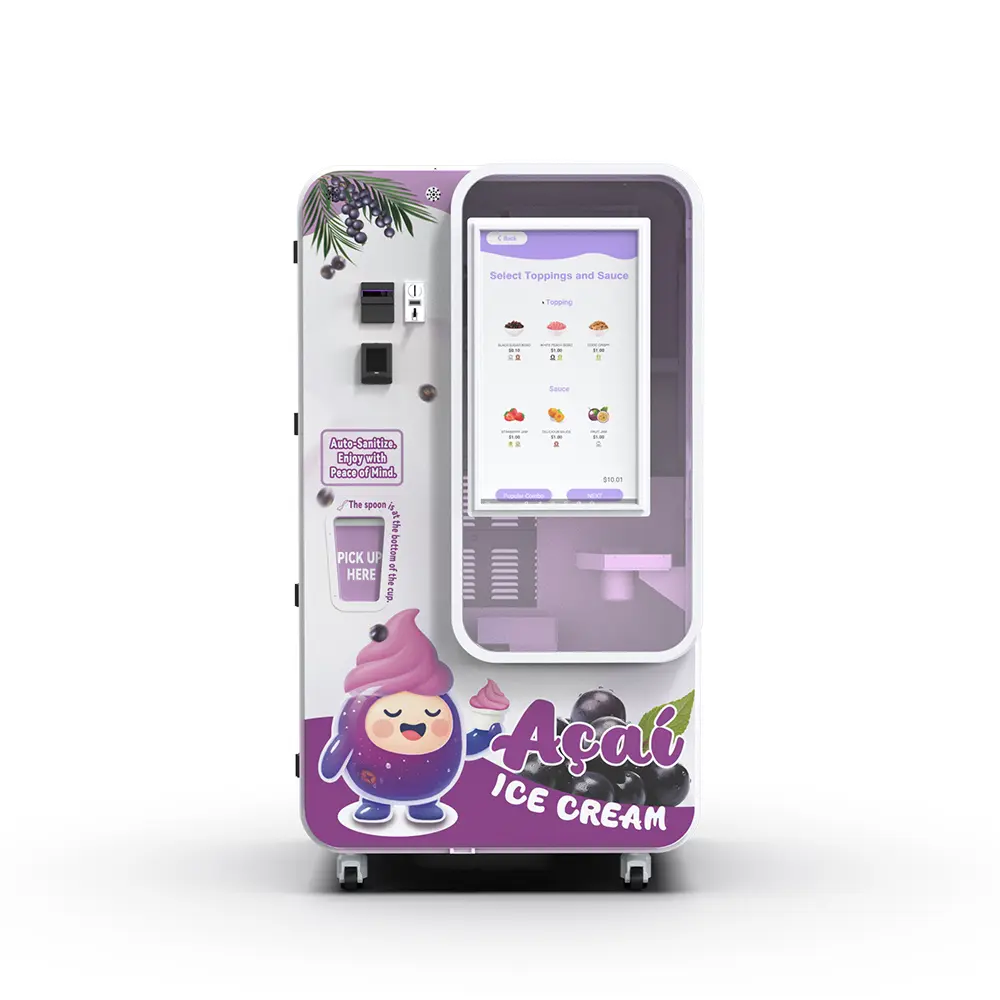
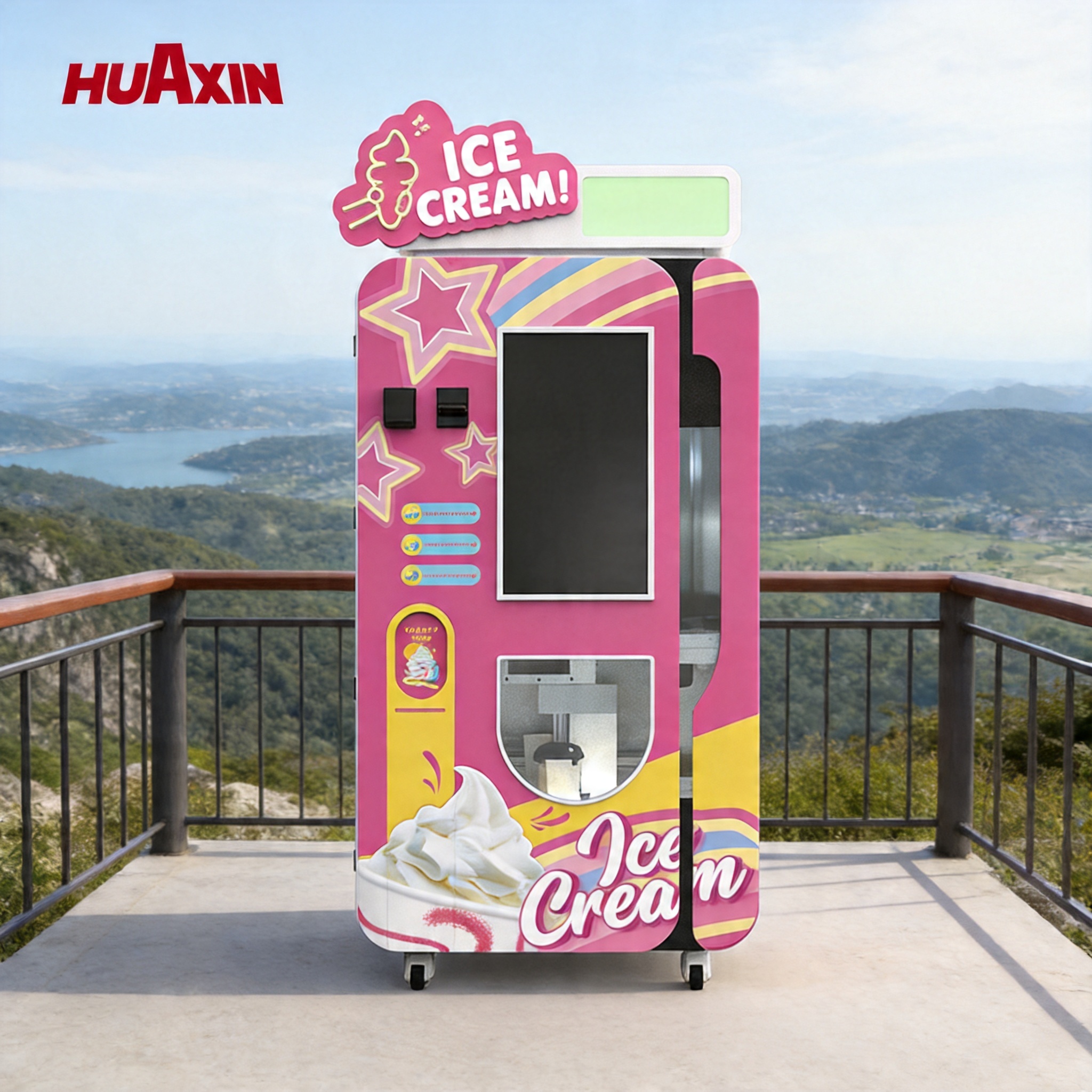
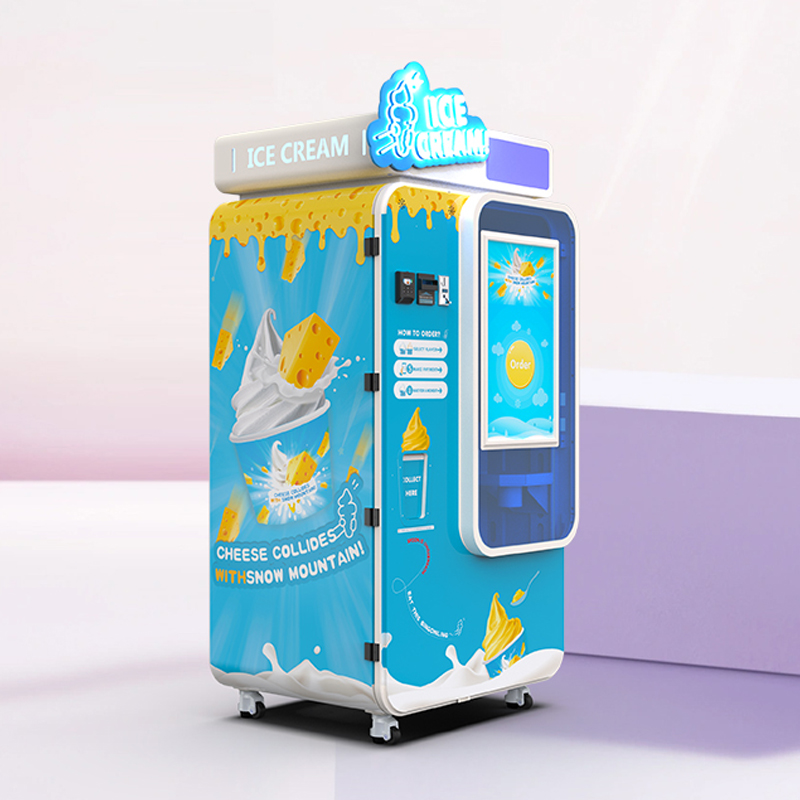
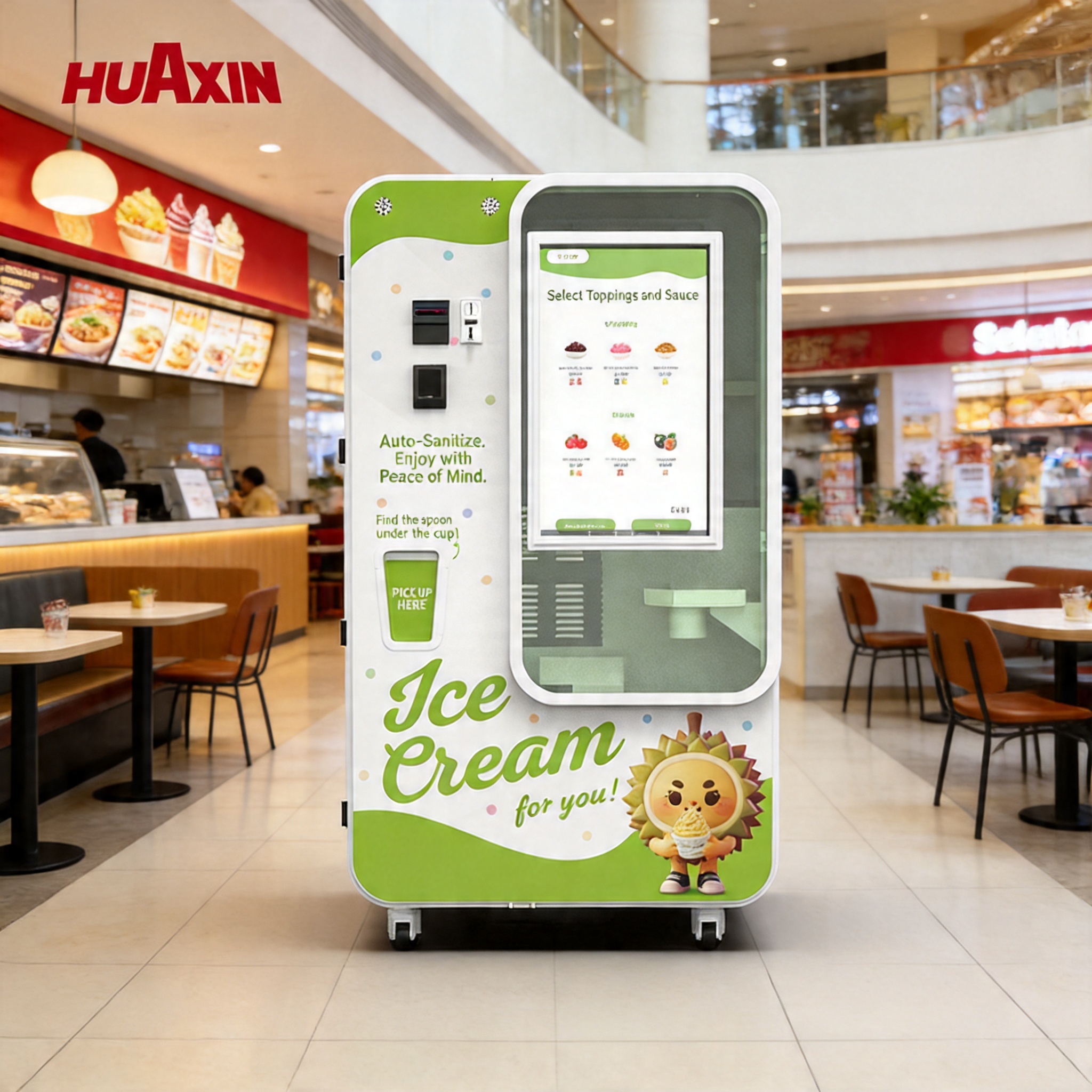
Ice Cream Vending Machine Business: A Practical Way to Test Dessert Retail Without Opening a Store
Explore how to start an ice cream vending machine business with practical guidance on market selection, location testing, ROI estimation, equipment choice, and scalable operation planning.
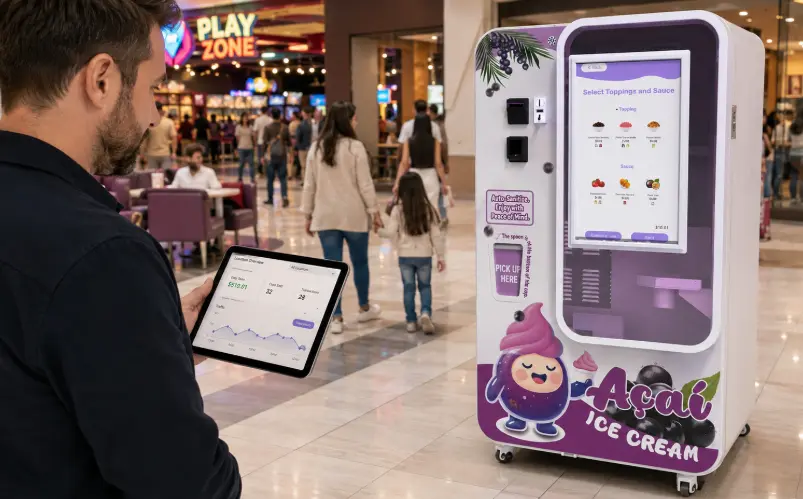
A shopping mall has an empty space near the children’s play area. The rent is much lower than a full dessert shop, and there is already weekend family traffic. A cinema wants to add one more snack option in the lobby, but it does not want to hire another employee. A tourist attraction has strong summer traffic, yet food service staff are difficult to manage during peak season.
These are the kinds of situations where many investors and operators begin to consider an Ice Cream Vending Machine Business.
At first, the idea looks simple: install a machine, sell soft serve ice cream, and let customers complete the purchase by themselves. But anyone who has operated retail equipment knows the real question is not whether the machine can make ice cream. The real question is whether the project can make sense after rent, ingredients, refilling, cleaning, maintenance, payment fees, and seasonal traffic changes.
An automatic ice cream vending business can be a practical model, especially for operators who already understand commercial locations. But it works best when it is treated as a small retail operation, not as a passive machine investment.
Why This Business Model Is Getting Attention
The interest in ice cream vending is not only because the machine looks new. The business logic is fairly practical.
Traditional ice cream retail usually needs a counter, staff, decoration, storage, and a larger rental area. In some locations, that investment is too heavy. A vending machine format gives the operator a smaller way to test demand.
For a mall, cinema, hotel, campus, or family entertainment center, the machine can create an extra dessert point without building a full shop. For an entrepreneur, it can be a way to test a location before committing to a larger business. For a vending operator, it can become a higher-value category compared with bottled drinks or packaged snacks.
The strongest reason is labor. A soft serve counter requires people to take orders, prepare products, collect payment, and clean the equipment. A vending machine still needs refilling and cleaning, but it does not require someone to stand beside it all day.
That difference becomes important in places with long business hours. A hotel lobby, mall corridor, cinema entrance, or tourist venue may have traffic throughout the day, but not enough to justify a dedicated employee. A self-service machine can cover these irregular sales periods better.
Another reason is standardization. If an operator wants to manage five, ten, or twenty locations, product consistency becomes difficult with manual service. A good vending system can standardize serving size, payment flow, sales data, machine status, and cleaning reminders. This makes the business easier to manage across multiple sites.
Start With the Market, Not the Machine
Many first-time buyers begin by asking for the machine price. That is understandable, but it is not the best starting point.
A better first question is: Where will this machine operate, and who will buy from it?
An ice cream vending machine may perform very differently in different markets. A warm-weather city with strong mall culture may be suitable. A market with many tourist attractions, family venues, campuses, and entertainment centers may also have good potential. But a location with low dessert consumption, weak cashless payment habits, or strict food vending regulations may need more preparation.
Before buying equipment, an operator should check several market conditions:
- Whether people are used to self-service payment
- Whether soft serve ice cream has clear demand
- Whether malls or venues accept vending machines
- Whether local regulations allow food vending equipment
- Whether the selling price can support the cost structure
- Whether the operator has staff for refill and cleaning work
This is also where different buyer types need different strategies.
A new entrepreneur may need one or two pilot machines. A vending operator may care more about route planning and remote monitoring. A distributor may focus on product quality, certification, spare parts, and after-sales support. A shopping mall or venue owner may care about appearance, guest experience, and revenue sharing.
The same machine can serve different business models, but the preparation work is not the same.
Good Locations Are Not Just “High Traffic” Locations
Traffic matters, but traffic alone does not create sales.
A train station corridor may have many people walking quickly, but most of them are trying to catch transportation. A family entertainment center may have fewer total visitors, but parents and children stay longer, wait more, and are more likely to buy snacks or desserts.
For an Ice Cream Vending Machine Business, the best locations usually have three characteristics:
First, people have time to stop.
Second, ice cream fits the customer mood.
Third, the machine can be seen easily before the buying moment passes.
This is why family-oriented and leisure locations are often more suitable than pure transit locations.
Potential locations include:
- Shopping malls
- Children’s play centers
- Family entertainment centers
- Cinemas
- Tourist attractions
- Amusement parks
- Zoos and aquariums
- University campuses
- Hotels and resorts
- Food courts
- Large convenience stores
- Commercial leisure areas
Within the same mall, placement can make a big difference. A machine near a children’s play zone, cinema lobby, food court entrance, or seating area may perform better than one placed in a fast-moving corridor.
Operators should observe customer behavior before signing a location agreement. Are families stopping nearby? Are children waiting in the area? Are people already buying drinks or snacks? Is there enough space to stand in front of the machine? Can the operator refill the machine without disturbing customers?
These details sound small, but they often decide whether the machine becomes a steady sales point or just a decoration in the corner.
A Conservative ROI Model Is Better Than an Exciting One
Many buyers want to know the vending machine ROI before they purchase. That is reasonable. But ROI should be calculated conservatively.
The mistake is using peak weekend traffic as the normal daily sales number. A machine may sell well on Saturday afternoon, but the real monthly result also includes weekday mornings, rainy days, school holidays, low seasons, cleaning time, and possible downtime.
A practical estimate should use several sales levels:
| Scenario | Estimated Daily Sales | Typical Situation |
|---|---|---|
| Low test result | 20–40 cups/day | Weak placement, early testing, limited visibility |
| Conservative operation | 40–60 cups/day | Moderate location with some family traffic |
| Healthy location | 70–100 cups/day | Good leisure or entertainment location |
| Strong location | 120+ cups/day | High-traffic site with clear dessert demand |
These ranges are planning references, not guaranteed results.
The operator should calculate profit from local numbers:
- Selling price per cup
- Ice cream mix cost
- Syrup or topping cost
- Cup and spoon cost
- Location rent or revenue share
- Payment transaction fee
- Refill and cleaning labor
- Electricity
- Maintenance reserve
- Marketing or signage
- Spare parts
For example, if the selling price is USD 3.00 per cup and the direct product cost is around USD 0.60–0.90, the gross margin may look attractive. But if the location rent is high, the machine sells only on weekends, or refill labor is inefficient, the final profit may be much lower.
A serious operator should also calculate the break-even point.
If the monthly fixed cost includes rent, labor, software, maintenance reserve, and depreciation, how many cups need to be sold every day to cover that cost? If the location cannot reach that number during normal weekdays, the project may depend too heavily on peak traffic.
Good ROI planning is not about making the number look impressive. It is about avoiding locations where the machine has no room to make money.
Choosing the Right Machine for the Actual Site
The best machine is not always the one with the most features. It is the one that matches the site, customer behavior, and operation team.
For a shopping mall, appearance and user experience may matter more. The machine should look clean, modern, and easy to use. For a tourist attraction, capacity and production stability may be more important. For a hotel, quiet operation and design may be more important than bright advertising. For a campus, payment convenience and simple maintenance may matter most.
Before choosing a model, buyers should check:
- Cup production speed
- Ingredient storage capacity
- Flavor options
- Payment system compatibility
- Voltage and plug requirements
- Machine size and weight
- Ventilation requirements
- Cleaning process
- Remote monitoring function
- Spare parts supply
- Warranty and technical support
- Branding customization
Payment compatibility deserves special attention. A machine that works well in one country may need adaptation in another market. Operators should confirm whether local card terminals, mobile wallets, QR payments, or payment gateways can work with the machine before shipment.
Cleaning is another point that buyers sometimes underestimate. Even if the machine has automatic cleaning functions, food-contact parts still need routine inspection and proper hygiene management. The supplier should provide clear cleaning videos, operation manuals, and maintenance guidance.
An ice cream vending project can lose customer trust quickly if the machine looks dirty, stops working, or produces inconsistent products. Reliable operation is more important than a long feature list.
The Business Becomes Scalable Only After the First Sites Are Stable
One machine is a test. Several good locations can become a business.
The difference is management.
An operator who wants to expand needs a simple but repeatable system. The team should know when to refill, when to clean, which parts to check, how to respond to faults, and how to compare location performance.
For multi-location operation, remote monitoring becomes valuable. If the operator can see sales, ingredient levels, temperature status, and fault alerts from a dashboard, the team can plan service visits more efficiently.
A basic operating system should include:
- Daily sales tracking
- Refill schedule
- Cleaning checklist
- Fault response process
- Spare parts list
- Location rent record
- Customer feedback record
- Monthly profit review
The refill route also matters. If machines are too far apart, service cost increases. It is often better to build location clusters in the same city or district. This allows one staff member to manage several machines more efficiently.
Expansion should follow data, not excitement. If the first location performs well, the operator can look for similar locations. If a machine performs poorly, the operator should check whether the problem is visibility, rent, customer type, product pricing, or machine placement before adding more units.
Risks New Operators Should Take Seriously
The ice cream vending machine business opportunity is real, but there are risks.
The first risk is choosing a location based only on foot traffic. Many people passing by does not mean many people will buy. Dessert sales need the right mood, visibility, and stopping time.
The second risk is signing an expensive rent agreement too early. A high fixed rent can pressure the project before the operator has real sales data. For new operators, a short test period or revenue-share agreement may be safer.
The third risk is ignoring after-sales support. A machine that cannot be repaired quickly can lose sales and damage the relationship with the location owner. Buyers should confirm spare parts, warranty terms, remote technical support, and troubleshooting guidance before purchase.
The fourth risk is expanding too fast. Ten machines sound better than one, but they also create more cleaning, refilling, maintenance, and cash flow pressure. A small stable network is better than a large unmanaged one.
Where Huaxin Fits Into This Business
For investors, operators, and distributors, starting an Ice Cream Vending Machine Business is not only a purchasing decision. It is a location strategy, operating plan, and supplier support decision.
Huaxin provides automatic ice cream vending machine solutions for commercial buyers who need equipment, customization, remote management, operation guidance, and technical support. The more useful conversation is not simply “What is the price of the machine?” but “What type of machine and operation plan fits this market and location?”
A well-planned automatic ice cream vending business usually starts with one strong location, realistic ROI assumptions, and clear daily management. After the first machine proves its sales and operating stability, expansion becomes much easier to judge.
For buyers who are just starting, that is the safest mindset: test carefully, measure honestly, and scale only when the numbers support it.
References / Sources