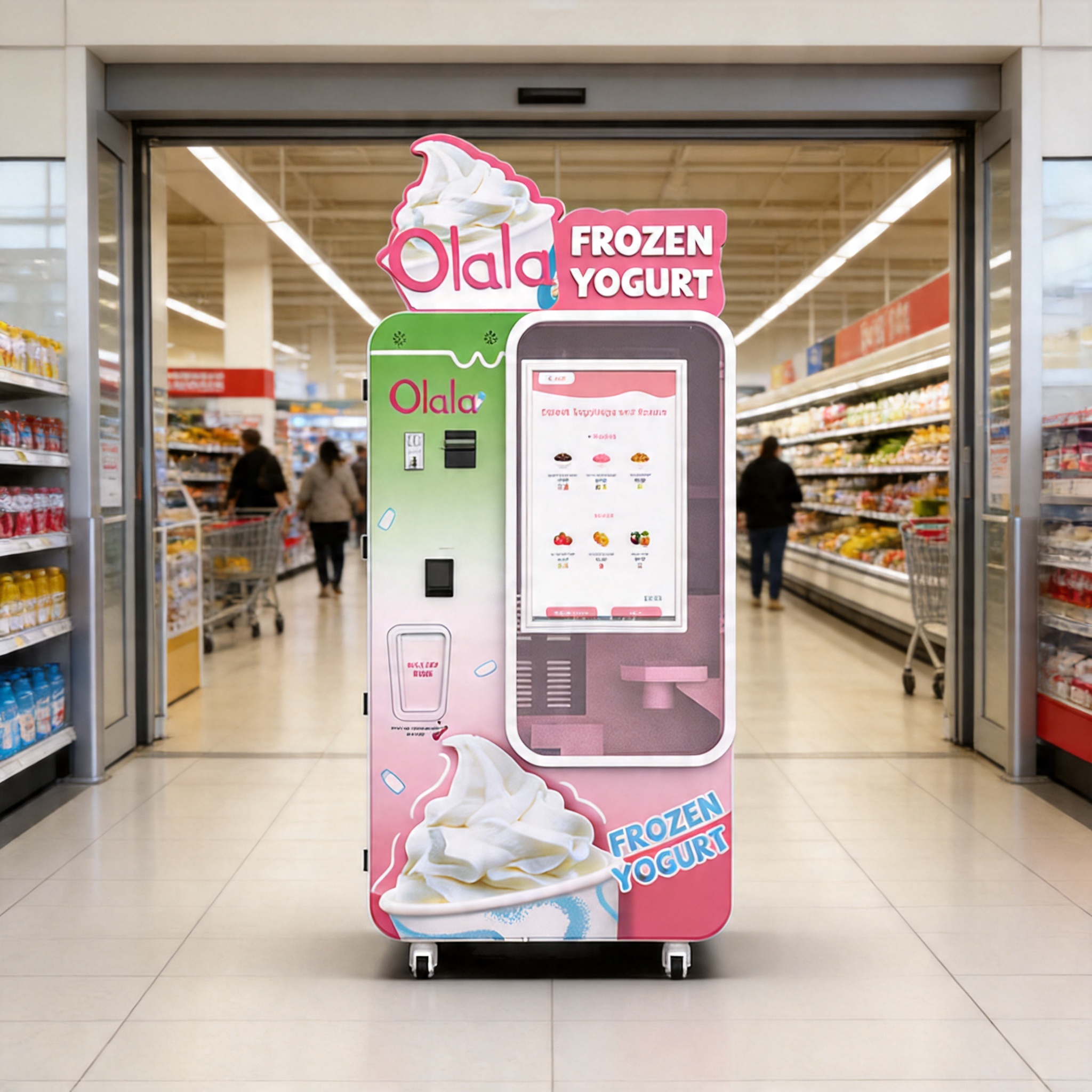
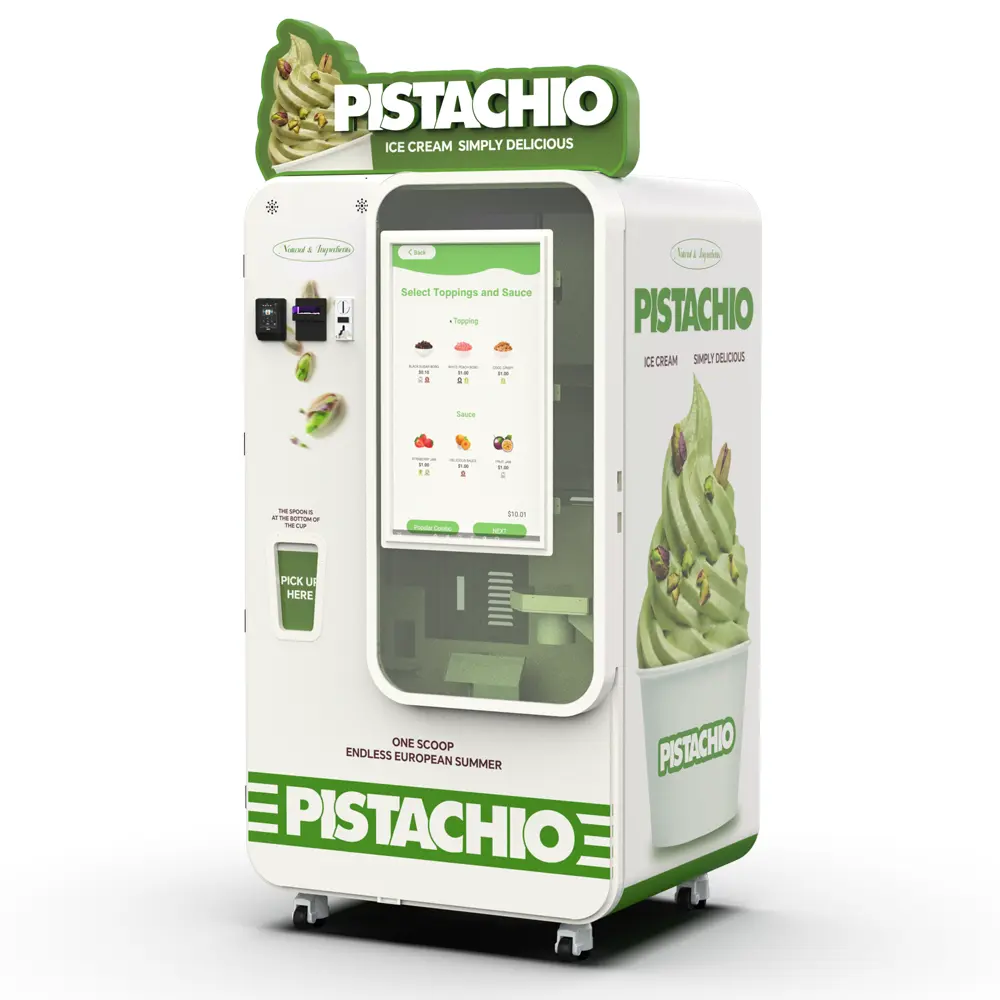
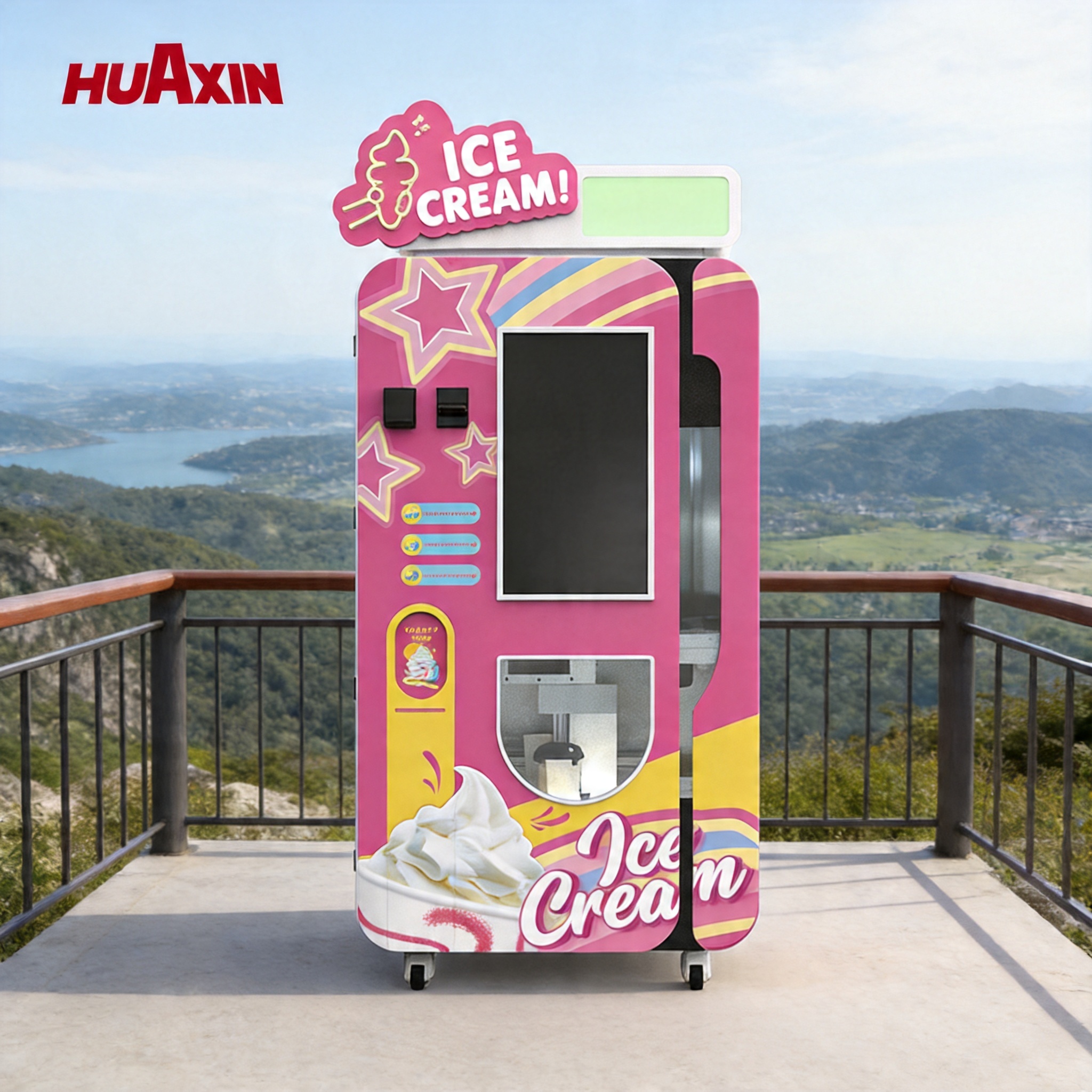
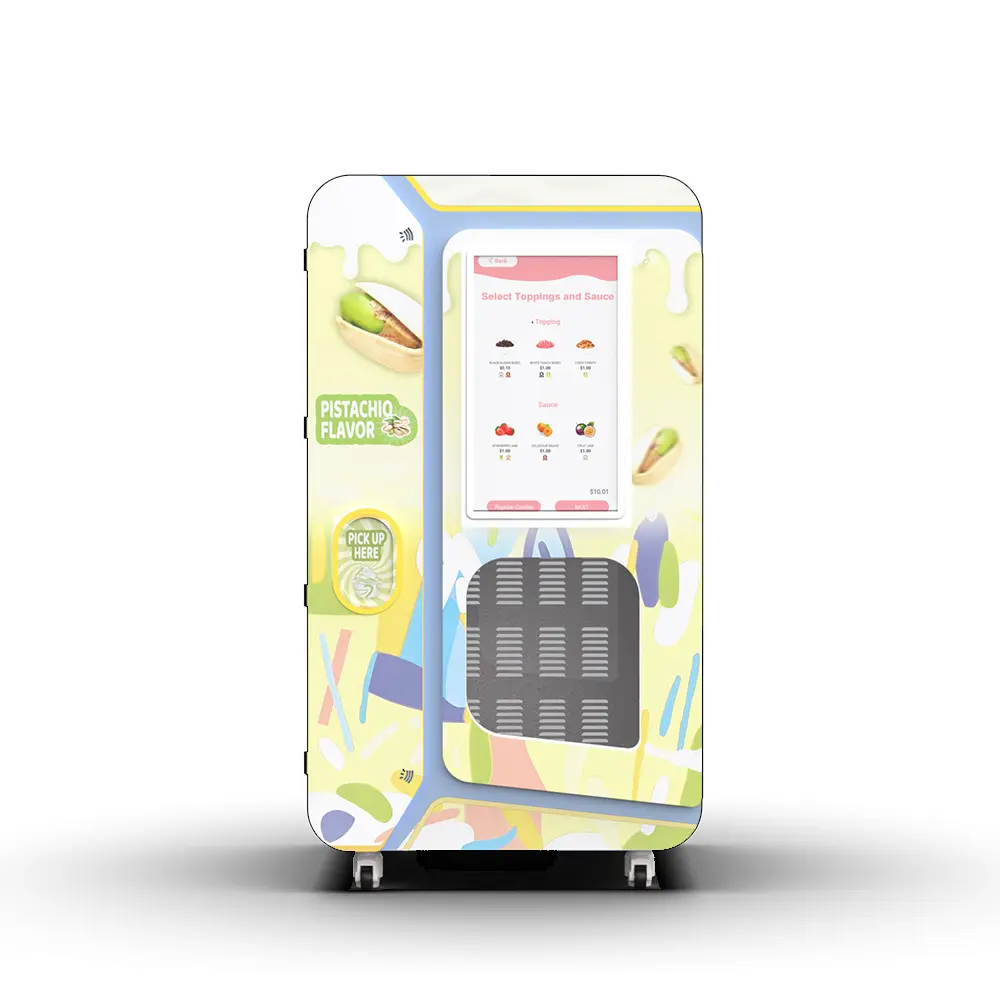
Ice Cream Vending Machine Cost: Machine, Shipping, Ingredients and Operation
Learn the real ice cream vending machine cost beyond the machine itself. This guide breaks down machine configuration, shipping, ingredients, operating expenses, and how to request an accurate commercial quote
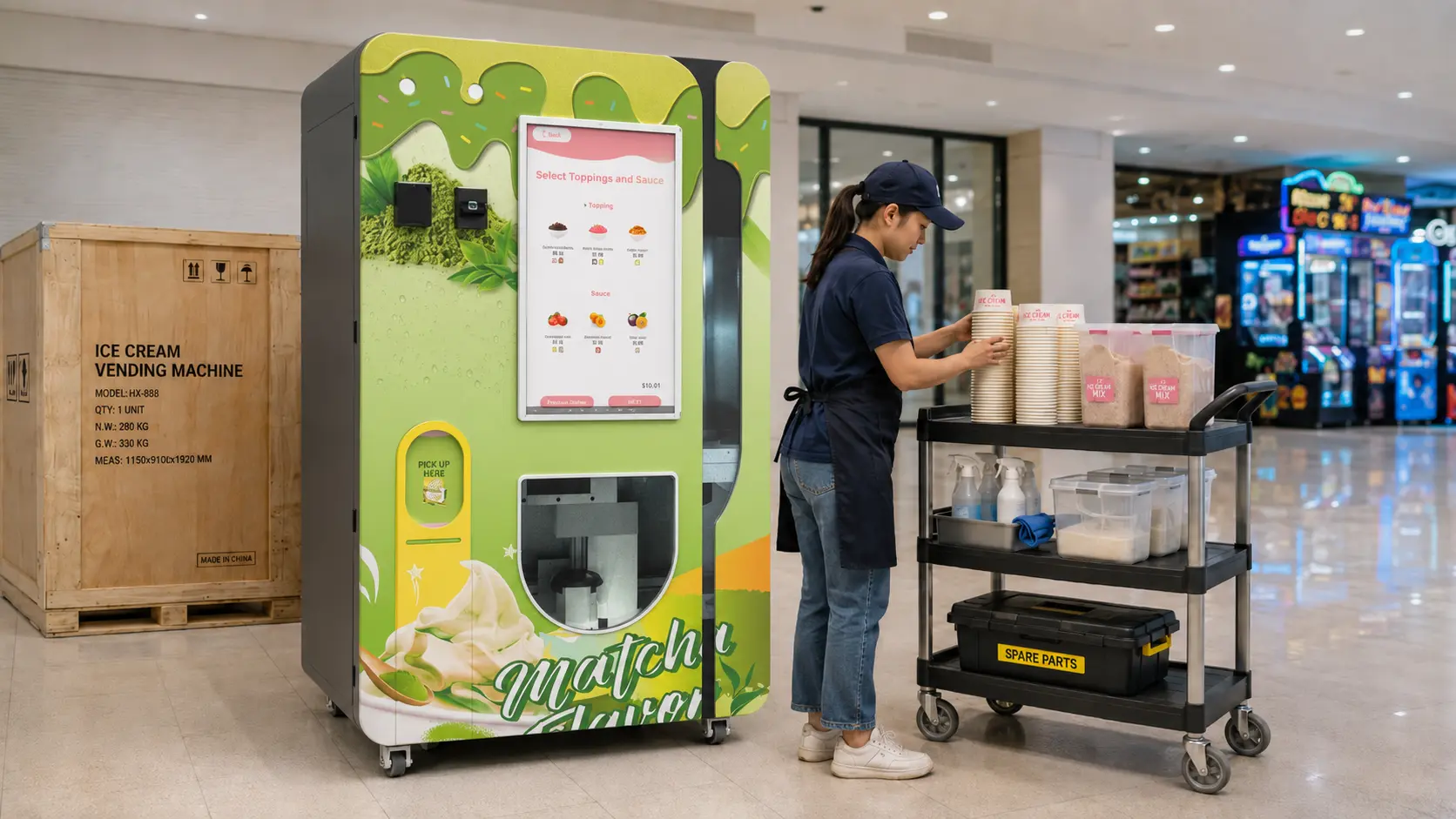
When buyers ask about ice cream vending machine cost, they often expect a single number. That is usually the first mistake. In commercial vending, the machine price is only one part of the total cost of ownership. A quote that looks low at first can become much less attractive once shipping, import charges, ingredients, paper cups, site-related expenses, payment integration, cleaning, and maintenance are added.
This is where many new projects go wrong. The buyer compares two machine prices, assumes the lower quote is the better deal, and only later realizes that one machine includes a larger touchscreen, stronger refrigeration, more suitable payment options, better capacity, export packaging, and remote monitoring, while the cheaper one does not.
For operators, distributors, investors, and project buyers, the better question is not simply, “How much is the machine?” The better question is, “What will it cost to buy, ship, launch, and operate this machine in the real world?”
This guide breaks the answer into four practical parts:
- Machine
- Shipping
- Ingredients
- Operation
It also explains how to request an accurate quote instead of collecting random numbers that are impossible to compare.
Why the Lowest Machine Price Can Be Misleading
A commercial ice cream vending machine is not a standard cabinet with a coin slot. It is a small unattended dessert operation built into one unit. That means the quote can reflect major differences in:
- refrigeration and food-safe storage
- payment hardware
- touchscreen quality
- cup and ingredient capacity
- automation level
- software and remote monitoring
- export packaging
- spare parts support
- cleaning and maintenance requirements
A low machine price may exclude key items that matter later. A higher price may actually reduce operating risk because the machine is easier to manage, more suitable for the target market, or less likely to create downtime.
In practice, buyers should think in terms of total cost of ownership (TCO) rather than unit price alone.
A practical cost framework
| Cost Category | What It Usually Covers | Why It Matters |
|---|---|---|
| Machine | Equipment body, hardware configuration, automation features | Determines performance, capacity, usability, and long-term reliability |
| Shipping | Packaging, freight, insurance, customs, duties, local delivery | Can significantly change the final landed cost |
| Ingredients & Consumables | Mix, cups, spoons, toppings, cleaning materials | Required before the machine can start operating |
| Operation | Labor, refilling, cleaning, site fees, maintenance, payment fees | Determines whether the machine remains commercially viable |
If a buyer compares only the first line, the rest of the project budget can easily be underestimated.
Part 1: Machine Cost — What Changes the Equipment Price?
Not all automatic ice cream vending machines are built to the same commercial standard. Some differences are visible immediately. Others only become obvious after installation.
1. Touchscreen and customer interface
The screen is not just decoration. It affects how easily customers can understand the product, place an order, and complete payment.
A larger, well-designed commercial touchscreen may support:
- clearer menus
- stronger product presentation
- better branding
- multilingual instructions
- easier first-time use
- promotional content
For a mall, family entertainment center, or airport location, the touchscreen has a direct effect on customer confidence. For a smaller hotel or office location, a more basic interface may still be acceptable.
2. Refrigeration and food-safe temperature control
This is one of the most important commercial cost drivers. A machine that handles soft serve, frozen yogurt, sorbet, or açaí-style products needs stable cold storage and consistent production performance.
Refrigeration affects:
- ingredient safety
- product texture
- serving consistency
- performance during peak hours
- maintenance frequency
- equipment lifespan
For many buyers, this is where “cheap” becomes expensive. A low-cost unit that cannot maintain stable performance in a busy location can create waste, customer complaints, and lost sales.
3. Payment system
Payment setup is a major pricing variable because different markets require different solutions.
Depending on the country and location, buyers may need:
- bank card acceptance
- NFC or contactless payment
- QR payment
- local wallet integration
- coin or bill options
- MDB-based integration with a local payment provider
A machine that looks affordable may not include the payment hardware or integration needed for the target market.
4. Capacity and internal storage
Capacity affects both the equipment price and the daily operating workload. Buyers should ask:
- How much base mix can the machine hold?
- How many cups can it store?
- How often will it need refilling?
- Is the capacity suitable for expected daily traffic?
A machine installed in a busy family entertainment center may need stronger capacity than one installed in a hotel or office location.
5. Automation level
The phrase “automatic ice cream vending machine” covers a wide range of automation. Some units are more automated in cup handling, serving flow, and pickup design than others.
Higher automation can improve consistency and reduce manual intervention, but it can also affect the quote. The right balance depends on the project. A high-traffic commercial site often justifies stronger automation more than a low-volume location.
6. Remote management
Remote management is especially important for multi-location operators. It can help monitor:
- machine online status
- ingredient levels
- sales data
- temperature alerts
- faults
- cleaning reminders
For a single test machine, remote monitoring is useful. For 3, 5, or 20 machines, it becomes operationally important.
Configuration vs price impact
| Configuration Area | Lower-Cost Setup | Higher-Cost Setup | Who Usually Needs the Higher Setup |
|---|---|---|---|
| Screen | Basic or smaller display | Larger branded touchscreen | Mall, FEC, airport, high-traffic retail |
| Refrigeration | Basic commercial cooling | Stronger stable temperature control | Fresh soft serve, frozen yogurt, heavy-use sites |
| Payment | Limited or simple payment setup | Multi-payment, local integration | Export buyers, public commercial locations |
| Capacity | Lower cup or mix storage | Higher storage and serving continuity | Busy multi-hour traffic sites |
| Remote System | Minimal or none | Sales, alerts, monitoring | Multi-location operators, distributors |
This is why a lower quote and a better quote are not always the same thing.
Part 2: Shipping Cost — What Buyers Often Forget
For international B2B buyers, shipping is usually the second major cost block after the machine itself.
A quote may be based on FOB, CIF, or another trade term, but buyers still need to understand the full landed picture.
Typical shipping-related budget items
- export wooden packaging or crate protection
- origin inland transport
- export declaration
- ocean freight or air freight
- cargo insurance
- destination port charges
- customs clearance
- import duties or taxes
- local delivery from port or warehouse to site
One reason buyers underestimate the total cost is that “shipping” often gets treated like a single line. In reality, it is a chain of separate cost items.
Huaxin export reference data
For a typical full-size Huaxin machine, buyers can use the following planning reference:
- Dimensions: approximately 1180 × 1100 × 2130 mm
- Weight: approximately 500 kg
- Volume: approximately 2.76 CBM
Container reference planning:
- 20-foot container: around 10 machines
- 40-foot high cube container: around 22 machines
These are useful planning numbers because shipping economics change significantly by quantity:
- 1 machine: often higher unit freight cost, especially under LCL
- 3–5 machines: shared logistics efficiency begins to improve
- 10+ machines: container-based planning becomes more efficient
Why landed cost can vary so much
The same machine shipped to the Middle East, Europe, Australia, or Latin America will not have the same landed cost. Differences come from:
- freight distance and route
- import procedures
- destination charges
- duty and tax regime
- local delivery distance
- whether the buyer needs door delivery or port delivery
This is why serious buyers should not compare machine price without asking about vending machine landed cost.
Part 3: Ingredients and Consumables — The Budget Starts Before Launch
Many first-time buyers budget for the machine and shipping, then forget the machine cannot start selling without operating stock.
Typical ingredient and consumable cost items
- base mix or powder
- water or milk input depending on setup
- paper cups
- spoons
- toppings or dry ingredients
- sauces
- cleaning products
- replacement seals or food-contact consumables
If the product strategy is soft serve only, the ingredient plan may be simpler. If the concept includes frozen yogurt or a topping-oriented menu, the consumable cost structure becomes more complex.
Why consumables matter in the budgeting phase
Consumables affect:
- opening budget
- pricing strategy
- daily operating routine
- gross margin planning
- restocking frequency
For example, a basic vanilla soft serve menu usually has a different operating profile from a frozen yogurt concept with fruit, nuts, granola, and sauce options.
Buyers do not need to calculate a perfect profit model at the quotation stage, but they do need to know that soft serve vending machine price is not the same as the total commercial setup cost.
Ingredient and consumable planning table
| Item | One-Time or Recurring | Budget Purpose |
|---|---|---|
| Base mix / powder | Recurring | Core product cost |
| Cups and spoons | Recurring | Packaging and service |
| Toppings / sauces | Recurring | Menu value and upsell potential |
| Cleaning agents | Recurring | Food safety and maintenance |
| Replacement seals / small consumables | Recurring | Preventive maintenance |
| Launch stock | Initial purchase | Needed before first sales |
A buyer who requests only the machine price often misses this entire layer.
Part 4: Operation Cost — The Part That Decides Real Commercial Viability
Operation cost is where the “ownership” part of total cost of ownership becomes real.
Even with an automatic machine, operators still need to plan for:
- ingredient refilling
- cup replenishment
- cleaning
- routine checks
- minor maintenance
- payment processing fees
- software or SIM/network charges if applicable
- site rent or revenue share
- labor time
Operation does not mean full-time staff
One advantage of an automatic machine is that it reduces on-site labor compared with a traditional dessert kiosk. But reduced labor is not zero labor.
Someone still needs to:
- restock the machine
- check sanitation
- respond to alerts
- handle faults
- manage consumables
- review performance
This is especially important for buyers entering the business for the first time. A good machine can reduce staffing pressure, but it does not remove the need for operational discipline.
Site-related cost also matters
Location type changes operational cost and commercial expectations.
A shopping mall may require:
- higher branding quality
- better payment setup
- stronger weekend support
- potential mall rent or revenue share
A school or factory may need:
- simpler payment logic
- moderate capacity
- more predictable refill pattern
A hotel or gym may have lower traffic but different customer expectations.
Budget differences by location type
| Location Type | Typical Budget Focus | Why It Changes Cost |
|---|---|---|
| Shopping Mall | Strong screen, payment, branding, higher site cost | Customer-facing quality matters more |
| FEC / Theme Venue | Capacity, speed, refill planning | Weekend peaks can be strong |
| Hotel | Premium appearance, quiet operation, moderate volume | Lower traffic but quality expectations |
| School / Campus | Simpler payment, stable operation | Controlled environment, repeat traffic |
| Gym / Wellness Site | Product positioning, toppings, clean presentation | Menu concept affects consumables |
Budget differences by purchase quantity
| Purchase Quantity | Main Budget Logic |
|---|---|
| 1 machine | Test budget, higher unit shipping, simple launch stock |
| 3–5 machines | Better logistics efficiency, stronger need for remote management |
| 10+ machines | Container planning, distributor logic, spare-parts planning, training value |
This matters because a first machine and a regional rollout should not be budgeted in the same way.
How to Ask for an Accurate Quote Instead of a Rough Number
If a buyer simply asks, “What is your best price?”, the supplier can only give a rough answer. A useful quote requires project information.
Effective quotation checklist
Before asking for price, prepare:
- target country
- target city or port
- expected purchase quantity
- target location type
- product type: soft serve, frozen yogurt, sorbet, or açaí-style
- payment requirements
- target daily sales estimate
- expected launch time
- whether shipping support is needed
- whether the buyer needs port delivery or door delivery
This is the difference between collecting prices and collecting usable quotations.
Quote request template
Country:
Target city / destination port:
Expected quantity:
Location type: Mall / FEC / Hotel / School / Gym / Other
Product type: Soft serve / Frozen yogurt / Sorbet / Açaí-style
Expected daily sales:
Payment requirements: Card / NFC / QR / Coin / Other
Need shipping estimate: Yes / No
Preferred delivery term: FOB / CIF / Other
Need local language or market-specific setup: Yes / No
Planned launch time:
Other requirements:
A supplier can give much better configuration and budget advice when this information is available.
FAQ
Does ice cream vending machine cost usually include shipping?
Not always. Many buyers first receive the machine price only. Shipping, packaging, customs-related charges, and local delivery may be quoted separately depending on the trade term.
What is included in the total cost of ice cream vending machine ownership?
A realistic total cost usually includes the machine, payment setup, shipping, import-related cost, ingredients, cups, cleaning supplies, operating labor, maintenance, and location-related expenses.
How much operating stock should I prepare before launch?
That depends on the concept and the expected traffic. At a minimum, buyers should prepare base mix, cups, spoons, cleaning products, and any toppings or sauces needed for the planned menu.
Is one machine much more expensive per unit than buying several?
Usually yes from a logistics perspective. A single unit often carries a higher freight cost per machine, while multi-unit orders can improve shipping efficiency and support container planning.
How can I get an accurate quote quickly?
Provide the country, destination city or port, purchase quantity, location type, payment requirements, product type, target daily sales, and expected launch date.
Should I focus more on machine price or operating cost?
Both matter, but operating cost is what determines whether the project remains manageable after launch. A lower machine price does not automatically mean lower total cost of ownership.
Conclusion
The real ice cream vending machine cost is not just the equipment price. It is the combined cost of the machine, shipping, ingredients, and operation.
That is why buyers so often get misled by a low starting number. The machine may look affordable, but the real commercial setup still depends on configuration, freight, import charges, consumables, and day-to-day operating demands.
For a first-time operator, the safest approach is to budget in four layers:
- Machine
- Shipping
- Ingredients
- Operation
For multi-location operators and distributors, the same logic applies, but with even more emphasis on payment compatibility, remote management, logistics efficiency, and refill planning.
If you want a realistic budget instead of a rough number, prepare the right information before requesting a quote: your country, target city or port, expected quantity, location type, product type, payment needs, expected daily sales, and target launch time.
That will help a supplier recommend the right commercial configuration instead of just sending the lowest possible machine price.
References
-
U.S. Food and Drug Administration (FDA) — Food Code 2022
-
National Automatic Merchandising Association (NAMA) — Multi-Drop Bus / Internal Communication Protocol
-
U.S. Bureau of Labor Statistics (BLS) — food service and service occupation cost reference materials
-
NAMA industry materials on convenience services and vending operations
-
Public trade and logistics references for container planning and international shipping terms
References / Sources