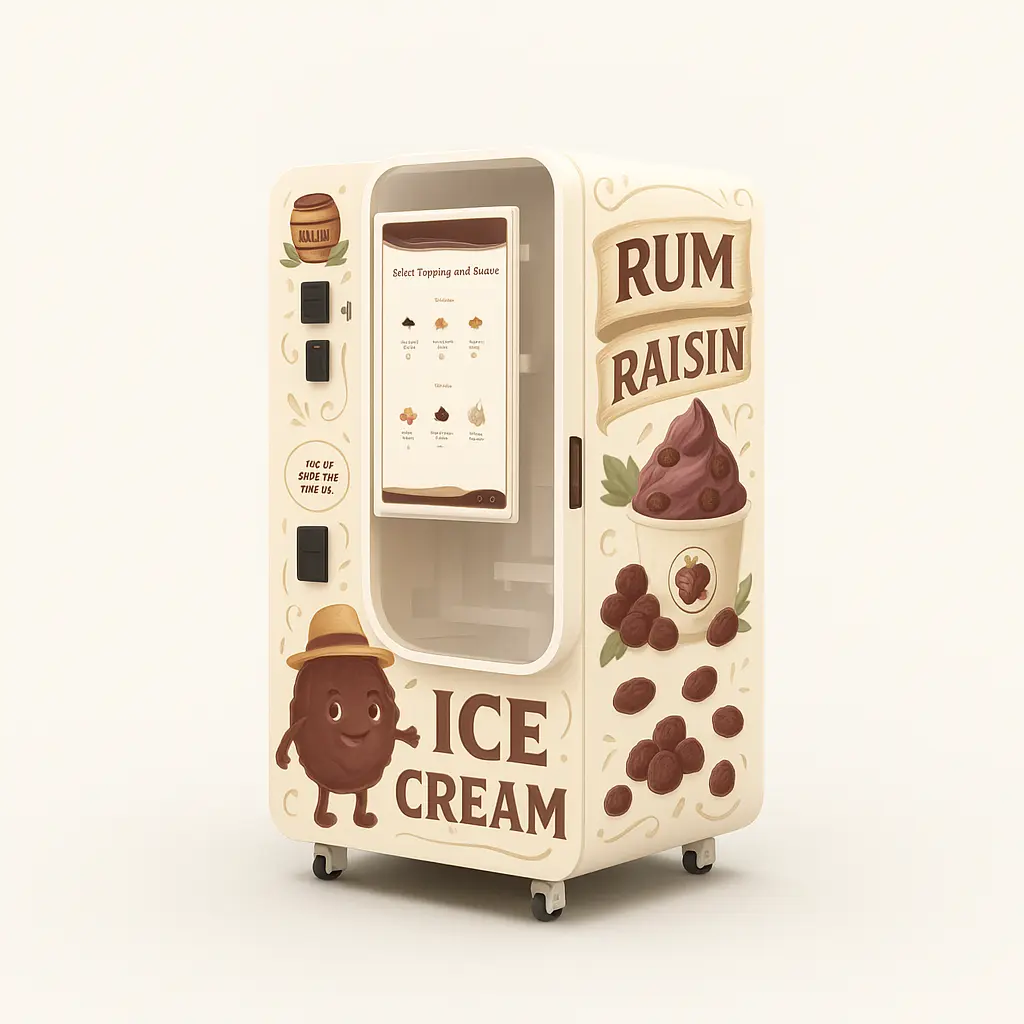
Tired of long queues when craving ice cream? The fully automatic soft-serve robot solves this hassle. Eliminating the need for manual preparation by staff, these machines operate efficiently 24/7, delivering soft-serve ice cream with consistent texture and delicious flavor to consumers. Unlike traditional ice cream machines that require constant human intervention, these robots achieve a closed-loop workflow—from raw material refrigeration to finished product delivery. To understand why they appeal to both businesses and consumers, we can break down their working process, advantages over conventional equipment, core configurations, and how equipment stability translates into tangible profits.
Working Process of the Fully Automatic Ice Cream Vending Machine
The automatic ice cream vending machine is a highly integrated electromechanical system. After a customer places an order and makes payment via the screen, the device switches from standby to production mode, with its core lying in the coordinated operation of various subsystems.
- Order Processing and System Response
Upon receiving the payment confirmation signal in real time, the machine's industrial control center parses the order details and simultaneously sends instructions to core modules including refrigeration, transmission, and cup dispensing. The device wakes up from low-power standby, and the compressor activates rapidly to enter high-efficiency cooling mode.
- Precision Cup Dispensing and Conveying Positioning
First, the ice cream container is prepared. The multi-helix structure inside the cup dispenser ensures only one paper cup is released at a time. Meanwhile, sensors monitor the cup position in real time to confirm accurate placement. Under the precise control of a stepping motor, the cup is smoothly and quietly transported to the discharge port via a conveyor belt.
- Synchronized Refrigeration and Quantitative Discharging
At the same time, powered by the refrigeration system, the milk slurry in the pre-cooling cylinder remains fresh, while the slurry in the freezing cylinder solidifies into semi-solid ice cream. The stirring mechanism operates at a constant speed to push the ice cream toward the discharge nozzle. A lifting rod ensures a precise amount of ice cream is evenly dispensed into the paper cup below.
- Topping Addition and Finished Product Assembly
If the order includes sauces or dry toppings, the system triggers the corresponding modules simultaneously. A dedicated sauce motor precisely dispenses pre-portioned sauces through food-grade hoses, completely isolating the ingredients from external contact. Meanwhile, a vibrating dry topping dispenser evenly sprinkles toppings over the ice cream surface, achieving standardized flavor combinations.
- Finished Product Delivery and User Interaction
The cup filled with ice cream is conveyed to the pickup window via the conveyor belt. Sensors at the window detect the cup's arrival and automatically open the pickup door. The entire production process is visible through a transparent panel, enhancing the consumer experience while ensuring food preparation transparency.
- Autonomous Maintenance and Energy Efficiency Management
After the ice cream is dispensed, the system can initiate an automatic cleaning cycle on command, thoroughly flushing the mixing cylinder and pipelines in a short time. During non-business hours, the device switches to low-power standby mode, significantly reducing the operational load on core components while maintaining essential hygiene standards—achieving both energy savings and extended equipment lifespan.
From order placement to product delivery, the entire process typically takes just 15 to 30 seconds. This is the result of seamless collaboration between the intelligent control system, high-precision actuators, efficient refrigeration units, and hygiene assurance systems, fully demonstrating the high integration and engineering reliability of modern automated food equipment.
Advantages of Fully Automatic Ice Cream Vending Machines Over Traditional Models
The gap between robotic vending machines and traditional models goes far beyond unattended operation—it addresses businesses' core pain points: limited space, high labor costs, and slow serving speeds.
- Compact Size for Flexible Placement
Traditional ice cream machines are bulky and immobile, wasting valuable space in high-rent locations such as shopping malls. In contrast, fully automatic ice cream robots occupy only 0.85–0.95 square meters and come with wheels, making them easy to move by a single person. For example, the owner of a small café in London placed the machine right outside the shop, turning an underutilized corner into a profitable revenue stream.
- Eliminate Hidden Labor Costs
Preparing a single serving of ice cream with a traditional machine requires staff to wash hands, retrieve a cup, dispense the ice cream, and clean up—taking at least 2 minutes per serving, leading to exorbitant long-term labor costs. Robotic machines enable fully self-service operation: customers place orders via a touchscreen, with support for cash, card, and mobile payments, and contactless pickup—all completed in under a minute.
This not only drastically cuts labor expenses but also recovers 30% of impulse buyers who would otherwise leave due to long queues. After switching to fully automatic ice cream vending machines, a fast-food chain in Australia saw a 40% increase in ice cream sales, as more customers were willing to place orders instantly without waiting.
- Mobile App Control for Time and Effort Savings
Traditional machines lack real-time data tracking, forcing businesses to physically check raw material levels and sales performance on-site. In contrast, fully automatic soft-serve ice cream vending robots are equipped with the Master OS mobile app, allowing merchants to remotely monitor temperature, ingredient stock, and revenue data. They can also adjust prices, perform one-click fault diagnosis, and even automate revenue sharing with shopping malls—streamlining collaboration. Lisa, a business owner, shared: "I used to visit the machine every day to check supplies; now I can manage everything from home and receive alerts when ingredients are running low."
Core Functional Configurations of Ice Cream Vending Robots
A reliable ice cream vending robot relies on the synergy of four core modules, traetlorming an ordinary vending machine into a self-sustaining revenue generator.
- Intelligent Control System—the "Brain" of the Machine
The device's core control unit acts as its brain, coordinating all processes from refrigeration to cup dispensing with a much lower error rate than traditional controllers. It supports multiple languages and mainstream payment methods, which is why Huaxin's equipment is sold in 33 countries, adapting seamlessly to local consumer habits.
- High-Efficiency Refrigeration System—the Backbone of Continuous Operation
The performance of the refrigeration system directly determines product quality and the device's continuous operation capability. Modern high-end models typically use advanced inverter compressors, offering two key benefits: first, ultra-fast response—reaching operating temperature within seconds of startup to meet on-demand consumer needs; second, exceptional durability—advanced cooling control technology ensures the machine can produce hundreds of servings consecutively in high-temperature environments while maintaining stable temperatures. This effectively prevents the downtime issues common with traditional machines during peak sales periods, ensuring uninterrupted operation during critical revenue-generating hours.
- Precision Transmission and Sensing System—the Key to Accurate Execution
The precision transmission and sensing system ensures cups are accurately positioned. Its direct advantages include operational stability and broad scenario adaptability: extremely low mechanical failure rates reduce maintenance frequency, while its ultra-quiet operation (below 55 decibels) allows the machine to be placed in noise-sensitive environments such as libraries and high-end office buildings—expanding potential profit locations.
- Closed-Loop Hygiene and Safety System—the Foundation of Consumer Trust
For unattended food equipment, building hygiene trust is critical. This system establishes a complete closed loop covering materials, processes, and automated maintenance: food-grade contact materials and sealed pipeline slurry delivery prevent cross-contamination; automatic sterilization and one-click self-cleaning functions replace complex manual cleaning with standardized procedures, ensuring consistent hygiene control. This not only guarantees food safety but also builds consumer confidence in the machine's reliability—a valuable intangible asset that drives repeat purchases and brand reputation.
How Equipment Stability Drives Business Profits
For businesses, the ultimate value of a machine lies in its profitability—and equipment stability directly impacts profit margins.
- Minimize Downtime and Repair Costs
Frequent breakdowns lead to lost sales and high repair expenses. High-end equipment uses premium components designed to withstand millions of cycles of operation. Additionally, its modular design allows 98% of faults to be resolved via remote guidance. Compared to traditional machines, which incur tens of thousands of dollars annually in maintenance and labor costs, automated systems boast extremely low upkeep expenses.
- Boost Sales Volume and Profit Margins
The machine's speed and quality directly drive revenue growth. With 15-second serving times, it captures impulse buyers; KFC-level creamy texture boosts repeat purchase rates; and exclusive cheese flavors can increase customer retention by an additional 30%.
Each serving of ice cream costs just $0.2–$0.25 to produce, with a selling price of $0.8–$1.35—delivering a gross profit margin of over 65%. For example, a machine installed in a prime U.S. shopping mall sells 200 servings daily. After deducting a monthly rent of $200 and electricity costs of $16, it generates a net profit of $1,600 per month. In contrast, a traditional machine at the same location only sells 300 servings monthly, with rent costs exceeding revenue—plunging the business into losses.
- Additional Revenue Streams via Advertising
The machine's large order screen can also display advertisements. Lisa's mall-installed machine earns an extra $270 monthly from ad revenue, turning the device into a dual-income platform combining ice cream sales and advertising—further boosting profitability.
Technology is ultimately designed to serve people. The fully automatic soft-serve ice cream vending robot is more than just an ice cream machine—it is a simple, intelligent retail solution that makes buying and selling ice cream easier than ever. Its streamlined workflow, reliable core configurations, and strong link to business profitability make it the ideal choice for both small entrepreneurs and large chain brands.