How Much Does an Ice Cream Vending Machine Cost? A Commercial Buyer’s Guide
Learn how much an ice cream vending machine costs, what affects the quote, and how buyers should budget for equipment, payment systems, shipping, duties, consumables, and after-sales support.
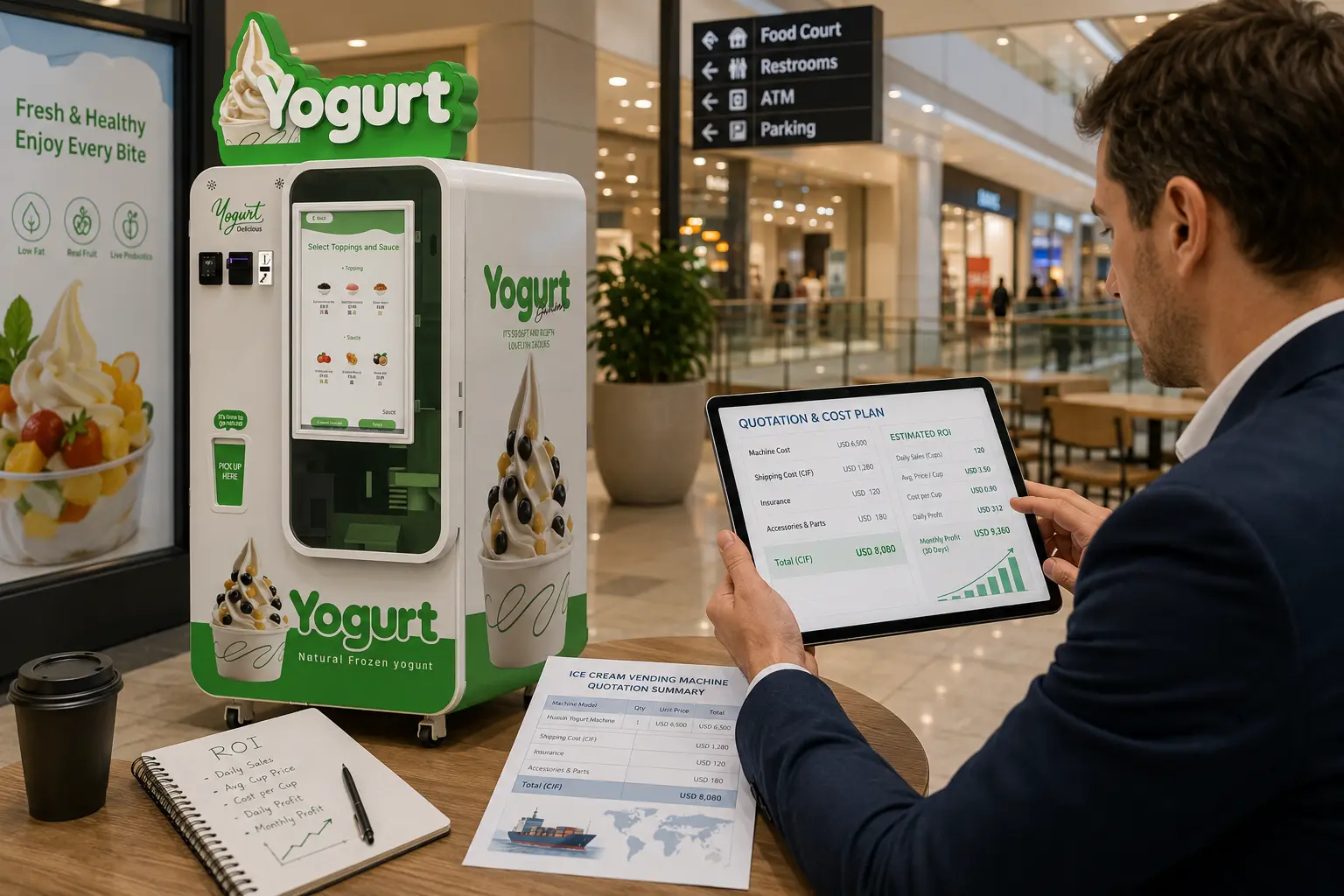
If you are asking how much does an ice cream vending machine cost, the honest answer is: it depends on what kind of machine you are actually buying. A simple frozen product vending machine, a compact countertop ice cream vending unit, and a full-size automatic soft serve vending machine are not priced the same way. For commercial buyers, the machine price is only one part of the budget. Payment systems, refrigeration design, screen size, capacity, remote monitoring, shipping, import taxes, consumables, spare parts, and after-sales support all affect the real investment.
That is why serious buyers should not compare only the lowest machine price. A low quote may look attractive at first, but if it excludes payment modules, export packaging, local compliance documents, remote monitoring, or shipping, the final cost can become much higher after purchase.
This guide explains how commercial buyers should understand equipment cost, what affects the quotation, and what information to prepare before contacting a supplier.
1. Why Buyers Should Not Look Only at the Machine Price
Many first-time buyers ask suppliers one short question: “How much is the machine?”
This is understandable. Every project needs a budget. But in the automatic ice cream vending business, this question is too simple.
The phrase “ice cream vending machine” can mean several different things:
| Machine Type | What It Sells | Cost Logic | Suitable Buyer |
|---|---|---|---|
| Packaged frozen ice cream vending machine | Pre-packed bars, cups, or frozen snacks | Lower equipment complexity | Offices, schools, factories, break rooms |
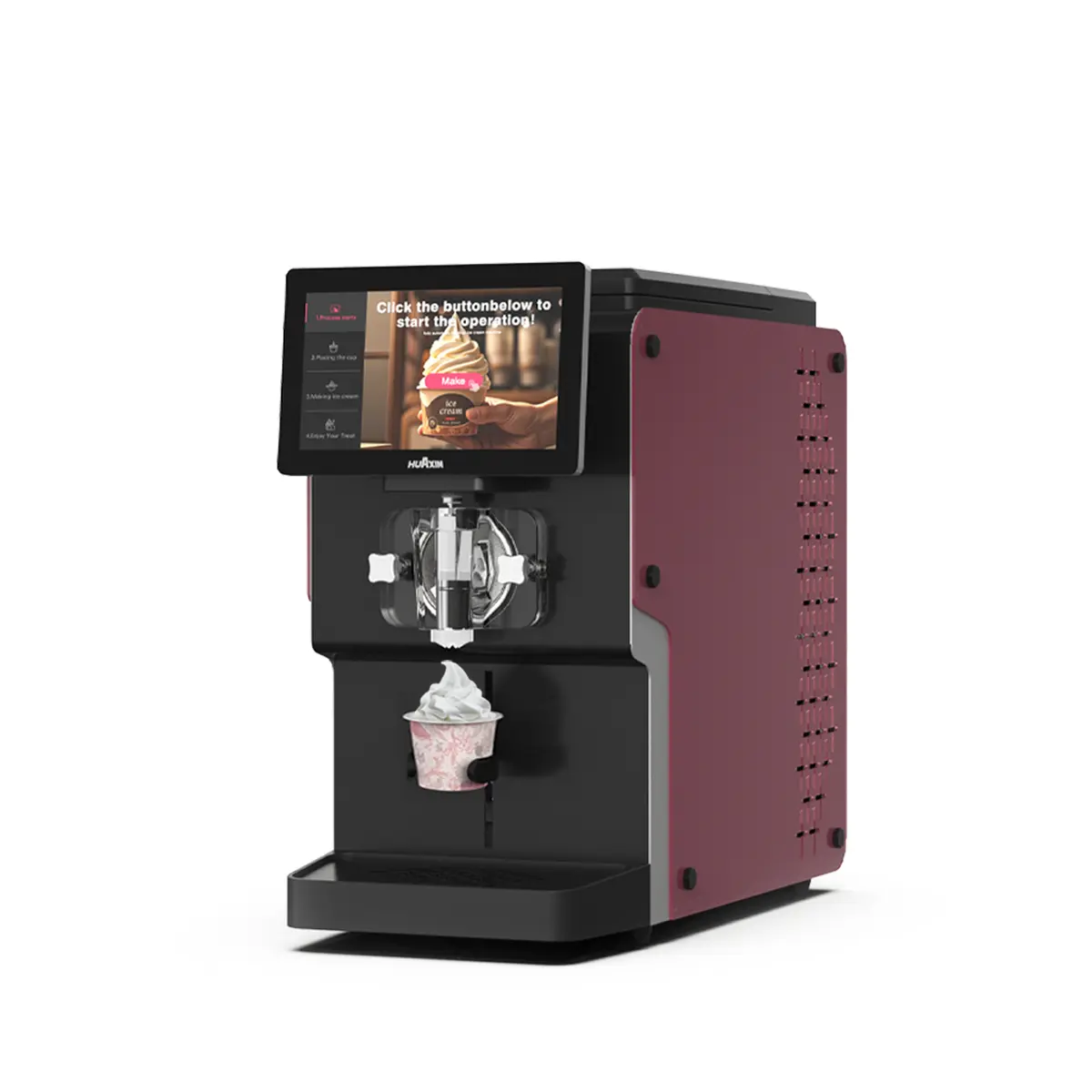
| Compact countertop vending machine | Small-format self-service ice cream or soft serve | Smaller footprint, lower capacity | Cafés, hotel lounges, small stores |
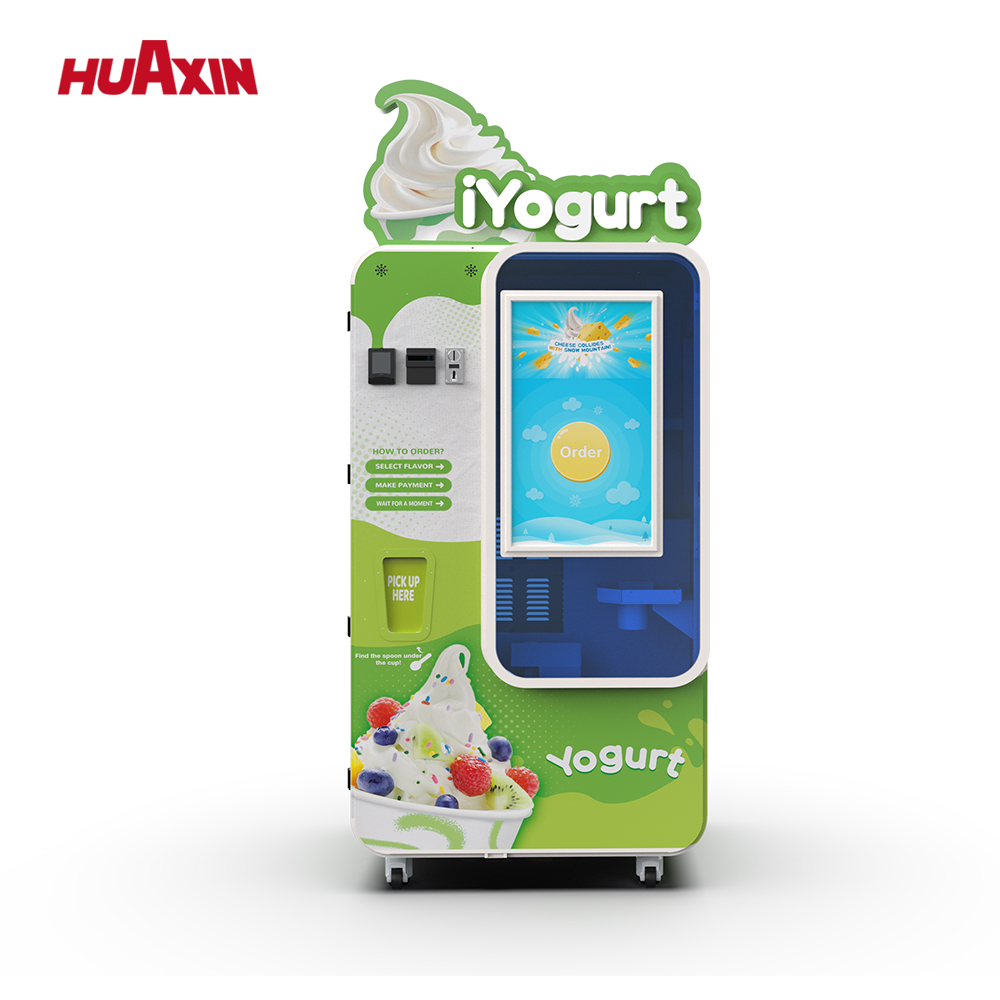
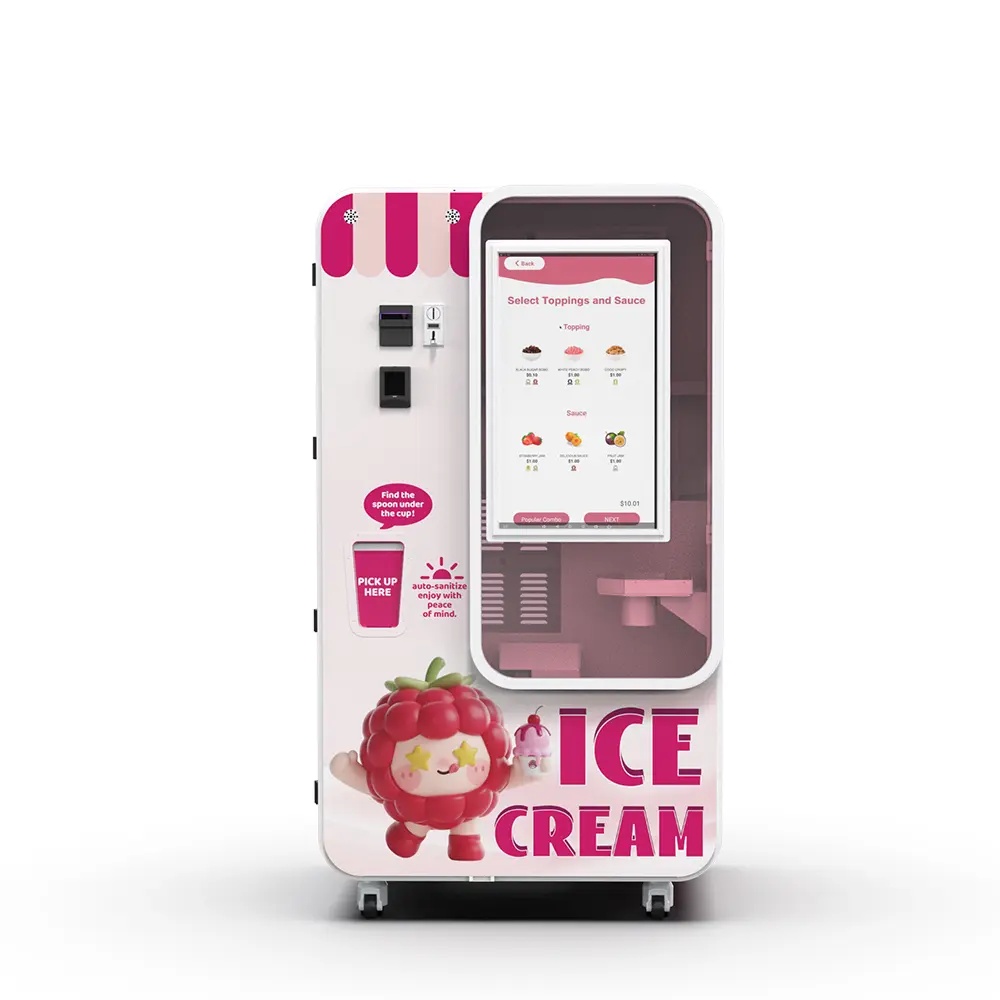
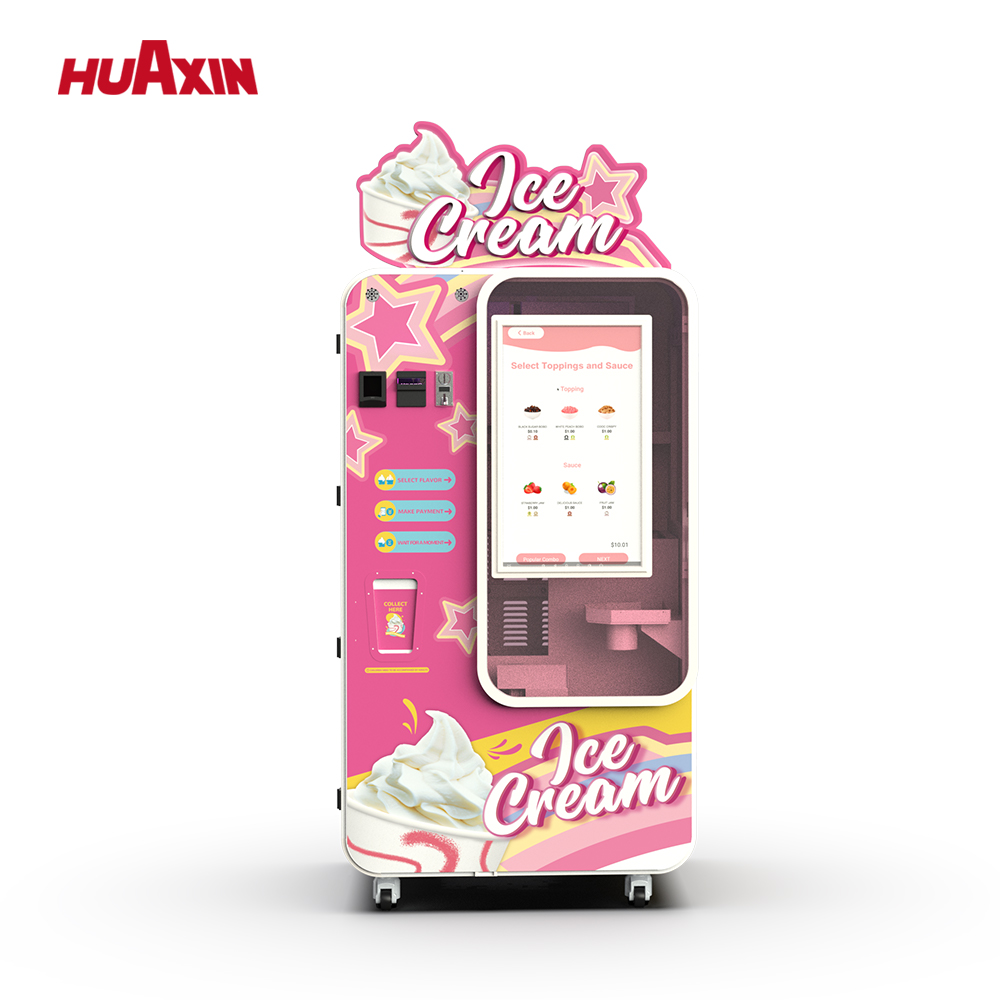
| Full-size automatic soft serve vending machine | Freshly made soft serve or frozen yogurt | Higher refrigeration, payment, dispensing, and software cost | Malls, campuses, cinemas, FECs, airports |
| Robotic or interactive ice cream vending machine | Automated dessert with visual production process | Higher automation and marketing value | High-traffic commercial venues, tourist sites |
| Full deployment package | Machine + shipping + installation + training + support | Higher total budget | Buyers who need turnkey launch support |
A buyer comparing these machines only by price may make the wrong decision. A packaged frozen vending machine may be cheaper, but it does not create fresh soft serve. A full automatic machine may cost more, but it can operate as a 24/7 unattended dessert retail point with payment, production, monitoring, and customer interaction.
The better question is not only “How much is it?”
The better question is:
“What machine configuration do I need for my country, location, payment habits, sales target, and operating model?”
2. A Practical Cost Range: What Public Market Prices Suggest
Public online pricing for ice cream vending equipment varies widely. Some public price guides suggest that basic or smaller-capacity models may start around several thousand dollars, while higher-end fully automated machines with refrigeration, IoT features, and advanced configurations may fall into a higher range. Other vending industry guides list ice cream vending machines around USD 5,000–14,000, while soft serve ice cream vending machines may be higher because they require mixing, refrigeration, and dispensing hardware.
These public ranges are useful as a starting point, but they should not be treated as a final quote.
For B2B buyers, the real commercial budget depends on:
- Machine type
- Order quantity
- Screen size
- Refrigeration system
- Payment configuration
- Ingredient capacity
- Cup capacity
- Remote management system
- Certifications
- Export packaging
- Customization
- Shipping destination
- Trade term: FOB, CIF, DDP, or buyer-arranged logistics
- Spare parts and technical support package
So when a buyer asks how much does an ice cream vending machine cost, a professional supplier should not only send a number. The supplier should explain what is included in the configuration and what additional budget items the buyer should prepare for.
3. Core Configurations That Affect the Cost
The cost difference between two machines often comes from the inside, not only from the outside appearance.
3.1 Screen Size and Ordering Interface
A commercial automatic ice cream vending machine is not just a box with a payment slot. The touchscreen is part of the customer experience.
A large screen can:
- Display flavors and product images
- Show price and payment steps clearly
- Guide first-time users
- Play promotional videos
- Support multiple languages
- Present nutritional or ingredient information
- Improve brand trust
For high-traffic locations such as shopping malls, airports, tourist attractions, or family entertainment centers, the screen directly affects customer confidence and conversion. A 32-inch touchscreen with branded UI is more expensive than a basic display, but it can make the machine feel like a professional dessert retail point rather than a low-end appliance.
3.2 Refrigeration System
Fresh soft serve, frozen yogurt, sorbet, and açaí-style products require stable temperature control. The refrigeration system affects texture, food safety, output speed, and machine uptime.
Buyers should ask:
- What compressor is used?
- Can the machine maintain ingredient temperature?
- Can it handle peak-hour production?
- Does it have temperature alerts?
- Can it stop vending if safe temperature is not maintained?
- How easy is it to clean the refrigerated ingredient system?
For commercial use, refrigeration is not a place to cut corners. A cheaper machine with weak cooling may lose sales during peak hours and create food safety risk.
3.3 Payment System
Payment configuration is one of the most important cost variables.
Common payment options include:
- Coin acceptor
- Bill validator
- Credit card reader
- NFC/contactless payment
- QR code payment
- Local mobile wallet
- MDB-compatible payment modules
Different regions require different payment strategies.
In the United States and Australia, card and contactless payment are often important. In parts of Southeast Asia and Latin America, QR payment or local wallets may be more relevant. In schools, factories, or closed locations, coin or bill payment may still be useful. In the Middle East and Europe, buyers may need a mix of card, NFC, QR, and sometimes cash options depending on the exact location.
A machine with only one payment method may be cheaper, but it can lose sales if customers cannot pay in their preferred way.
3.4 Capacity: Cups, Mix, and Toppings
Capacity affects both machine cost and operating efficiency.
Buyers should consider:
- How many cups can the machine store?
- How much ice cream mix can it hold?
- How often does it need refilling?
- How many toppings or sauces can it support?
- Is the machine designed for low-volume or high-volume locations?
For example, a machine placed in a family entertainment center on weekends needs higher capacity than a machine placed in a small office pantry. A machine that requires frequent refilling may reduce labor savings.
3.5 Remote Management
For one machine, remote monitoring is convenient. For multiple machines, it becomes essential.
A remote system can help operators monitor:
- Sales data
- Ingredient level
- Cup inventory
- Machine online/offline status
- Temperature alerts
- Fault codes
- Payment records
- Cleaning reminders
This matters because a commercial buyer is not only buying equipment. They are building a small automated retail system. If the machine has no remote management, the operator may need to visit locations blindly. If the machine sends alerts, the operator can plan restocking and maintenance more efficiently.
For multi-location buyers, remote management can reduce service trips and protect uptime.
4. Budget Items Beyond the Machine
The automatic ice cream vending machine cost is only one part of the total investment. A serious buyer should prepare a complete budget.
| Budget Item | Why It Matters |
| Machine price | The base equipment cost |
| Payment module | Different markets require different payment systems |
| Export packaging | Protects the machine during ocean freight |
| Inland transport in China | Needed from factory to port or warehouse |
| Ocean freight or air freight | Depends on destination, volume, and weight |
| Insurance | Protects against shipping damage or loss |
| Customs clearance | Required for import |
| Duties, VAT, or GST | Varies by country |
| Local delivery | Port-to-site or warehouse delivery |
| Initial cups and ingredients | Needed before launch |
| Spare parts kit | Reduces downtime after installation |
| Software or payment fees | May apply depending on payment provider |
| Site rent or revenue share | Often affects ROI more than machine price |
| Installation and training | Important for first-time operators |
| After-sales support | Protects long-term operation |
For export planning, Huaxin’s full-size automatic ice cream vending machine commonly uses a reference size of approximately 1180 × 1100 × 2130 mm, with a weight of around 380 kg and a volume of about 2.76 CBM. A common HS Code reference is 8476810000. Around 10 units can be considered for a 20-foot container, and around 22 units for a 40-foot high cube container, depending on final packaging and loading plan.
These numbers matter because shipping one machine by LCL is different from shipping 10 machines by container. A one-unit pilot has higher unit logistics cost. A distributor order can spread shipping, spare parts, and training cost across more machines.
5. Duties, Taxes, Consumables, and After-Sales Support
Many buyers forget that the machine is not the only investment.
Duties and Taxes
Import duties, VAT, GST, and customs fees vary by country. A buyer in Europe may need to consider VAT and CE documentation. A buyer in the United States may focus more on customs classification, food safety expectations, and payment integration. Buyers in the Middle East, Southeast Asia, Australia, and Latin America may face different certification, import, or local compliance requirements.
This is why the supplier should ask for the destination country and port before preparing a serious quote.
Consumables
The first machine cannot start selling without consumables.
Buyers should budget for:
- Ice cream mix or powder
- Cups
- Spoons
- Toppings
- Sauces
- Cleaning materials
- Packaging materials
- Replacement seals or simple wear parts
A machine may arrive ready to operate, but the business is not ready unless the operator has the right consumables and supply chain.
Spare Parts
A basic spare parts kit is especially important for overseas buyers.
Useful spare parts may include:
- Seals
- Sensors
- Tubes
- Nozzles
- Belts
- Small electrical parts
- Cleaning accessories
- Payment-related parts if required
Waiting for a small part to ship internationally can cause unnecessary downtime. For multi-machine buyers, a spare parts kit is not optional; it is part of the operating plan.
After-Sales Support
A cheaper machine can become expensive if support is weak.
Buyers should ask:
- Is remote technical support available?
- Are training videos provided?
- Is there an English manual?
- Can the supplier diagnose faults remotely?
- What spare parts are recommended?
- What is the warranty period?
- How fast can the supplier respond?
For a B2B buyer, after-sales support is not a bonus. It is part of the machine’s real value.
6. Budget Judgment by Location Type
Different locations require different machine configurations. Buyers should not use the same budget logic for every project.
Shopping Malls
Shopping malls need strong visual appeal, stable payment, and high reliability. A full-size automatic vending machine with a large screen, cashless payment, remote monitoring, and strong branding is usually more suitable.
Budget focus:
- Large screen
- Premium appearance
- Card/NFC/QR payment
- Remote monitoring
- Higher capacity
- Branding customization
Airports and Stations
Airports and stations need fast, simple, multilingual, and cashless-friendly operation. International travelers may not carry local cash.
Budget focus:
- Multi-language interface
- Card and NFC payment
- High uptime
- Simple pickup flow
- Stable remote monitoring
- Strong after-sales plan
Family Entertainment Centers and Theme Parks
These locations often have strong impulse demand from children and families. The machine needs to look fun, clean, and easy to use.
Budget focus:
- High visibility
- Fast production
- Colorful product display
- Weekend peak capacity
- Remote alerts
- Simple maintenance
Schools and Factories
Schools and factories may not need the most premium appearance, but they need reliability, simple operation, and sometimes coin or bill payment.
Budget focus:
- Coin/card payment options
- Easy cleaning
- Stable refrigeration
- Controlled menu
- Simple refill process
- Good durability
Gyms and Supermarkets
Gyms and supermarkets may prefer frozen yogurt, low-sugar, or health-positioned dessert products.
Budget focus:
- Formula compatibility
- Nutritional display
- Fruit/granola/nut topping strategy
- Cashless payment
- Premium but clean design
- Smaller footprint if needed
7. Budget Judgment by Purchase Quantity
Quantity changes the logic of the quote.
One Machine: Pilot Budget
A one-machine buyer usually wants to test the market. The key is not getting the lowest possible price, but reducing launch risk.
The quote should include:
- Machine configuration
- Payment setup
- Export packaging
- Shipping estimate
- Basic spare parts
- Training materials
- Recommended consumables
- Technical support plan
One machine can test customer acceptance, but it cannot fully test route efficiency.
Three to Five Machines: Small Route Operation
At this stage, the buyer is no longer only testing a product. They are testing an operating system.
The quote should include:
- Remote management
- Multi-machine monitoring
- Spare parts kit
- Maintenance SOP
- Payment reporting
- Refill planning
- Basic brand consistency
This quantity is suitable for operators testing several malls, schools, gyms, or entertainment locations.
Ten or More Machines: Distributor or Multi-Location Deployment
A 10+ machine order changes the focus again.
The buyer should care about:
- Bulk price
- Container loading plan
- Spare parts inventory
- Training system
- Local payment integration
- Branding support
- Regional cooperation
- Long-term after-sales process
A distributor should not only ask how much does an ice cream vending machine cost per unit. They should ask how the supplier can support repeated sales, installation, customer training, maintenance, and market expansion.
8. How to Request a Useful Quote from a Supplier
A useful quote starts with useful information. If a buyer only asks “price?”, the supplier can only give a rough answer.
Before requesting a commercial vending machine quote, prepare the following details:
| Information to Provide | Why It Matters |
| Country | Affects voltage, certification, payment, shipping, and import cost |
| Destination city or port | Needed for freight estimate |
| Purchase quantity | Affects unit price, container planning, and spare parts |
| Business type | Operator, distributor, mall owner, school, factory, investor |
| Location type | Mall, airport, gym, campus, FEC, supermarket, tourist site |
| Product type | Soft serve, frozen yogurt, sorbet, or açaí-style |
| Payment method | Coin, bill, card, NFC, QR, local wallet |
| Target daily sales | Helps recommend capacity and model |
| Customization needs | Exterior, logo, UI, language, menu, cup design |
| Certification requirement | CE, ETL, RoHS, SGS, or local documents |
| Shipping term | FOB, CIF, DDP, or buyer-arranged logistics |
| Expected launch date | Helps production and logistics planning |
This information helps the supplier recommend the right model instead of sending a generic price.
9. Quote Request Template
Buyers can copy and send this template to a supplier:
Country:
Destination city / port:
Purchase quantity:
Business type: Operator / Distributor / Mall / School / Factory / Investor
Target location: Mall / Airport / Gym / Campus / FEC / Supermarket / Tourist site
Indoor or outdoor placement:
Product type: Soft serve / Frozen yogurt / Sorbet / Açaí-style
Payment required: Coin / Bill / Card / NFC / QR / Local wallet
Target daily sales:
Customization needed: Exterior / Logo / UI / Language / Menu / Cup design
Certification required:
Shipping term preferred: FOB / CIF / DDP
Do you need cups or ingredients?
Do you need spare parts?
Expected launch date:
Additional questions:
A buyer who provides this information will usually receive a more accurate machine recommendation and quote.
10. FAQ
How much does an ice cream vending machine cost?
It depends on machine type, configuration, payment system, capacity, refrigeration design, customization, shipping destination, and order quantity. A packaged frozen vending machine and a full automatic soft serve vending machine are not the same product, so they should not be compared only by price.
Why do automatic ice cream vending machines cost more than normal vending machines?
They must handle refrigeration, ingredient storage, automatic production, dispensing, payment, cleaning, sensors, and software control. A normal snack vending machine only dispenses packaged products. A fresh ice cream vending machine operates more like a small automated dessert shop.
Does the quote usually include shipping?
Not always. Some quotes are FOB, some are CIF, and some may be DDP. Buyers should confirm whether ocean freight, insurance, destination charges, import duties, taxes, and local delivery are included.
What information should I provide to get an accurate quote?
Provide your country, destination port, purchase quantity, location type, product type, payment requirements, customization needs, certification requirements, target daily sales, and preferred shipping term.
Is one machine enough to test the business?
One machine can test customer acceptance at one location. However, it cannot fully test multi-location operations, refill routes, maintenance planning, or distributor scalability. Buyers planning long-term operation should evaluate future expansion from the beginning.
Which locations need higher configuration?
Shopping malls, airports, family entertainment centers, tourist attractions, and high-traffic commercial venues usually require stronger visual design, cashless payment, remote monitoring, and higher capacity. Schools, factories, and closed locations may focus more on durability, simple payment, and easy maintenance.
Conclusion: Ask for a Quote Based on Your Business Model, Not Just the Machine
When buyers ask how much does an ice cream vending machine cost, they are really asking: “What budget do I need to start this business safely?”
The answer depends on much more than equipment price.
A serious buyer should consider configuration, screen size, refrigeration, payment system, capacity, remote management, shipping, taxes, consumables, spare parts, and after-sales support. The right machine for a shopping mall in the United States may not be the same as the right machine for a school in Southeast Asia or a supermarket in Europe.
For global B2B buyers, the best way to get a realistic quote is to send clear project details: country, destination city, location type, expected purchase quantity, payment needs, and target daily sales.
Once the supplier understands your business model, they can recommend the right configuration and provide a quote that reflects real commercial use—not just the lowest number on a product page.
References / Sources
NAMA — New Census Shows Convenience Services Outpacing Much of Foodservice and Shifting Toward Tech-Enabled, Health-Forward Offeringshttps://namanow.org/new-census-reveals-shifts-in-convenience-services-industry/
NAMA — The State of Convenience Services Industry Census
https://namanow.org/foundation/census/
U.S. Bureau of Labor Statistics — May 2025 National Occupational Employment and Wage Estimates
https://www.bls.gov/news.release/ocwage.t01.htm
FDA — Food Code 2022
https://www.fda.gov/food/fda-food-code/food-code-2022
Virginia Administrative Code — Vending Machines, Automatic Shutoff Based on FDA Food Code Requirement
https://law.lis.virginia.gov/admincode/title12/agency5/chapter421/section1310/
References / Sources