Best Locations for Ice Cream Vending Machines: A Site Scoring Checklist
Use a 10-point checklist to compare ice cream vending sites by customer fit, dwell time, utilities, refill access and lease terms, then plan a measurable pilot
The best locations for ice cream vending machines combine a reason to buy dessert, time to stop, clear visibility and practical service access. Start with approved positions near mall seating, entertainment breaks, attraction rest areas or workplace food zones. Compare the exact position before committing to rent; a venue's total visitor count cannot tell you how many cups that position will sell.
Huaxin manufactures automatic ice cream vending machines. This checklist is our recommended way to compare candidate sites before a pilot. Its scores organize observations and unresolved work; they are not a sales forecast or a validated performance benchmark.
Watch where people pause and what they can buy
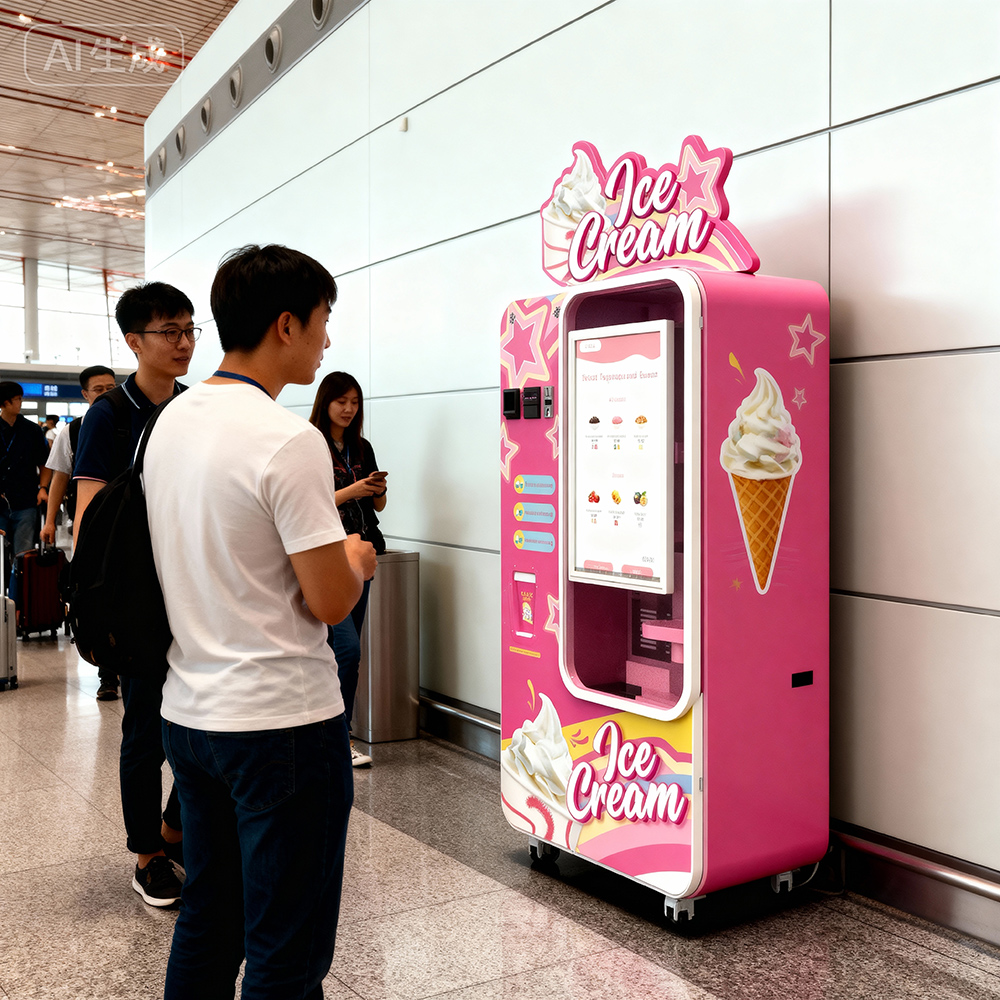
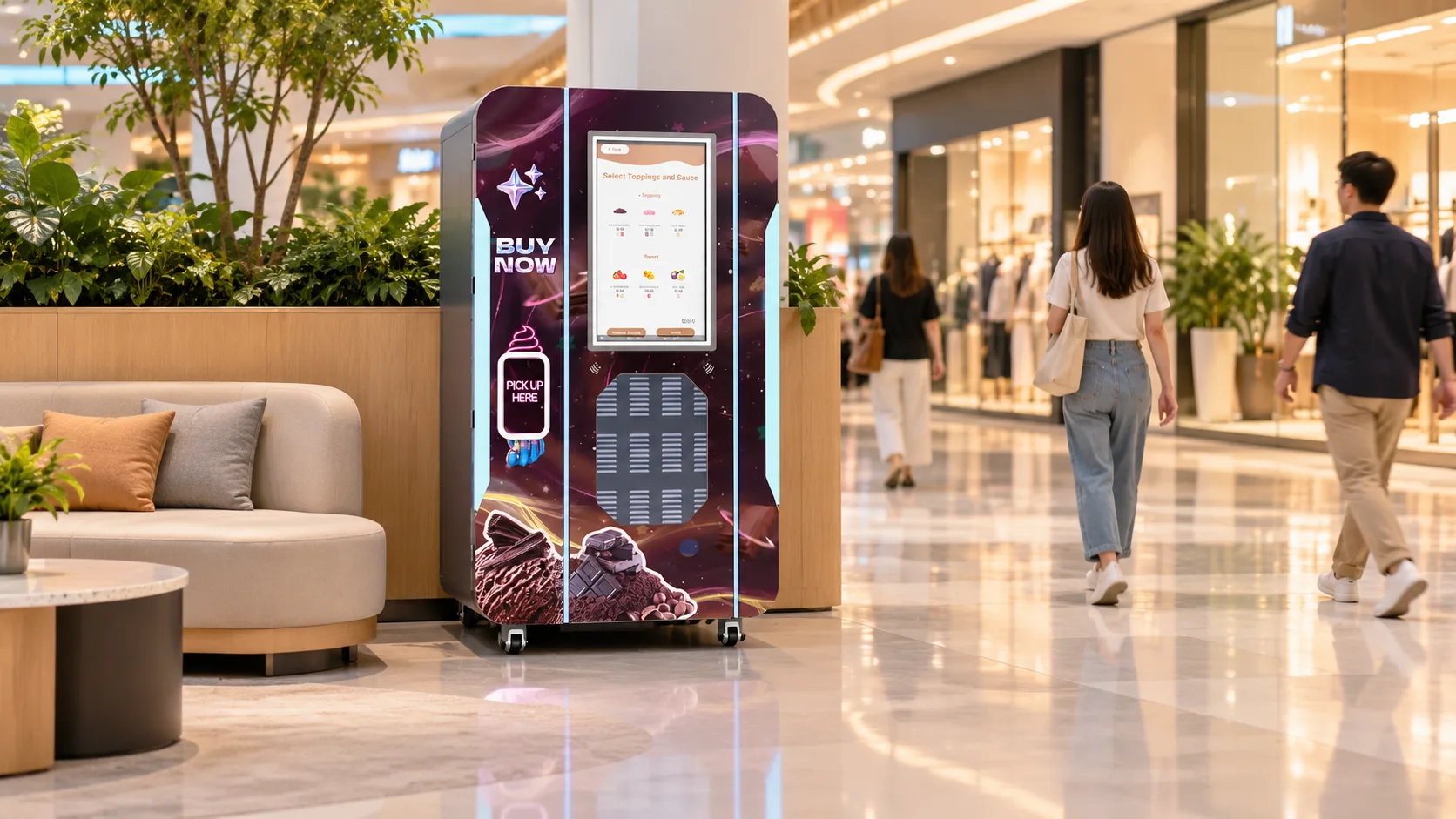
If you are deciding where to place an ice cream vending machine, observe the area from a customer's approach. Can someone see the machine, understand the offer, stop safely, pay and collect a cup before their next activity? A long queue nearby only helps if people can leave it or buy without losing their place.
Walk the proposed position during ordinary trading as well as the periods the venue describes as busy. Count passers at that spot in consistent observation windows, such as 15 minutes. Record how many pause nearby, how long the pause lasts and whether eating is permitted. Keep the counting method consistent between sites and avoid treating repeated passes by one group as unique visitors.
Use short customer conversations to test the proposed dessert, portion and price. Watching people buy other snacks can suggest a buying occasion; it cannot establish demand for your menu. Venue attendance, observed pauses and completed ice cream purchases belong in separate columns. Do not multiply attendance by an assumed conversion rate and present the result as expected sales.
Clear the installation conditions before adding scores
Before ranking an ice cream vending machine location, resolve conditions that could prevent operation. Ask the property manager, facilities team and relevant local authority to confirm the items within their responsibility:
Permission to sell the proposed food product at the marked position, including any concession restrictions, approvals and responsibility for applications.
A supply suitable for the selected machine's electrical specification, plus the connection required by the chosen payment and monitoring setup.
A feasible hygiene plan covering ingredient handling, temperature control, cleaning, water and waste arrangements, and the person responsible for each task.
Delivery and service access, usable customer space, ventilation and a position that meets the venue's circulation and accessibility requirements.
For Huaxin B Series projects, outdoor placement needs review of shelter, temperature, rain, sunlight, dust and electrical conditions. A covered walkway still needs an environmental assessment. Send site photographs for review before treating an outdoor or partly sheltered position as suitable.
Put an unresolved essential condition on hold. Strong customer interest cannot compensate for a position that cannot be operated as proposed.
Use this 10-point site scoring checklist
Make one sheet for each exact position, including different positions inside the same venue. Record the address, a marked photograph or plan, observation dates and times, proposed machine and menu, assessor and version of the site offer. Attach evidence to each rating so another team member can understand it.
Score each criterion from 0 to 5. Use 0 for an unacceptable condition, 1 for weak evidence or a major disadvantage, 2 for substantial problems, 3 for workable conditions with an agreed corrective plan, 4 for verified adequate conditions and 5 for a verified strong fit. Mark missing evidence U for unknown. Complete the checks before comparing totals; any unresolved essential condition still holds the site back.
Criterion and score | How to judge it on site | Evidence for a strong rating |
|---|---|---|
1 Customer fit and buying occasion | Identify who passes the position, who pays and what happens before or after the visit. Ask potential customers about the actual menu and price. Include people who decline. | Observed snack occasions and customer responses support the proposed offer during normal trading. |
2 Usable dwell time | Time pauses near the marked position. Check whether people can reach the machine and complete a purchase without losing a queue place, missing an activity or breaking venue rules. | Customers have an accessible pause long enough for the complete ordering and collection process. |
3 Visibility and understanding | Approach from each main direction. Photograph the view at customer eye level. Check obstructions, reflections and whether the product, price and collection point are understandable. | The offer is visible before the stopping point, including when nearby kiosks and temporary displays are operating. |
4 Customer and service space | Use the current installation drawing to mark the machine, door opening, ventilation, customer standing area and likely queue. Have the venue review routes and accessibility. | The approved layout accommodates buying, collection and servicing while preserving required circulation space. |
5 Power and connectivity | Have the facilities team check the actual connection against the selected specification, including overnight power policy. Test the required network and payment connection at the position. | Supply and connection are confirmed for required operating periods, with responsibility for faults agreed. |
6 Heat and weather exposure | Visit when heat or sunlight is most challenging. Review ventilation, rain paths, dust and cleaning practices. Compare conditions with the manufacturer's installation limits. | The proposed environment fits confirmed installation conditions and protection arrangements. |
7 Refill and hygiene access | Walk the delivery route with a trolley. Check parking, doors, lifts, storage, cleaning facilities, waste handling, access times and the journey from the previous service stop. | A named operator can complete replenishment and hygiene tasks within permitted hours at a recorded service cost. |
8 Hours and seasonality | Compare venue opening hours with customer presence and operator access. Review ordinary weekdays, weekends, holidays, event days and closure periods separately. | The operating plan covers ordinary and quiet periods, with access and costs understood beyond launch week. |
9 Menu and nearby alternatives | Map competing desserts and included meal or party offers. Compare portion, price, payment, dietary information and food-consumption rules. Confirm any exclusive concession rights. | The proposed offer has a clear reason to be chosen and is permitted alongside existing concessions. |
10 Commercial terms | Obtain written rent, revenue share, minimum guarantees, utilities, fees and deposits. Confirm the revenue-share calculation, access rights, trial review, relocation and termination terms. | The complete cost and obligations are documented, with a usable route to review, move or remove the machine. |
Add the ten scores for a total out of 50. Equal weighting keeps this first comparison simple; it does not imply that every factor has the same effect on sales. Keep any locally chosen weighting consistent across the candidates and record the reason for it.
As an optional screening rule, shortlist sites scoring 40–50 for pilot negotiation, resolve weaknesses at 30–39 and give lower totals lower priority. These are suggested working bands, not industry standards. A 42-point site with unconfirmed electrical approval remains on hold. A 35-point site might improve after the owner agrees to a better position and workable service access.
Review the weakest rows before choosing between similar totals. A commercial terms problem may be negotiable. Poor access during the only hours when customers are present may be much harder to fix.
Compare the position inside each type of venue
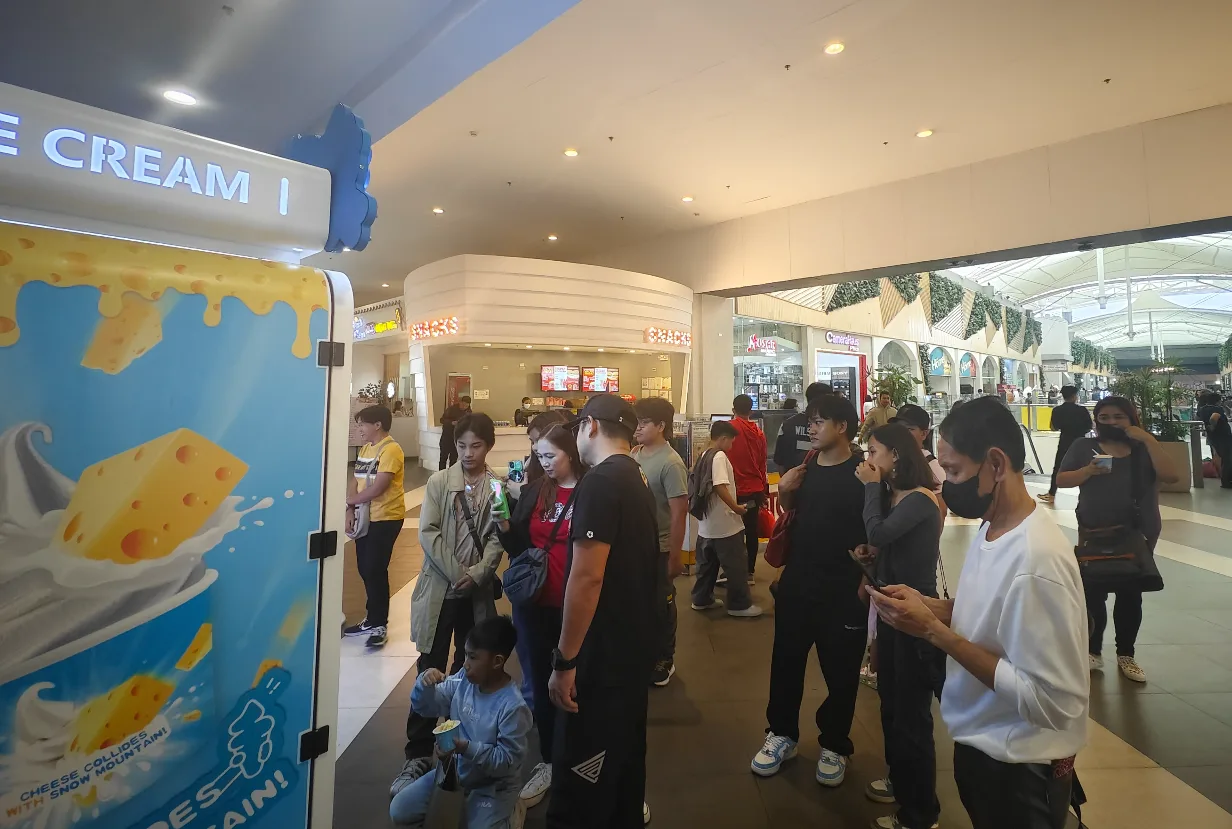
Use the following as starting points for inspection. The best locations for ice cream vending machines vary with the menu, service route and agreement; the venue categories below are not a sales ranking.
Venue | Position and buying occasion to investigate | What could rule it out |
|---|---|---|
Shopping malls | Approved retail areas beside seating, cinema waiting areas or family leisure zones. Check whether the customer can stop outside the main flow. | An entrance with hurried traffic, a blocked approach, dessert exclusivity or a high minimum site charge. See the shopping mall placement guide. |
Family entertainment centers and indoor playgrounds | Parent seating and permitted refreshment areas between activities. Observe who orders and pays during an ordinary session. | Food restrictions, snacks already included in party packages, or no time for replenishment between groups. Read the family entertainment center and indoor playground guide. |
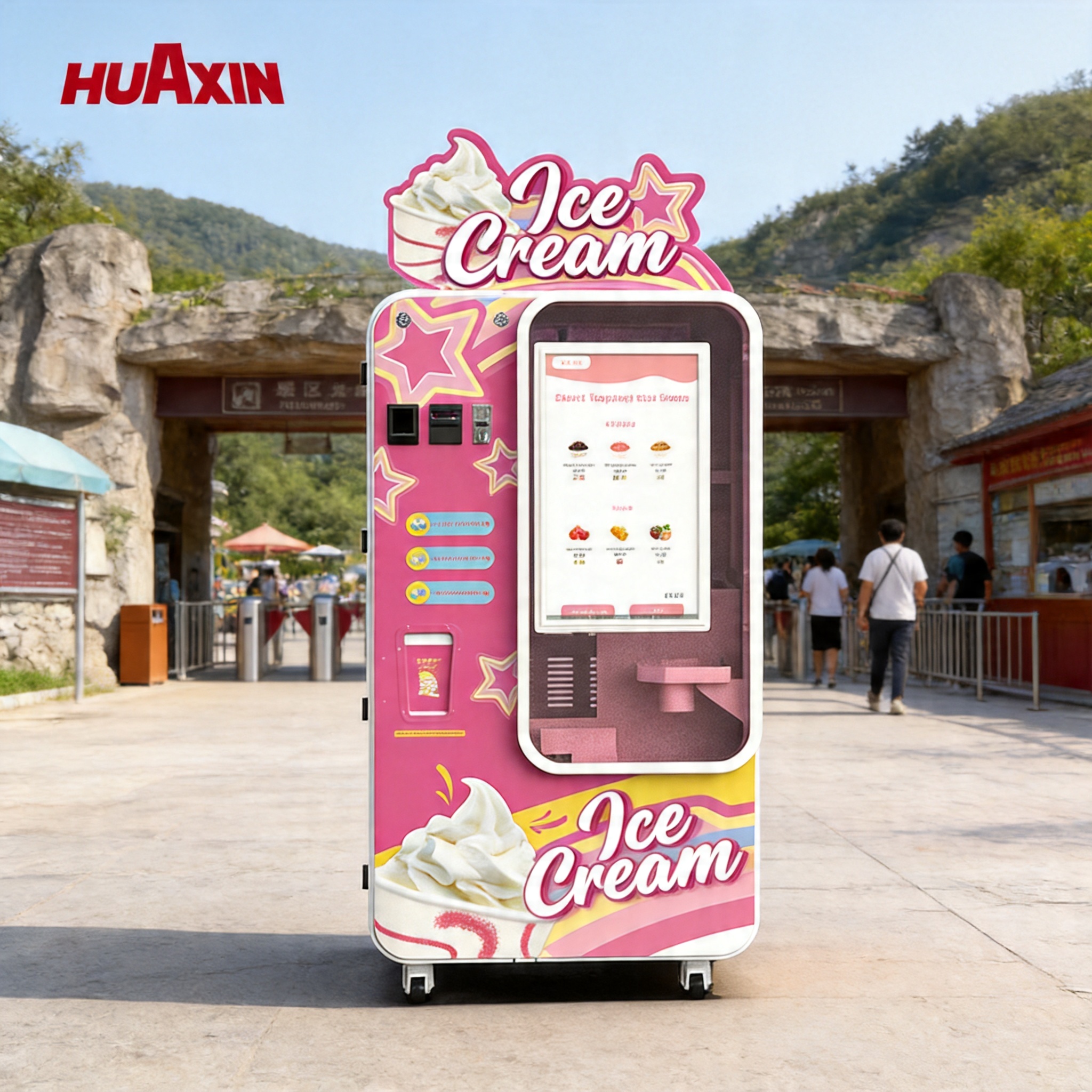
Tourist attractions | Visitor centers and approved rest areas along the actual visitor route. Check shade, seating, payment needs and seasonal access. | A pilot conducted only during a festival, an unsuitable exposed position or a restricted service road. Review tourist attraction and visitor-area placement. |
Sports facilities and stadiums | Permitted refreshment areas near spectator pauses or post-activity gathering points. Separate event demand from ordinary training days. | Compressed breaks, existing concession rights, security restrictions or a queue that obstructs circulation. |
Convenience stores and fuel stations | Indoor retail or rest areas where customers already stop. Examine the route between checkout, seating and the proposed position. | Customers leaving immediately, no accessible cleaning or refill arrangements, or a proposed position in a vehicle movement area. |
Offices, factories and business parks | Cafeteria exits, break areas and shared food zones used during actual shifts. Check employee access and the proposed price. | Limited attendance, restricted breaks, closure outside office hours or a contract priced around the building's total headcount. |
For malls, agree the exact position on a plan before comparing rent proposals. A right to place a machine somewhere in the building gives too little protection if the owner can move it to a hidden corner. Ask how a move changes the charge and whether you can end the arrangement if the replacement position is unsuitable.
At event venues and attractions, schedule the review around more than a successful peak. Keep event and ordinary-day results separate. For an office site, the useful comparison may be between shifts or attended days, rather than between weekdays and weekends.
Our Location Lessons article discusses the operating perspective after sites open. Use this checklist to document the evidence before installation and to identify what the pilot still needs to test.
Agree how the pilot will be judged before it starts
Write the review date, permitted operating hours, initial position, site charges and removal conditions into the pilot agreement. Choose a trial long enough to observe the trading pattern you intend to operate. A launch promotion or one event weekend provides little evidence about an ordinary month. There is no universal trial length that resolves every location's seasonality.
Record completed orders, cups dispensed, sales receipts and refunds separately. Alongside them, log sellable hours, stockouts, cleaning downtime, equipment faults, payment failures, waste, refill visits and time spent traveling and servicing. Include customer questions and abandoned orders observed on site. A low sales count while the machine is unavailable cannot isolate weak demand.
Review costs over the same period as sales. Deduct ingredients, packaging, payment charges, refunds, waste, site charges, electricity, connectivity and service labor, including travel. State whether equipment depreciation or financing, insurance, tax and other overheads are included. Use the result for the site decision; an operating surplus alone does not establish payback on the original investment.
If the machine is frequently unavailable, correct that problem before judging customer demand. If availability is good but purchases remain weak, check visibility, stopping space, price and menu fit. Change one major factor at a time where practical, record the date and compare equivalent trading periods.
Decision | Evidence to look for | Next action |
|---|---|---|
Continue at the site | Comparable periods show repeat purchases, reliable availability and a result that meets the operator's documented cost and service targets. Quiet periods remain manageable. | Continue under reviewed terms. Keep monitoring ordinary trading; assess each additional site separately. |
Relocate and retest | The offer is permitted and serviceable, but observation identifies a specific position problem, such as a hidden approach. Another approved position offers a testable improvement. | Agree the new position, moving cost and fresh review date. Rescore affected criteria and compare matched periods after the move. |
Remove the machine | Demand remains insufficient after reasonable corrections, required access or installation conditions cannot be maintained, or the terms prevent an acceptable operating result. | Use the agreed exit terms. Arrange final settlement, safe removal and any required site reinstatement; record the reason for future screening. |
Relocation needs a reason that can be tested. Moving a machine repeatedly without recording availability, customer behavior and costs leaves the next decision just as uncertain.
Send the candidate site for assessment
For an ice cream vending machine site selection review, send Huaxin photographs of each candidate position, the venue's opening hours and the proposed cooperation terms. Include a view from the customer approach and another showing the service route. Add the country and city, location type, available power and the person who will handle replenishment and cleaning if those details are ready.
Request a site assessment and identify the conditions still awaiting confirmation. Include the marked position and written site offer so the equipment review and commercial discussion refer to the same proposal.
References / Sources

PREVIOUS ARTICLE
Ice Cream Vending Machine After-Sales Support: Warranty, Spare Parts and Fault Reporting
NEXT ARTICLE