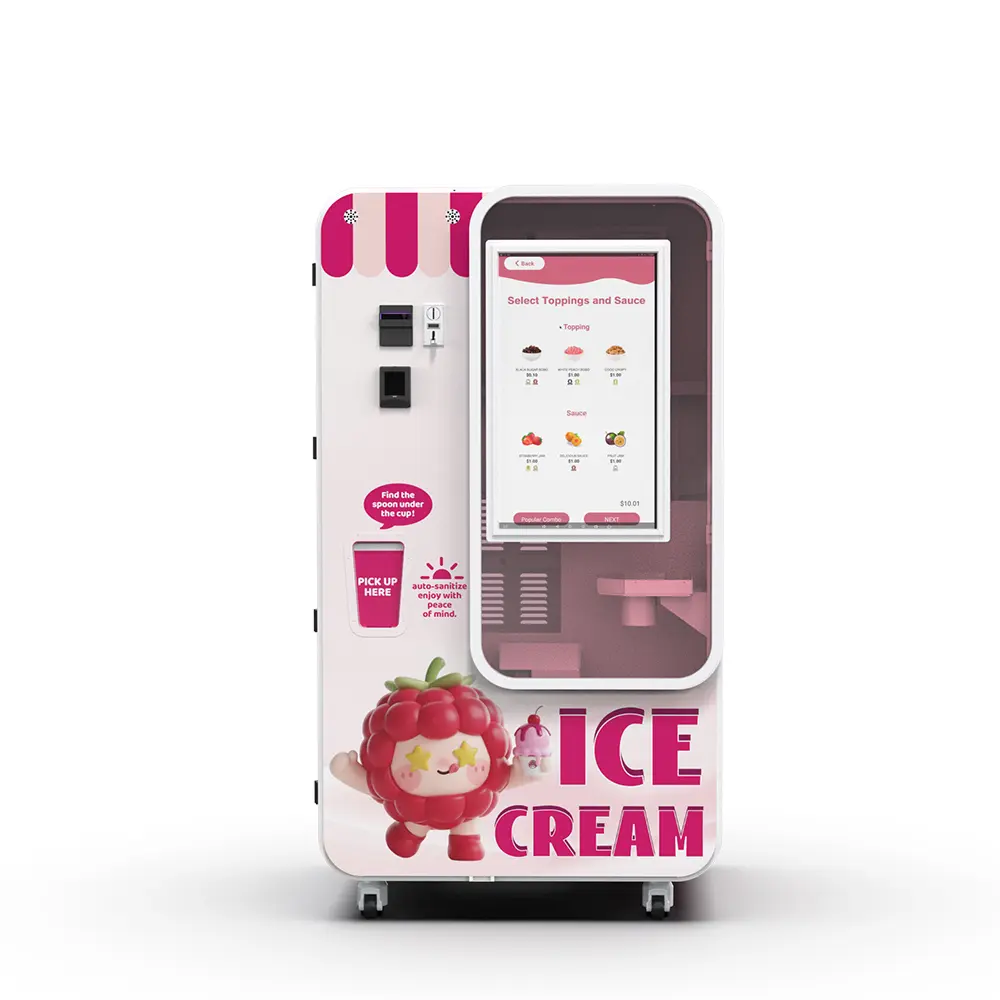
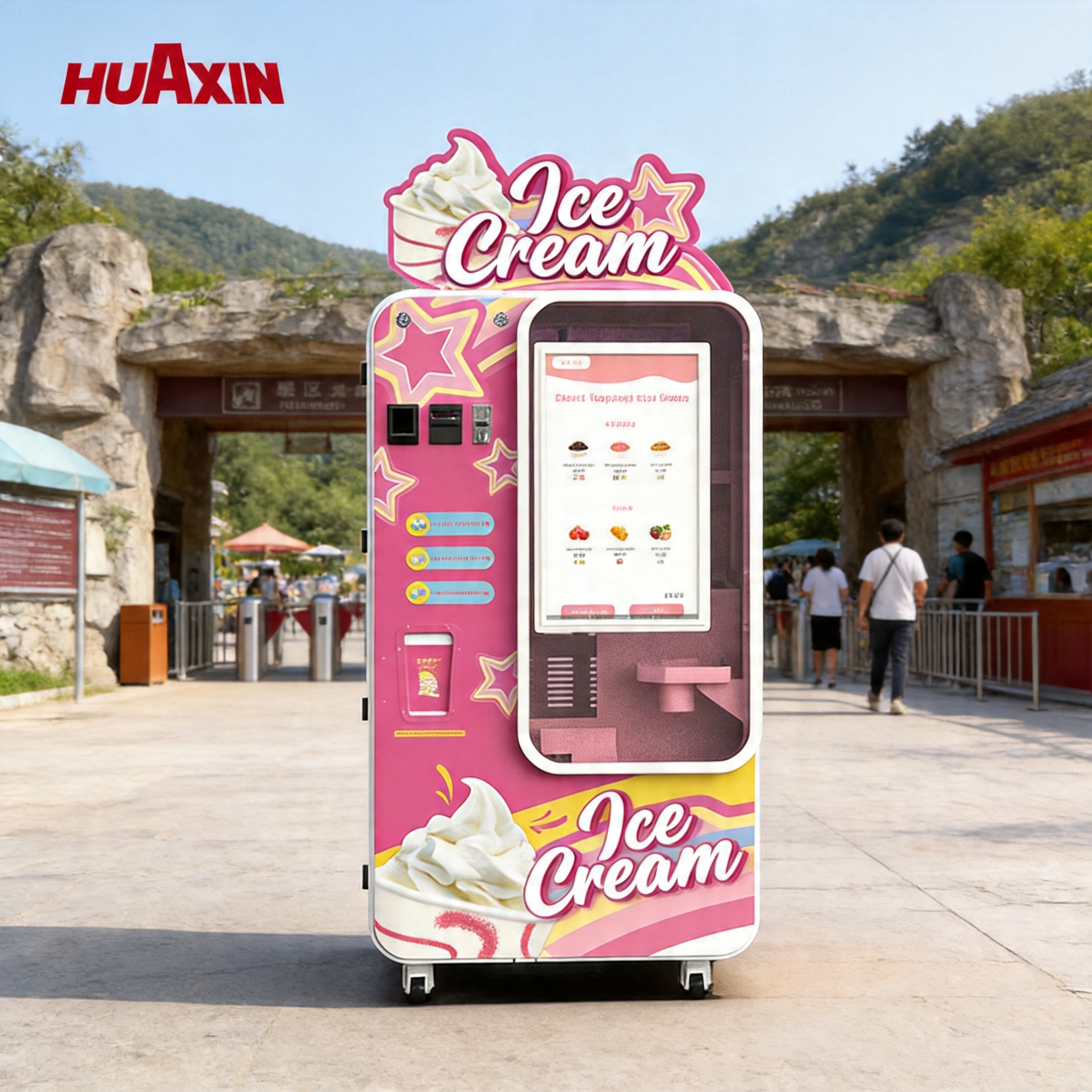
Ice Cream Vending Machine Startup Cost and Investment Planning for New Operators
Understand the real ice cream vending machine startup cost, including equipment, payment systems, shipping, compliance, site setup, starter ingredients, spare parts and working capital for a first commercial pilot.
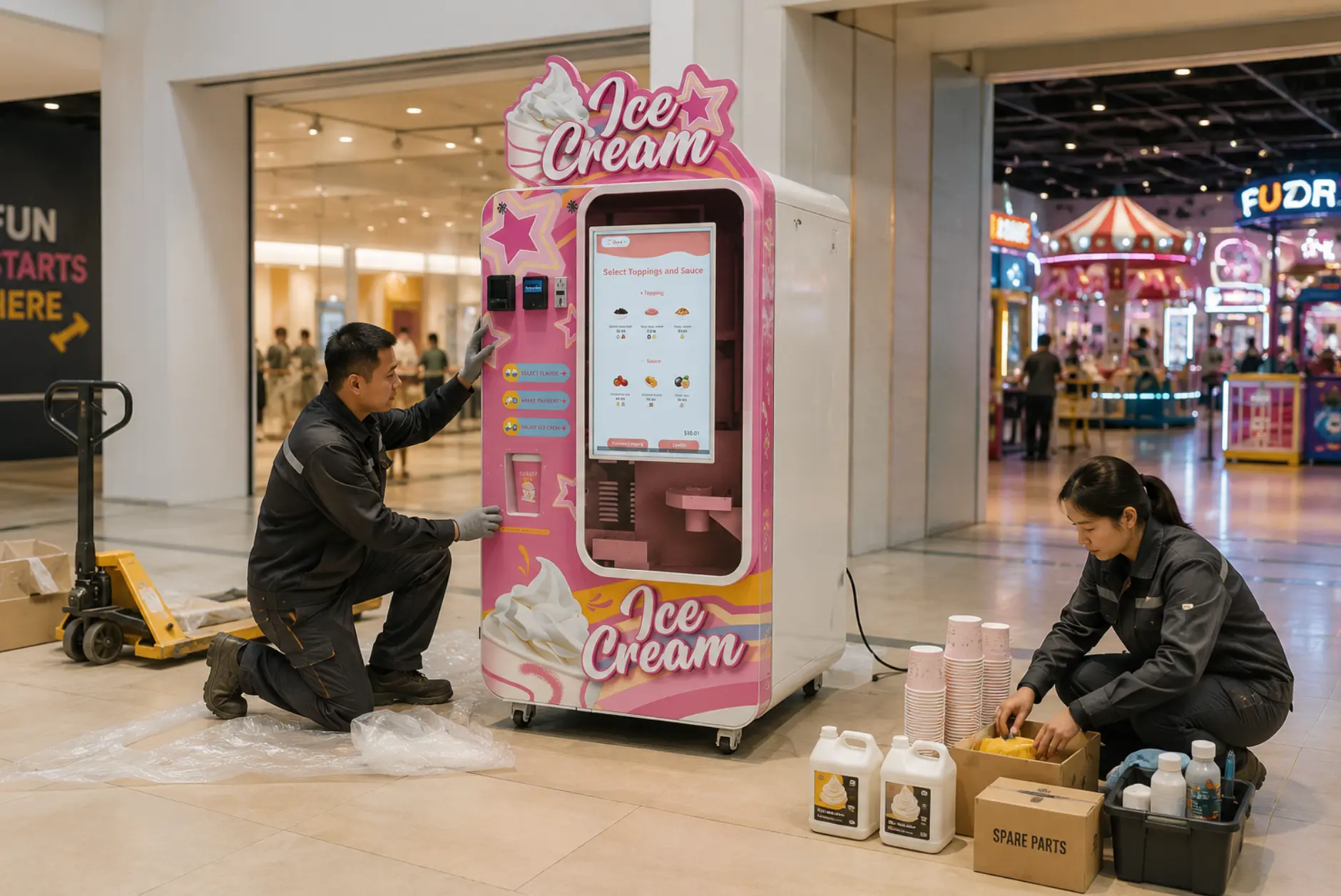
The ice cream vending machine startup cost is not simply the amount shown next to the machine on a supplier quotation.
For a new operator, the real startup budget begins with the purchase-ready equipment and continues through payment setup, export packaging, freight, import compliance, local delivery, site preparation, initial ingredients, cups, cleaning supplies, spare parts and enough working capital to operate through the first testing period.
This distinction matters because first-time buyers frequently focus most of their attention on negotiating the equipment price. A reduction of several hundred dollars can feel important while several larger project expenses remain unconfirmed.
The better question is:
How much capital is required to move from “I want to buy a machine” to “the machine is installed, stocked, tested and ready for customers”?
For a pilot project, the startup budget should be divided into seven cost blocks:
- Purchase-ready machine
- Payment and market configuration
- Shipping and import
- Compliance and documentation
- Site preparation and installation
- Initial consumables and spare parts
- Working-capital and contingency reserve
That framework gives a new operator a much more useful investment plan than comparing factory prices alone.
Start With the Difference Between Machine Price and Startup Cost
A machine quotation normally describes a piece of equipment.
A startup budget describes a commercial project.
Those are different things.
A low equipment quotation may exclude:
- Cashless payment hardware
- Local payment integration
- Export packaging
- Freight
- Import charges
- Local delivery
- Site electrical preparation
- Initial cups and ingredients
- Spare parts
- Local compliance work
- Technician assistance
- Working capital
A more expensive quotation may include some of these items.
For that reason, two offers should be converted into the same startup-cost worksheet before comparing them.
Complete Startup Cost Structure
| Startup Cost Block | Typical Items | Usually One-Time? | Who Should Confirm It? |
|---|---|---|---|
| Equipment | Machine and required commercial configuration | Yes | Supplier |
| Payment | Terminal, mounting, integration, activation | Mainly yes | Supplier + payment provider |
| Logistics | Packaging, inland transport, freight, insurance | Yes per shipment | Supplier + forwarder |
| Import | Customs, duty, tax, destination handling | Yes per shipment | Broker + importer |
| Compliance | Testing, declarations, certificates, local approvals | Usually initial | Supplier + buyer |
| Site setup | Power, network, positioning, signage | Usually initial | Buyer + site |
| Launch stock | Mix, cups, spoons, toppings, cleaning supplies | Initial + recurring | Operator |
| Spare parts | Recommended starter stock | Initial + replacement | Supplier |
| Working reserve | Unexpected setup and early operating expenses | Reserve | Buyer |
The key is not to assign a universal percentage to each line. The key is to make sure no line is missing.
1. Purchase-Ready Equipment: Do Not Budget for a Base Specification You Cannot Use
The correct equipment figure is the price of the machine configured for the intended market and location.
Several features can change the initial investment.
Touchscreen and User Interface
A commercial touchscreen may need:
- Local language
- Menu configuration
- Product images
- Pricing interface
- Payment instructions
- Promotional content
- Brand graphics
A busy mall or FEC may justify a larger customer-facing display because visibility and ease of use matter. A smaller controlled location may not require the same presentation.
The startup decision should be based on the site requirement, not on selecting either the cheapest or most feature-heavy version automatically.
Refrigeration and Production System
Fresh soft serve and frozen yogurt require reliable refrigeration and product-temperature management.
A new operator should confirm:
- Intended ambient conditions
- Product type
- Expected peak demand
- Cleaning method
- Refrigeration specifications
- Power requirements
- Service access
A cheaper configuration that is poorly matched to the site can create additional startup risk before the operator has even validated demand.
Payment Hardware
Payment configuration can be one of the most underestimated startup expenses.
The project may require:
- Card reader
- NFC/contactless payment
- QR payment
- Coin or bill equipment
- Local wallet support
- MDB communication
- SIM or network connection
- Payment-provider activation
A machine being “cashless compatible” does not mean a payment terminal for every country is already included.
Before ordering, identify the likely payment provider and confirm both hardware and commercial activation requirements.
Capacity
Capacity affects initial investment and the operating plan.
A larger cup or ingredient capacity may reduce refill frequency in a strong location. However, a new operator should not automatically buy maximum capacity on the assumption that sales will immediately be high.
For a pilot, the configuration should support realistic demand while keeping refill and waste risk manageable.
Remote Management
Remote monitoring can be particularly valuable during a first pilot because the operator is still learning:
- How quickly ingredients are used
- When cups need replenishment
- Which hours generate sales
- Whether faults occur
- How often a site visit is actually necessary
For multiple locations, its value increases further because inspection visits can be prioritized using machine data rather than a fixed schedule.
Remote monitoring does not eliminate physical cleaning, refilling or repair, but it can reduce avoidable operating uncertainty.
2. Shipping and Import Belong in the Startup Budget From Day One
New operators sometimes negotiate the machine first and investigate freight later.
That sequence creates unnecessary uncertainty.
For a typical full-size Huaxin machine, preliminary logistics planning can use:
- Approximate dimensions: 1180 × 1100 × 2130 mm
- Approximate weight: 500 kg
- Approximate volume: 2.76 CBM
- 20-foot container planning reference: approximately 10 units
- 40-foot high-cube planning reference: approximately 22 units
Final packed dimensions and loading plans should be confirmed before shipment.
A one-machine pilot will usually have different freight economics from a distributor order.
A First-Machine Shipment May Include
- Export wooden case
- Factory-to-port transportation
- Export declaration
- LCL freight
- Cargo insurance
- Destination handling
- Customs broker
- Import duty
- VAT or GST
- Port-to-site transport
- Unloading
These costs should be estimated before the purchase decision—not after the machine is finished.
For a deeper landed-cost calculation, the detailed shipping and import model should be handled separately from the startup-budget page.
3. Certification and Compliance Can Affect Both Cost and Launch Time
Compliance is one of the most important areas for first-time international buyers because requirements differ by market.
There is no responsible global statement such as:
“Every ice cream vending machine needs CE and ETL.”
That is not how product compliance works.
European Union
For machinery placed on the EU market in 2026, the European Commission states that the current Machinery Directive 2006/42/EC remains applicable. The new Machinery Regulation (EU) 2023/1230 becomes mandatory from 20 January 2027. Machinery placed on the EU market before that date must comply with the current Directive.
CE marking is not simply a certificate that a buyer purchases.
The manufacturer must identify the applicable EU legislation, perform the required conformity-assessment process, prepare technical documentation and issue the appropriate declaration of conformity before applying the CE mark. The European Commission specifically warns that generic voluntary “CE certificates” should not be confused with legally required conformity procedures.
A European startup budget may therefore need to consider:
- Applicable machinery requirements
- Electrical safety
- Electromagnetic compatibility
- Technical documentation
- Declaration of conformity
- Local-language instructions
- Market-specific food-contact or sanitation requirements
The exact combination depends on the product configuration and destination.
United States and Canada
North American projects require a different approach.
Intertek explains that the ETL Listed Mark demonstrates compliance with applicable North American safety standards through testing by a Nationally Recognized Testing Laboratory. ETL is recognized by U.S. and Canadian Authorities Having Jurisdiction.
OSHA’s NRTL materials include UL 541 — Refrigerated Vending Machines among recognized test standards in its certification framework.
However, a buyer should not assume that “ETL is federally mandatory for every vending installation.” Requirements can depend on:
- Applicable electrical code
- Local AHJ
- Building owner
- Insurer
- Site policy
- Machine design
- Intended use
The practical startup step is to ask the proposed site and local electrical/compliance professional what listing or documentation they will require before the machine is ordered.
That can prevent the expensive situation where equipment arrives but the property will not approve installation.
4. Site Preparation Costs Are Small Until They Are Forgotten
A machine cannot generate sales from a warehouse.
The location must be ready.
Possible site-launch expenses include:
- Electrical outlet or dedicated circuit
- Network connection
- SIM/data activation
- Floor positioning
- Delivery appointment
- Loading-dock access
- Pallet jack or forklift
- Moving equipment
- Signage
- Branding
- Site deposit
- First month’s rent
- Local inspection
- Waste arrangement
A first-time buyer should inspect the route from delivery truck to machine position.
Check:
- Door width
- Lift size
- Ceiling height
- Turning radius
- Floor loading
- Ramp access
- Electrical position
- Network availability
A machine that fits the floor plan may still be difficult to move through the building.
5. Starter Ingredients and Consumables Need Their Own Launch Budget
The machine is not ready for commercial use until the operator has enough stock for recipe testing, commissioning and initial sales.
A starter inventory may include:
- Soft serve or frozen yogurt mix
- Paper cups
- Spoons
- Toppings
- Sauces
- Cleaning products
- Sanitizing supplies
- Gloves
- Small food-contact wear items
Public U.S. foodservice prices provide a useful illustration of how quickly these items add up.
As of August 2026, a public WebstaurantStore listing prices Frostline vanilla soft serve mix at USD 86.99 per six-bag case; the manufacturer information states that a case yields approximately 15 gallons of prepared product.
A 6 oz paper frozen-yogurt cup is publicly listed at USD 76.49 per 1,000, or approximately USD 0.08 per cup before local freight or branding.
These are not Huaxin prices and should not be used as global cost benchmarks. They simply demonstrate why the startup budget needs a separate consumables line.
A buyer in Europe, the Middle East or Latin America should source equivalent local quotations.
Do Not Buy Too Much Ingredient for the Pilot
Bulk purchasing can reduce unit cost, but a first pilot is also a recipe-validation exercise.
The operator still needs to learn:
- Which mix works best
- Which portion customers prefer
- Which toppings sell
- How quickly ingredients are consumed
- How much cleaning loss occurs
- Whether storage conditions are suitable
Buying several months of product before validating these points can tie up capital and increase waste.
6. A Starter Spare-Parts Package Is Part of Risk Control
One small component should not shut down a new project for weeks.
For an overseas machine, a pilot budget should include selected recommended spare parts.
Depending on the equipment, this may include:
- Seals
- Tubes
- Sensors
- Fuses or electrical wear items
- Cup-handling components
- Cleaning accessories
- Other supplier-recommended wear parts
The objective is not to buy a second machine in spare parts.
It is to keep inexpensive, commonly needed components nearby so that international courier lead time does not become unnecessary downtime.
The spare-parts strategy should increase as the fleet grows.
7. Working Capital Is Different From the Startup Purchase
A new operator should not invest every available dollar in equipment and delivery.
The project still needs enough cash after installation to cover:
- Rent
- Ingredients
- Payment fees
- Cleaning
- Refilling labor
- Minor repairs
- Marketing
- Unexpected site expenses
- Initial low-sales periods
This is especially important because pilot sales are uncertain.
Even a well-researched location may take time to establish customer awareness.
A working-capital reserve gives the operator time to evaluate the site rather than making decisions after one weak week.
Illustrative One-Machine Pilot Startup Budget
The following example is hypothetical and illustrative only.
It is not a Huaxin quotation, not an average market price and not a guarantee of what a project will cost.
It demonstrates how a new operator can structure the budget.
| Startup Item | Illustrative Amount |
| Purchase-ready equipment | USD 7,000 |
| Payment hardware / activation | USD 700 |
| Export packaging and origin logistics | USD 500 |
| International freight and insurance | USD 1,500 |
| Destination handling / customs / local delivery | USD 1,200 |
| Compliance / documentation reserve | USD 600 |
| Site electrical / network / positioning | USD 600 |
| Initial ingredients and consumables | USD 500 |
| Starter spare-parts package | USD 450 |
| Initial site deposit / launch expense | USD 600 |
| Contingency and working reserve | USD 1,500 |
| Illustrative startup capital | USD 15,150 |
The numbers should not be copied into an actual investment plan.
For example:
- Shipping may be materially higher or lower.
- Duty and VAT depend on the country.
- A premium mall may require a much larger deposit.
- A payment provider may charge different activation fees.
- Some projects already have suitable power and network.
- Some buyers may require additional compliance testing.
- Equipment configuration can change the machine figure.
The useful part is the structure, not the USD 15,150 result.
8. One-Machine Pilots Need a Different Investment Strategy From Rollouts
For a first-time operator, one machine can be an expensive way to buy information—but that information can prevent a much larger mistake.
A pilot can test:
- Customer demand
- Price
- Product type
- Payment method
- Refill frequency
- Cleaning routine
- Ingredient sourcing
- Site access
- Remote monitoring
- Maintenance response
What Not to Optimize Too Early
A pilot does not need to maximize:
- Container utilization
- Ingredient purchasing volume
- Custom spare-parts inventory
- Complex fleet integrations
- Large warehouse stock
Those become more important after the model is validated.
What the Pilot Should Validate
The first machine should answer:
- Does the location produce enough relevant demand?
- Is the menu suitable?
- Can customers pay easily?
- Can the operator refill and clean efficiently?
- Does the machine capacity fit peak demand?
- Are spare parts and service manageable?
- Can the same process realistically be repeated at a second location?
A successful pilot is not simply a machine that generates revenue.
It is a repeatable operating process.
9. Configuration Decisions Should Be Based on Risk, Not Maximum Features
| Configuration | Startup Investment Impact | Potential Pilot Value |
| Larger touchscreen | Higher | Better visibility and ordering clarity |
| Strong commercial refrigeration | Higher | Supports consistent product and peak operation |
| Local cashless payment | Higher setup cost | Removes purchase friction |
| Larger cup capacity | Higher | Reduces refill frequency at strong sites |
| Remote management | Software/connectivity cost | Helps learn real usage and faults |
| Automated cleaning functions | Higher specification | Standardizes parts of maintenance routine |
| Exterior branding | Additional design cost | Improves point-of-sale identity |
A feature should earn its place in the pilot budget.
For example, remote monitoring may be more useful than cosmetic upgrades if the operator lives far from the location.
In a highly visible premium mall, exterior design may matter more.
The correct configuration comes from the site and operating plan.
10. Risk Control for First-Time Operators
Keep the First Location Measurable
Avoid launching in a site where:
- Traffic data is unavailable
- Rent terms are unclear
- Payment options are unconfirmed
- Operators cannot access the machine easily
- Customer demographics do not fit the product
Do Not Commit to Multiple Machines Only Because the Unit Price Falls
Quantity discounts and better freight economics are attractive.
They do not make a weak location profitable.
A new operator should distinguish between:
- Procurement efficiency
- Business-model validation
They are not the same thing.
Confirm Compliance Before Production
Do not wait for the machine to reach the port before asking whether the building requires an NRTL listing, CE documentation, local food approval or specific electrical standard.
Keep the Recipe Flexible During Testing
The operator may need to adjust:
- Product formulation
- Portion size
- Toppings
- Price
- Menu presentation
Do not lock the project into excessive initial stock.
Maintain a Contingency Reserve
A startup model without contingency assumes:
- No freight changes
- No customs delays
- No local electrical work
- No damaged consumables
- No extra site charges
- No early component replacement
That is rarely a realistic planning assumption.
Startup Investment Planning Template
Country:
Destination City / Port:
Location Type:
Proposed Launch Date:
Initial Machine Quantity:
Future Expansion Plan:
Product Type: Soft Serve / Frozen Yogurt / Sorbet / Açaí-Style
Expected Daily Sales:
Expected Peak-Hour Demand:
Payment Methods:
Local Payment Provider:
Required Language:
Machine Configuration Budget:
Payment Hardware Budget:
Branding / UI Budget:
Export Packaging:
Origin Transport:
Freight:
Insurance:
Destination Charges:
Duty / VAT / GST:
Local Delivery:
Compliance / Certification Requirements:
Compliance Budget:
Electrical / Site Preparation:
Network Setup:
Delivery / Positioning Equipment:
Site Deposit:
Initial Mix:
Initial Cups / Spoons:
Initial Toppings:
Cleaning Supplies:
Starter Spare Parts:
Training / Technician Support:
Working Capital Reserve:
Contingency Reserve:
Estimated Total Startup Capital:
This format allows a buyer to identify missing costs before comparing suppliers.
New Operator Startup Checklist
-
Confirm the proposed country and final location.
-
Estimate realistic daily and peak-hour demand.
-
Select the product category before choosing configuration.
-
Confirm required payment methods.
-
Identify the local payment provider where possible.
-
Confirm voltage and frequency.
-
Check market-specific compliance requirements.
-
Ask the property owner about required safety listings or approvals.
-
Confirm machine dimensions and weight.
-
Confirm packed dimensions and gross weight.
-
Obtain a shipping estimate.
-
Estimate customs, destination charges and local delivery.
-
Check the entire physical delivery route into the site.
-
Confirm power and network availability.
-
Prepare initial cups and ingredients.
-
Prepare cleaning supplies.
-
Order recommended starter spare parts.
-
Confirm technical support and training.
-
Prepare a working-capital reserve.
-
Add a contingency allowance.
-
Start with a measurable pilot before assuming large-scale rollout.
Quote Request Template for a First Project
Company / Buyer Name:
Country:
Destination City or Port:
Complete Delivery Address, if available:
Initial Quantity:
Future Quantity if Pilot Is Successful:
Location Type: Mall / FEC / Hotel / Campus / Tourist Site / Other
Indoor or Outdoor:
Expected Daily Sales:
Expected Peak-Hour Demand:
Product Type: Soft Serve / Frozen Yogurt / Sorbet / Açaí-Style
Cup Size:
Topping Requirements:
Payment Methods Required:
Local Payment Provider, if known:
Required Language:
Voltage and Frequency:
Required Compliance Documents / Certifications:
Preferred Trade Term: FOB / CIF / DAP / DDP / Need Advice
Port Delivery or Door Delivery:
Need Branding: Yes / No
Need Remote Management: Yes / No
Need Starter Cups / Ingredients: Yes / No
Need Spare-Parts Package: Yes / No
Need Technical Training: Yes / No
Planned Launch Date:
Other Requirements:
A complete project brief gives the supplier enough information to quote the actual launch requirement instead of sending an incomplete base-machine price.
FAQ
How much does it cost to start with one ice cream vending machine?
There is no universal startup figure. The complete budget includes the purchase-ready machine, payment configuration, shipping, import expenses, compliance, local delivery, site preparation, initial consumables, spare parts and working capital. A machine-only quotation is therefore not a startup budget.
Which startup costs are most commonly forgotten?
Destination charges, payment activation, local delivery, electrical preparation, initial stock, spare parts, site deposits and working capital are frequently missed during early budgeting.
Is one machine a good way to start?
A one-machine pilot can be useful when its purpose is to test the location, menu, price, payment setup and service routine before scaling. The objective should be learning and validation rather than maximizing purchasing discounts.
How much should I budget for certification?
There is no standard global figure because requirements depend on the destination, machine configuration, applicable legislation and site. Confirm the required conformity documents or safety listing before ordering.
Does CE marking apply to every country?
No. CE marking relates to products placed on the EU market and certain other markets that recognize EU conformity in specific circumstances. Other countries have their own product-safety frameworks.
Does a U.S. project always require ETL?
Not necessarily as a universal rule. ETL is an NRTL safety certification mark accepted in North America, but the exact requirement depends on applicable standards, local authorities, building owners and project conditions.
Should a first-time operator buy several months of ingredients?
Usually it is safer to validate the recipe, demand and refill rate before committing to excessive stock. Bulk purchasing can reduce unit cost but can also increase waste and tied-up capital.
What information is needed for the most accurate startup quotation?
Provide the country, destination, machine quantity, location type, product category, payment requirements, expected daily sales, required compliance documents and launch date.
Conclusion: Plan the Business Launch, Not Just the Machine Purchase
The ice cream vending machine startup cost is the amount required to create an operating point of sale—not simply the price of the equipment.
For a new operator, the startup plan should include:
- Purchase-ready equipment
- Payment configuration
- Shipping and import
- Compliance
- Site preparation
- Initial consumables
- Spare parts
- Working capital
- Contingency
The first project should also be treated as a learning investment.
A good pilot gives the operator real information about demand, pricing, refill frequency, ingredient consumption, maintenance and site performance before a larger rollout.
That is more valuable than selecting the lowest machine price or assuming that purchasing more units automatically reduces business risk.
For a project-specific configuration and quotation, prepare your country, destination, proposed point type, machine quantity, product category, expected daily sales, payment requirements and planned launch date.
The more complete that information is, the more accurately the supplier can help separate the true startup investment from costs that belong to later operation or expansion.
References / Sources
-
European Commission — Machinery: EU Machinery Legislation. Confirms that Machinery Directive 2006/42/EC remains the current machinery framework for products placed on the EU market before 20 January 2027, when Regulation (EU) 2023/1230 becomes mandatory.
-
Intertek — ETL Listed Mark FAQ. Explains the ETL Listed Mark, NRTL testing and recognition by North American Authorities Having Jurisdiction.
-
U.S. Occupational Safety and Health Administration — NRTL Program. OSHA materials include UL 541, Refrigerated Vending Machines, within recognized testing standards.
-
WebstaurantStore — Frostline Vanilla Soft Serve Ice Cream Mix, 6 lb., 6/Case. Public price checked August 2026: USD 86.99 per case; each case yields approximately 15 gallons of prepared product.
-
WebstaurantStore — Choice 6 oz. White Paper Frozen Yogurt / Food Cup, 1,000/Case. Public price checked August 2026: USD 76.49 per case, approximately USD 0.08 each.
References / Sources