BLOG Robot Ice Cream Vending Machine Mechanics: How the Automatic Cup Dispensing System Works
Robot Ice Cream Vending Machine Mechanics: How the Automatic Cup Dispensing System Works
Date:2026-05-22 Author:Huaxin
This in-depth guide explores how robot ice cream vending machines leverage robotic arms, photoelectric sensors, anti-drip systems and IoT remote monitoring to achieve stable cup dispensing, lower cup jamming rates, and boost unmanned retail operational efficiency and return on investment.
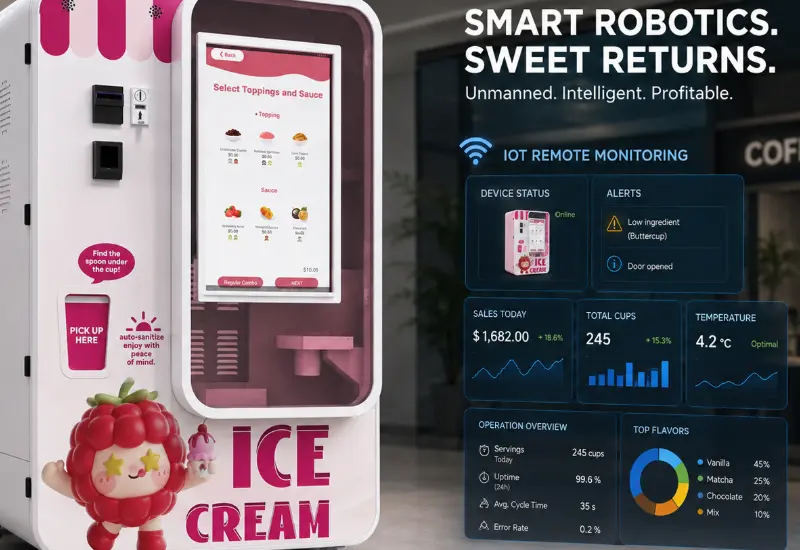
Back in 2024 when we engaged with overseas distributors, the most frequently raised question was never about pricing. Instead, it was "What if the machine gets cup jams in the middle of the night?" This question reflects the core concern of the unmanned retail industry: whether automated machines can run stably unattended in the long term.
For B2B investors deploying 20, 50 or even over 100 units in airports, shopping malls, campuses, transportation hubs and other venues, the value of robot ice cream vending machines lies far beyond mere automation. What they truly prioritize includes precise cup positioning, ultra-low cup jam rates, reliable automatic cleaning systems, built-in fault early warning functions and long-term OEE (Overall Equipment Effectiveness) performance.
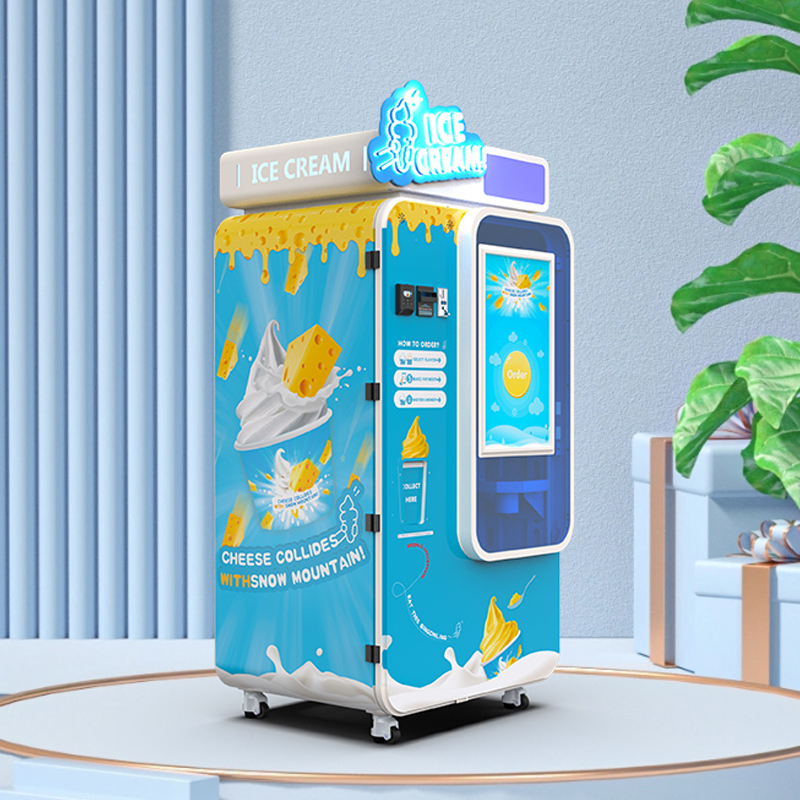
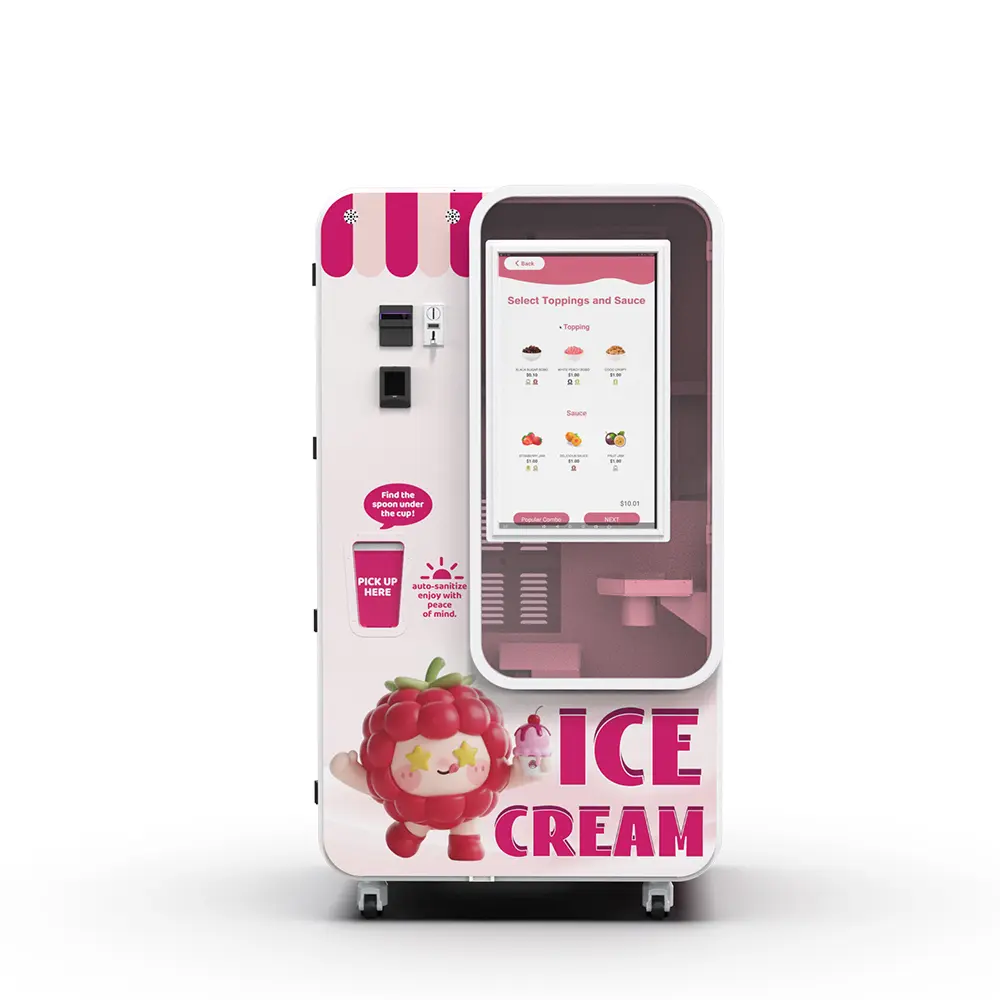
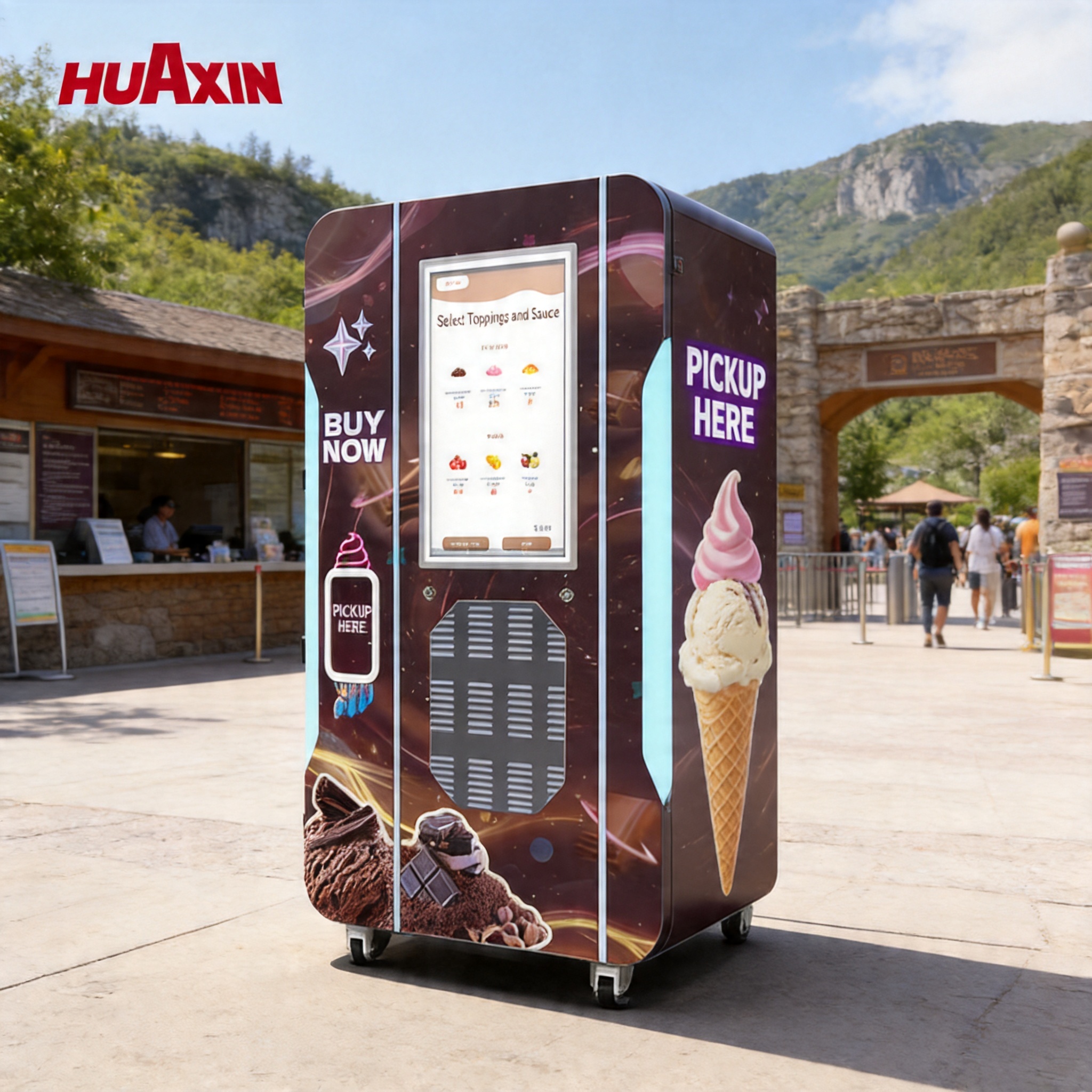
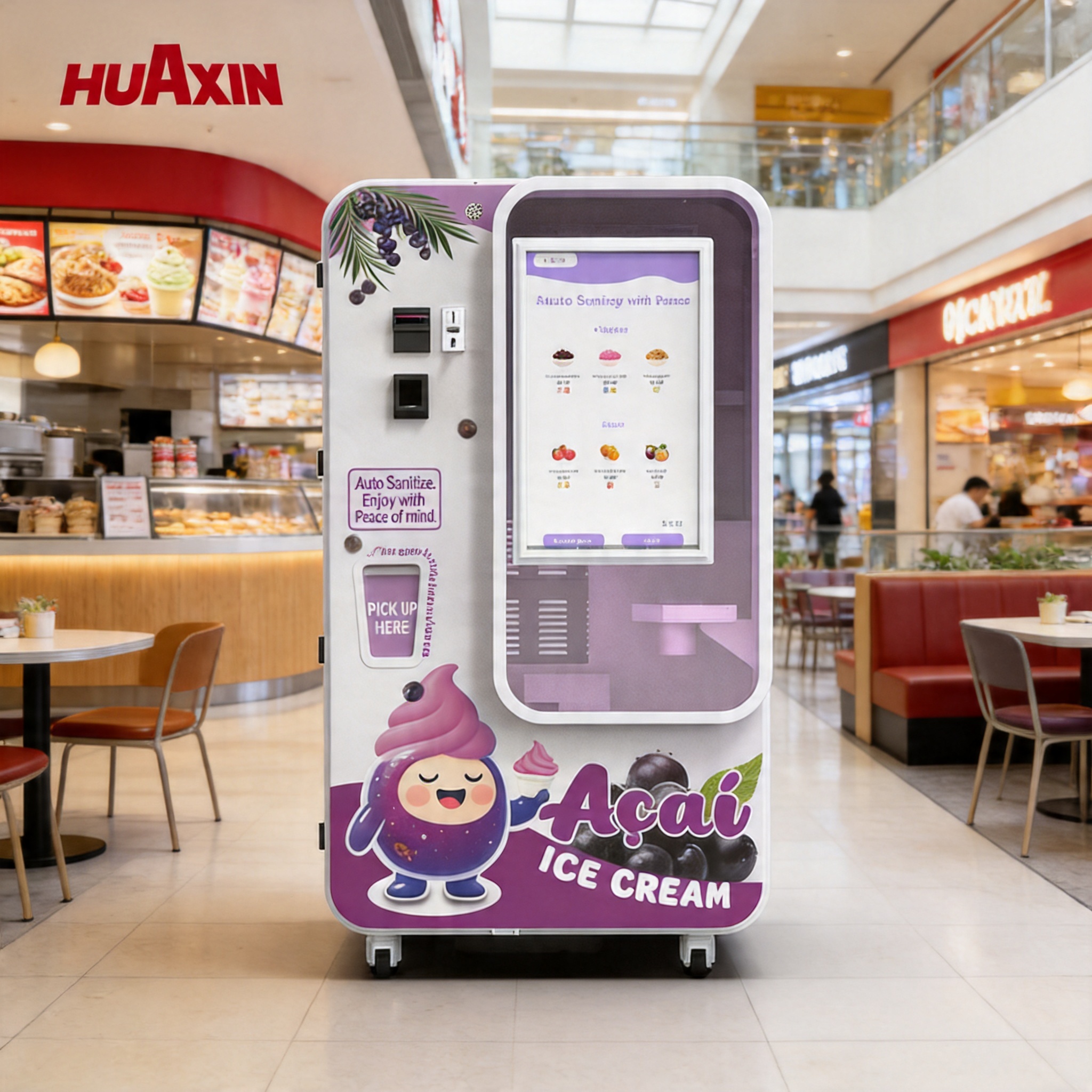
Essentially, a robot ice cream vending machine is a compact automated mini food factory fitted within an area of 1 to 2 square meters.
Poorly designed cup dispensing mechanical structures tend to trigger the following operational malfunctions and negative impacts:
| Common Faults | Operational Impacts |
| Cup jamming | User refunds and order interruptions |
| Ice cream dripping | Poor hygiene perception and rising negative reviews |
| Sensor displacement | Incorrect cup position recognition |
| Residue accumulation on nozzles | Increased bacterial contamination risks |
| Compressor overload | Unexpected machine shutdowns |
Based on our internal operation and maintenance data collected from Southeast Asian and Middle Eastern projects, over 62% of early operational failures stemmed from defective cup dispensing mechanical structures rather than refrigeration system issues. This explains why professional buyers are increasingly curious about the working principle of the automatic cup dispensing system.
Why Automatic Robotic Catering Equipment Gains Growing Market Popularity
The booming demand for robot ice cream vending machines is driven by three global trends: rising labor costs, growing demand for contactless catering services and the maturing 24-hour unmanned retail business model. In the UAE, Singapore and parts of North America, the monthly labor cost for an ordinary catering staff can reach 2,500 to 4,000 US dollars. Robotic vending solutions effectively restructure operational cost frameworks.Traditional Ice Cream Shops VS Robot Ice Cream Vending Machines
| Comparison Dimension | Physical Ice Cream Stores | Robot Ice Cream Vending Machine |
| Labor Dependence | High | Extremely Low |
| Business Operation Hours | Time-limited | 24/7 Non-stop |
| Occupied Floor Area | 25-80 Square Meters | 1-3 Square Meters |
| Daily Cup Production Capacity | 150-400 Cups | 200-600 Cups |
| Manual Contact Risk | Moderate | Low |
| Market Expansion Speed | Slow | Fast |
Now the market focus has extended beyond basic automation. Many machines function flawlessly in the first 30 days but suffer frequent cup jams after six months of operation. Hence seasoned investors pay more attention to mechanical stability, redundant sensor design, automatic cleaning mechanisms, remote operation support and fault prediction systems. In short, buyers are purchasing a complete automatic operation solution rather than a single piece of equipment.
How the Automatic Cup Dispensing System Works in Robot Ice Cream Vending Machines
Complete Operating Process of Robot Ice Cream Vending MachinesStandard operating procedures cover user payment confirmation, automatic cup dropping, cup position identification, robotic arm movement, ice cream extrusion, optional topping dispensing, cup capping or pick-up positioning and automatic cleaning. The most sophisticated procedures take place between cup dropping and accurate ice cream filling. Even a 3-5mm position deviation may lead to misplaced ice cream dispensing, tilted cups, sensor misjudgment, motor overload and dripping contamination. Therefore, coordinated control of robotic arm motion trajectories and photoelectric sensors forms the core of the whole system.
Coordination Mechanism of Robotic Arm Trajectory and Photoelectric Sensors
1. Cup Body Recognition LogicHigh-end commercial models adopt dual photoelectric sensor configurations.
| Sensor Type | Core Function |
| Through-beam Photoelectric Sensor | Detect the presence of cups |
| Retro-reflective Photoelectric Sensor | Verify accurate cup placement |
The system not only checks cup availability but also confirms cup mouth diameter, vertical placement, tilting status and positional offset. Low-cost machines commonly adopt single-sensor designs to cut BOM costs. Long-term operational vibration causes tiny structural displacements, which eventually result in cup jams, misplaced dispensing and empty-cup discharging failures. This accounts for the sudden surge in failure rates of entry-level devices after 3 to 6 months of service.
2. Robotic Arm Motion Trajectory Control
Commercial-grade units are equipped with stepper motors, servo motors, linear guide rails and PLC motion control systems. Robotic arm movements are precisely programmed with comprehensive considerations of operating speed, vibration reduction, nozzle positioning accuracy and motor heat generation.
Many emerging manufacturers highlight ultra-fast 15-second cup output, yet excessive operating speed accelerates mechanical wear. Field data proves that machines running beyond reasonable acceleration limits witness a 18%-22% higher maintenance frequency within 12 months. Premium solutions adopt smooth acceleration and stable trajectory control, as operational stability outweighs fast dispensing speed in unmanned retail scenarios.
Why Anti-jamming Design Outweighs Dispensing Speed
While novice investors focus on hourly sales volume, experienced operators prioritize continuous stable running capacity. End-users can tolerate a 10-second longer waiting time, yet single cup jams during peak hours trigger mass refunds and negative feedback. Such malfunctions lead to substantial economic losses in high-traffic venues including shopping malls, airports and scenic spots.Premium devices are fitted with anti-static cup separation structures, adjustable cup bin pressure, vibration-assisted cup dropping systems and multi-angle slideways to avoid double cup discharge, jamming and empty cup issues. Humidity significantly raises cup jam risks in Southeast Asian, coastal and high-humidity regions. Many machines pass factory tests smoothly but show soaring failure rates after commercial deployment.
In-depth Analysis of Anti-drip Technology and CIP Automatic Cleaning System
Hidden Hazards of Ice Cream DrippingMinor dripping issues are often underestimated, yet they undermine visual appeal, consumer trust, sensor service life and increase routine maintenance costs. Long-term ice cream residue around nozzles causes photoelectric sensor misjudgment, sticky blockages and potential bacterial proliferation, making anti-drip design indispensable for stable daily operation.
Operating Mechanism of Anti-drip Systems
Qualified devices integrate multiple mature technologies for effective drip prevention:
| Core Technology | Practical Function |
| Ice Cream Suck-back System | Draw residual ice cream back into nozzles |
| Solenoid Valve Cut-off Control | Instantly stop material outflow |
| Constant-temperature Nozzles | Maintain stable ice cream fluidity |
| Delayed Shutdown Algorithm | Eliminate dripping caused by residual pipeline pressure |
The suck-back system plays a decisive role. Without this configuration, residual pipeline pressure keeps pushing out ice cream continuously. Low-end devices suffer severe dripping problems during peak sales hours and high-temperature environments, especially when ambient temperature exceeds 32 degrees Celsius.
Growing Necessity of CIP (Clean-In-Place) Systems
CIP automatic cleaning systems have become mainstream in unmanned food vending equipment, enabling full internal cleaning without manual disassembly, which is a must-have function for operators managing large-scale equipment networks.Standard CIP cleaning procedures include warm water flushing, detergent circulating cleaning, sanitizing rinsing and air-drying treatment. Operational statistics from 47 deployed units in Canada indicate that standardized CIP systems cut manual maintenance working hours by approximately 35% and reduce nozzle blockage rates by around 41%.
A common industry pitfall needs attention: many manufacturers label simple surface nozzle flushing as full automatic cleaning. Professional-grade CIP systems must cover internal pipelines, discharge valves, mixing chambers and air pump passages, directly determining long-term food safety and operational reliability.
Mechanical Fault Early Warning Enabled by IoT Technology
The industry has shifted from passive breakdown maintenance to proactive predictive maintenance over the past five years, marking a major upgrade for robot ice cream vending machines.Key Operational Parameters Monitored by IoT Systems
| Monitored Parameter | Commercial Application Value |
| Compressor Operating Temperature | Prevent equipment overheating shutdown |
| Motor Operating Current | Identify abnormal operational resistance |
| Raw Material & Cup Stock Level | Avoid stock-out issues |
| Material Tank Temperature | Ensure food safety compliance |
| Real-time Sales Data | Support product portfolio optimization |
| Automatic Cleaning Records | Trace daily hygiene management status |
| Sensor Error Frequency | Predict early mechanical displacement faults |
This intelligent monitoring mechanism realizes timely fault prediction ahead of actual equipment breakdowns.
Practical Case: IoT Solutions Reduce Equipment Downtime
A Middle Eastern operator deployed 32 robot ice cream vending machines in shopping malls, facing early-stage troubles including robotic arm calibration deviation and high emergency maintenance costs. After activating motor current anomaly monitoring, the system accurately detects abnormal guide rail resistance in advance, allowing maintenance teams to replace worn components before malfunctions occur.
After 8 months of practical operation, equipment downtime decreased by 27%, emergency maintenance visits dropped by 31%, and the average online operation rate maintained above 96%. The core commercial value of IoT technology lies in operational risk reduction rather than empty smart technology concepts.
Three Easily Overlooked Points for B2B Buyers
1. Overemphasis on Exterior DesignNovice buyers tend to prioritize large display screens, decorative lighting and interactive UI effects. Nevertheless, long-term return on investment depends primarily on motor service life, sensor precision, refrigeration efficiency and cleaning performance. Attractive appearance cannot offset financial losses caused by frequent operational failures.
2. Neglect of Regional Climatic Differences
Equipment operating in high-temperature and high-humidity regions such as Dubai, Manila, Jakarta and Miami faces harsher working conditions than standard factory test environments. Extreme temperatures, high humidity and unstable voltage all affect cup jam rates, compressor load, ice cream fluidity and sensor sensitivity. Buyers are advised to verify high-humidity endurance test results, continuous load test data and high-temperature adaptability parameters from suppliers.
3. Underestimate Remote Operation & Maintenance Capacity
Spare parts reserve is less critical than remote fault diagnosis, error code analysis, OTA online upgrade and cloud-based unified management systems for large-scale equipment deployment. Leading manufacturers are evolving from pure equipment suppliers to integrated service providers offering both hardware devices and SaaS operation management services.
Stable Operation: The Core ROI Driver of Robot Ice Cream Vending Machines
The profit logic of unmanned retail is straightforward: stable online operating rates generate steady cash flow. Taking a unit with a daily sales volume of 120 cups, unit customer price of 3.5 US dollars and gross profit margin of 65% as an example, it delivers impressive theoretical investment returns. However, frequent cup jams, defective cleaning functions and excessive downtime will completely collapse the profit model.Therefore, professional operators attach great importance to OEE indicators, failure rates, remote maintenance support, cup dispensing stability and large-scale business expansion capabilities.
The future development of automated robotic catering goes far beyond simple labor replacement. It aims to build standardized, predictable and long-term stable unmanned retail infrastructure, among which the structural stability of automatic cup dispensing systems exerts far greater influence on profitability than most investors expect.
FAQ
1. How do robot ice cream vending machines prevent cup jams?Premium devices adopt dual photoelectric sensors, anti-static cup separation structures, vibration-assisted cup dropping systems and precise robotic arm trajectory control to enhance dispensing accuracy and minimize cup jam occurrences.
2. What causes ice cream dripping in automatic vending machines?
Primary causes include residual pipeline pressure, unstable valve control and fluctuating ice cream fluidity. Professional anti-drip solutions integrate suck-back systems and high-precision solenoid valves to eliminate dripping effectively.
3. Is the CIP automatic cleaning system essential?
Absolutely necessary. CIP systems greatly cut down manual maintenance workload, ensure consistent food hygiene standards and reduce nozzle blockage probabilities, perfectly matching the operational demands of multi-site unmanned retail deployment.
4. How does IoT technology improve overall equipment stability?
The IoT system monitors real-time data including compressor temperature, motor current, material stock and sensor operational status to realize predictive maintenance and effectively avoid unexpected sudden shutdowns.
5. What are the top priorities for B2B buyers when selecting robot ice cream vending machines?
Prioritize mechanical structural stability, sensor precision, full-range automatic cleaning performance, high-temperature and high-humidity adaptability, complete remote maintenance systems and reliable after-sales service systems over superficial appearance designs. These core factors determine long-term investment returns and large-scale commercial expansion potential.
References / Sources