BLOG Global Shipping: A Logistics Guide for Importing Large Ice Cream Machines from China
Global Shipping: A Logistics Guide for Importing Large Ice Cream Machines from China
Date:2026-04-15 Author:Huaxin
Wondering if large ice cream machines can be safely shipped from China? International transport for heavy equipment is highly standardized, with professional packaging, ocean freight, customs clearance and inspection at every step. Learn the full logistics process for first-time buyers.
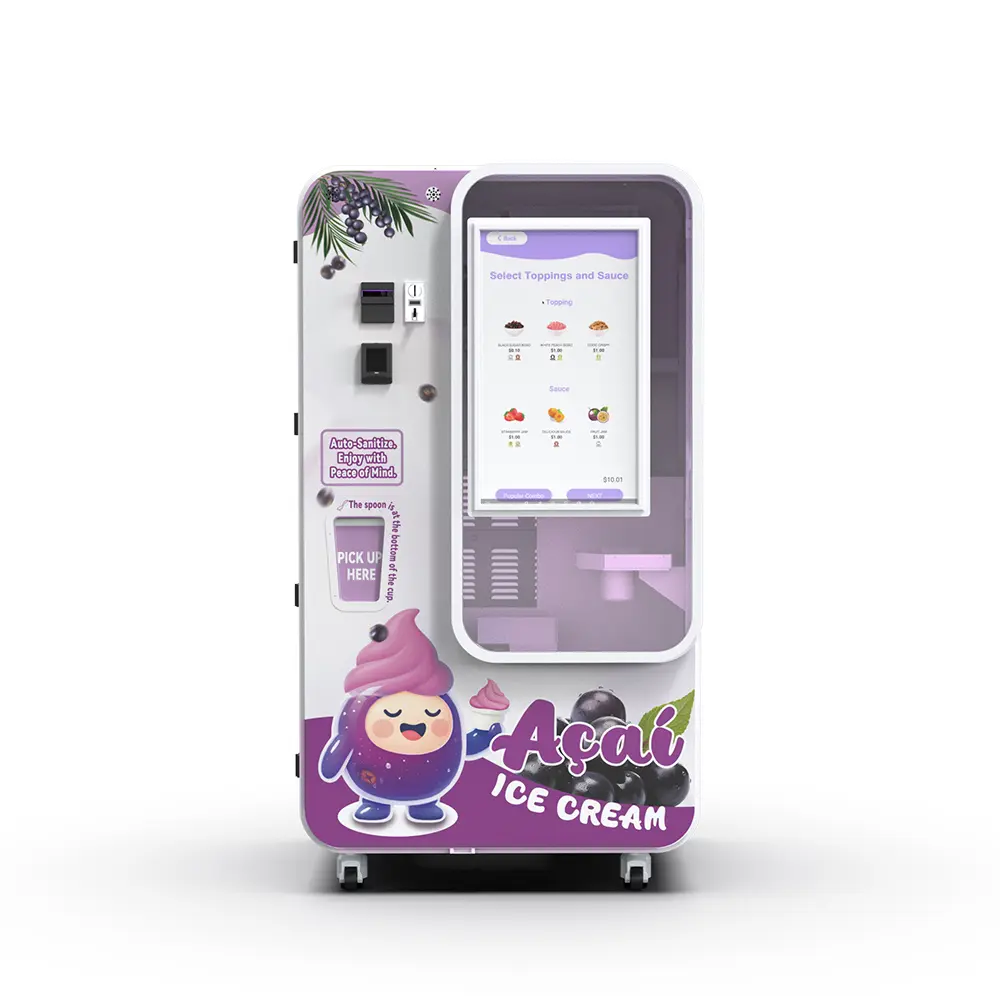
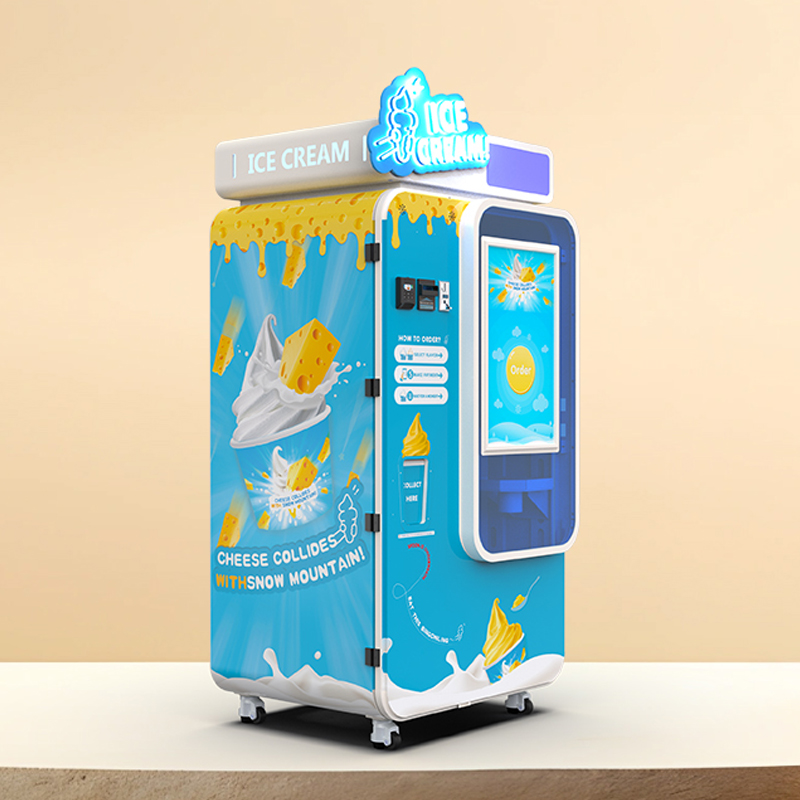
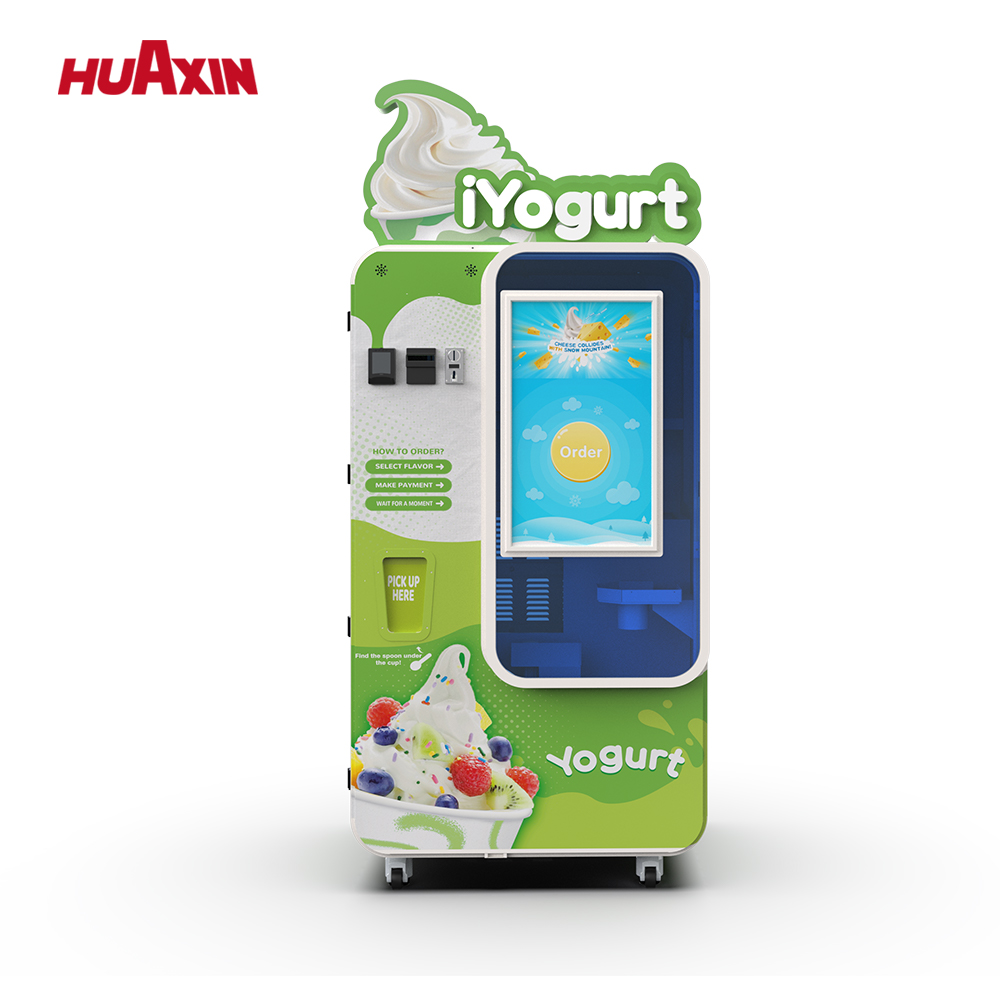
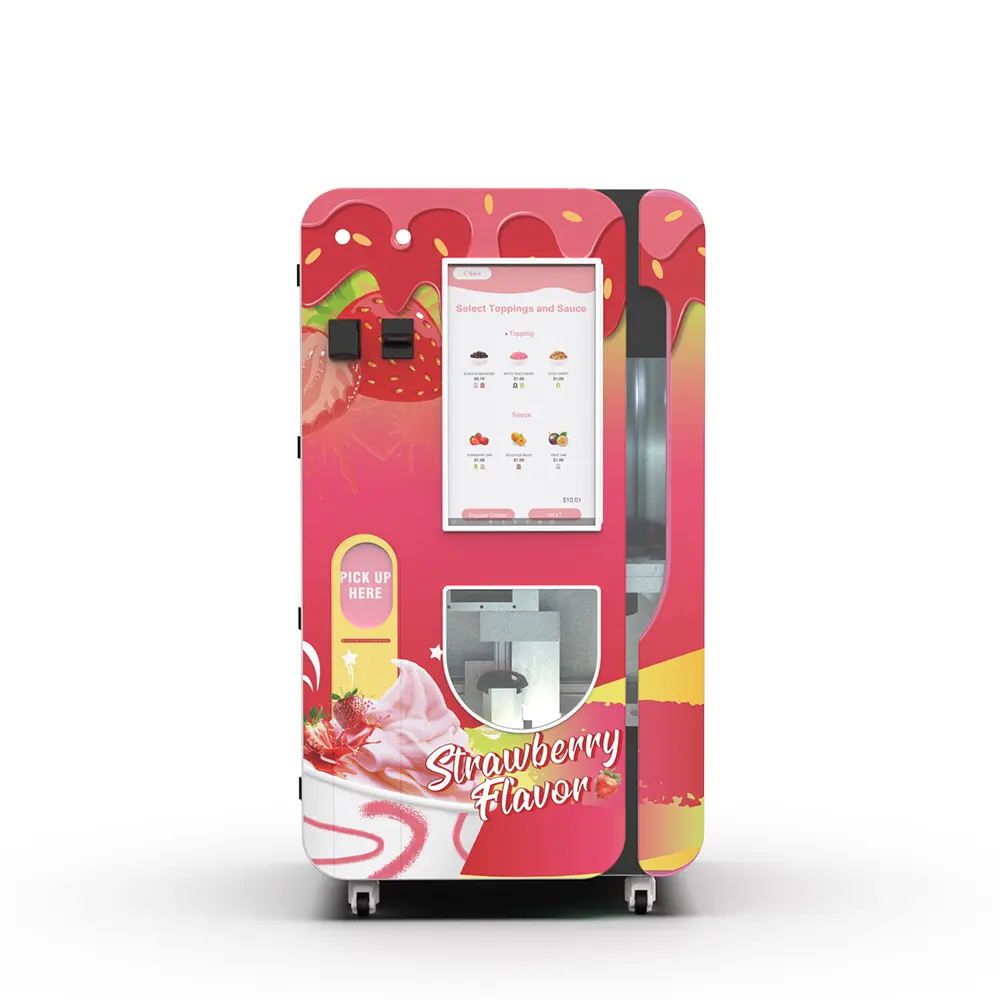
If you pay attention to large shopping malls or tourist attractions, you may notice a new type of equipment gradually appearing — vending machines that can automatically make ice cream.
Unlike traditional ice cream shops, these machines can complete the entire process of making and selling ice cream without staff on site. As long as ingredients are replenished regularly and the machine is maintained, it can operate continuously. Because of this convenience, many operators who are interested in unattended retail projects have begun exploring this type of equipment.
China has become an important manufacturing base for vending machines. Many buyers choose to purchase directly from Chinese factories because the country has a well-developed manufacturing system and a complete supply chain. This allows machines to maintain reliable quality while keeping costs competitive.
However, once the purchasing decision is made, many customers encounter a new question: How can a machine weighing several hundred kilograms be safely transported from China to another country?
In fact, international transportation of large equipment is not as complicated as it may seem. Once you understand the basic transportation methods, packaging standards, and common trade terms, the overall process becomes much clearer.
Why Large Ice Cream Machines Are Usually Shipped by Sea
Ice cream vending machines are relatively large commercial devices. A complete machine typically weighs between 250 kg and 400 kg, and contains multiple components such as compressors, touch screens, and ingredient storage tanks.Because of their size and weight, standard international courier services are usually not suitable for transporting this type of equipment. On one hand, shipping costs would be extremely high; on the other hand, courier services often have strict size and weight limitations.
For this reason, large equipment in international trade is usually transported by ocean freight.
The main advantage of sea freight is that it allows large and heavy goods to be transported reliably while keeping transportation costs relatively manageable. In practice, ice cream vending machines are typically transported by truck from the factory to the export port, then loaded into containers for sea transportation.
After arriving at the destination port, customs clearance and local delivery can be arranged according to the buyer's requirements. Although the process involves several steps, these procedures are already very common within the international logistics system.
During the entire shipping process, export packaging is one of the key factors that ensures the equipment arrives safely.
Export Packaging: Why Plywood Crates Are Used
For large equipment, transportation safety depends heavily on the packaging method. To reduce the risk of damage during shipping, most machines are packed in plywood crates for export.This type of packaging is widely used in international equipment transportation. During long-distance shipping, machines may go through several stages of loading and unloading, including factory loading, port handling, container transportation, and unloading at the destination.
Without strong packaging protection, the outer structure of the machine could easily be damaged during handling.
Plywood crates are generally strong and durable. They can withstand certain pressure and help absorb vibrations during transportation. Unlike ordinary wooden boxes, export plywood materials are usually treated to comply with international quarantine standards for wooden packaging.
In addition to the outer crate, the machine itself is usually secured inside the packaging. Protective materials such as shock-absorbing foam, fixing straps, and corner protectors are commonly used to keep the equipment firmly attached to the crate base.
With this type of internal reinforcement, the machine will not shift inside the crate even if vibrations occur during transportation. This significantly reduces the risk of damage.
Through this multi-layer protection system, the safety of large ice cream machines during sea freight can generally be ensured.
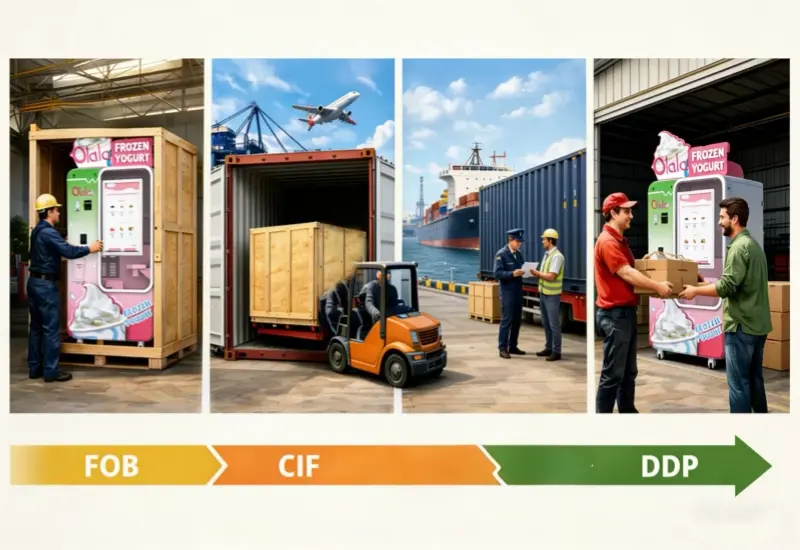
Shipping Terms Explained: FOB, CIF, and DDP
When discussing international shipping, certain trade terms often appear, such as FOB, CIF, and DDP. For customers who are new to international trade, these abbreviations can sometimes be confusing.In fact, these trade terms simply describe how responsibilities are divided between the buyer and the seller during the transportation process.
For example, FOB (Free On Board) means the supplier is responsible for delivering the equipment to the export port in China and loading it onto the ship. Once the goods are on board, the buyer becomes responsible for the remaining steps, including ocean freight, insurance, customs clearance, and local transportation. This arrangement is usually suitable for importers who already have their own freight forwarders.
CIF (Cost, Insurance and Freight) adds the cost of sea freight and insurance to the FOB arrangement. In this case, the seller arranges and pays for the sea transportation to the destination port. However, once the goods arrive, the buyer is still responsible for import customs clearance and local delivery.
For many first-time equipment buyers, DDP (Delivered Duty Paid) is often the simplest option. Under this arrangement, the seller manages the entire transportation process, including sea freight, customs clearance, and final delivery. The buyer simply receives the machine at the designated location.
Different projects may choose different trade terms depending on their needs, but understanding these concepts helps buyers communicate more clearly when discussing logistics arrangements.
The First Step After Delivery: Unboxing Inspection
After the equipment arrives at its destination, performing a basic inspection before putting it into operation is very important. This helps confirm the condition of the machine and can prevent unnecessary disputes later.
First, check whether the outer packaging is intact. If the plywood crate shows obvious damage, cracks, or severe deformation, it is recommended to take photos before opening it.
During the unboxing process, taking photos or videos can also be helpful. These records can provide useful documentation if communication with the logistics company becomes necessary.
Once the machine is removed from the crate, you can perform a basic exterior inspection. Check whether the machine body has visible scratches, whether the touch screen is intact, and whether the door can open and close normally.
Next, inspect internal components such as the ingredient tank, ingredient containers, and included accessories to ensure everything is complete.
If conditions allow, it is also recommended to wait 24 hours after the machine has remained stationary before performing a simple power test to confirm that the system starts normally.
In most cases, if any issues occurred during transportation, they can be discovered during this inspection stage.
FAQ
Q: How much does it cost to ship an ice cream vending machine from China?A: Shipping costs vary depending on the machine size, weight, and destination country. For large equipment, sea freight is usually the most economical option.
Q: Is there a high risk of damage during sea transportation?
A: With professional export packaging and proper internal fixation, the safety of large equipment during sea freight is generally very reliable.
Q: Is customs clearance complicated for vending machines?
A: In most cases, vending machines are classified as commercial equipment and follow standard import procedures. Specific requirements may vary by country.
Q: Which shipping method is recommended for first-time buyers?
A: Many first-time buyers prefer DDP shipping because the supplier handles transportation and customs clearance, making the process simpler.
For many customers purchasing equipment for the first time, international logistics may initially seem complicated. In reality, however, the transportation of large equipment has already developed into a stable and well-established system.
Once the basic process is understood, importing a large ice cream machine from China is usually much simpler than expected. With proper planning and cooperation with reliable suppliers and logistics providers, the equipment can be delivered safely and smoothly, and quickly put into commercial operation.
References / Sources