Product Description.
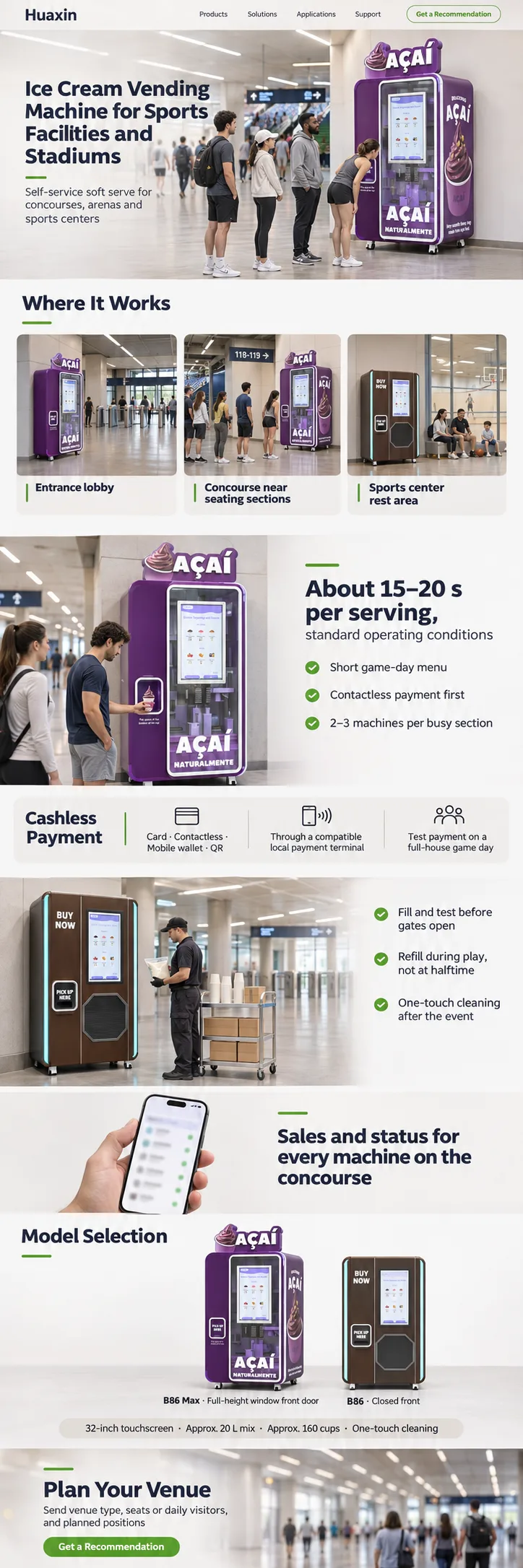
Huaxin is a manufacturer of fully automatic vending machines for soft serve, and this page is for anyone planning an ice cream vending machine for sports facilities: stadium and arena operators, venue concessionaires, and vending operators placing machines in sports venues. Sales in a sports venue follow the schedule. On game days, purchases bunch up before the start and during the break; on training days, fewer people come through, but they keep coming all day. Below we cover how traffic moves, where to place the machine, what it can serve at peak times, how to handle payment and refilling, which model to choose, and what we need from you for a quote.
Game Days and Training Days
On game days, foot traffic follows the schedule. Once the gates open, early arrivals wait for friends or look for their seats in the entrance lobby and along the concourse, which is your first window for sales. During play the concourse is mostly empty. When halftime or an intermission starts, large numbers of fans leave their seats at the same moment for the restrooms and concession stands, and in soccer, basketball and ice hockey that break usually lasts less than 20 minutes. After the game, people head straight for the exits and rarely stop to buy. In baseball and other games without a fixed break, purchases are spread across the whole game.
Training days and non-event days work differently. Recreation centers, sports halls and training facilities run practices, youth classes and amateur leagues every day. The numbers are smaller but steady: parents waiting for their children, players finishing a session, adults arriving for evening league games. Youth tournaments at the weekend add a few small peaks to the day.
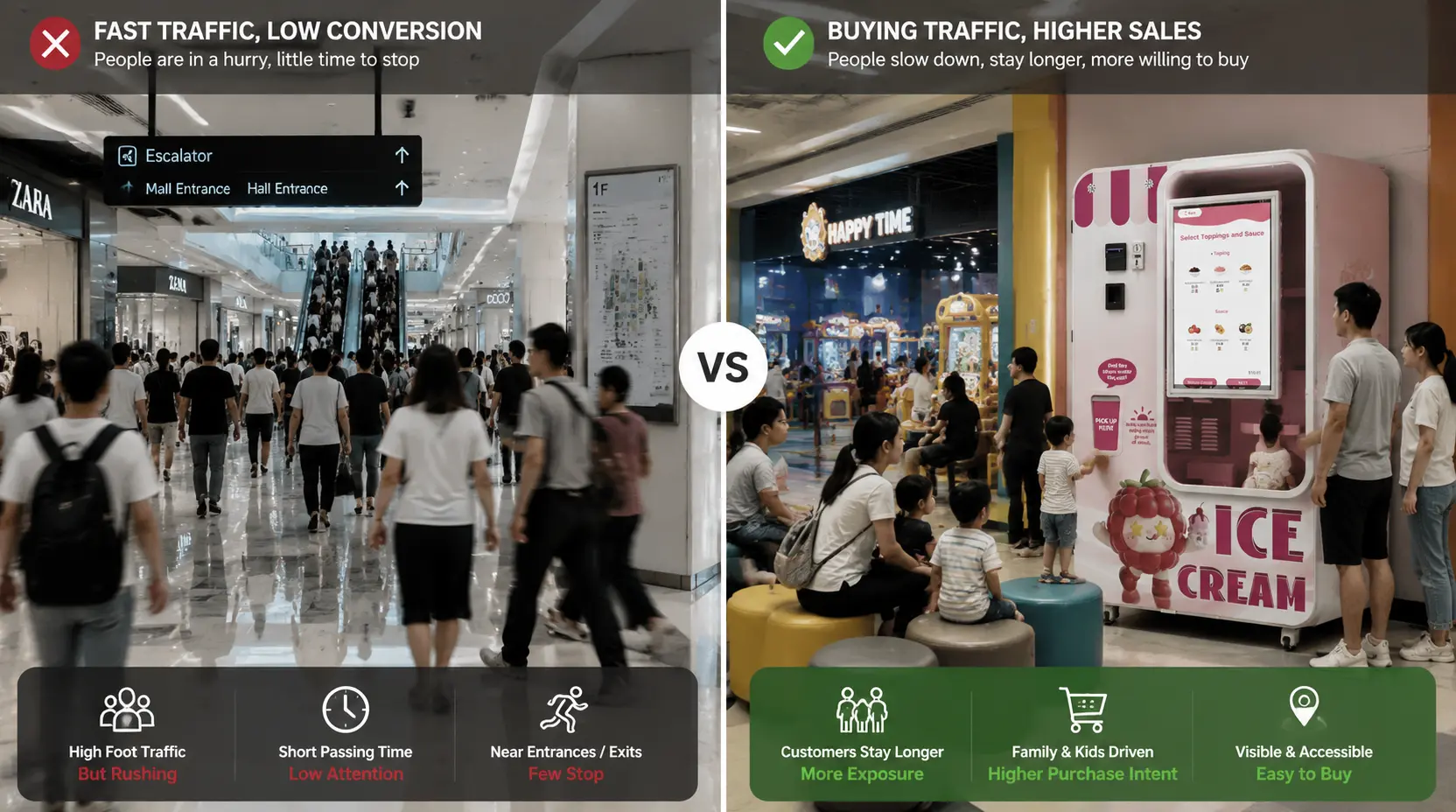
Assess the two kinds of location separately. At a stadium position that only opens on game days, the machine has no customers for most of the time between events. A recreation center that opens every day has fewer people, but it has them every day. Some venues have both: the main arena hosts games while an attached training hall, ice rink or court stays open daily. Count how many game days, training days and closed days the venue has in a year, then decide which side the machine goes on. To score a location, use our site scoring checklist for ice cream vending machine locations.
Where to Place the Machine: Entrances, Concourses and Rest Areas
Position | Why people buy here | Check first |
|---|
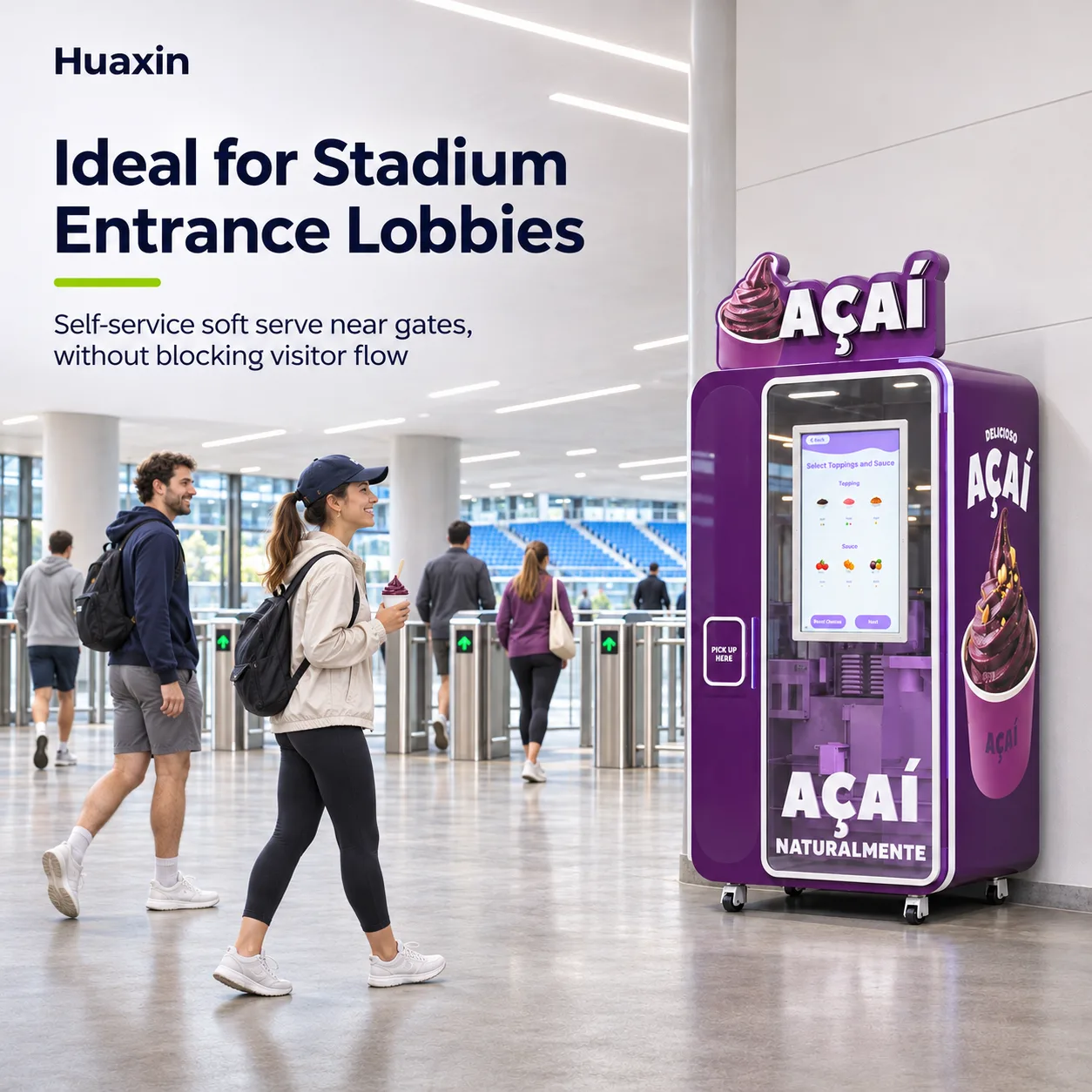
Entrance lobby (inside the ticket gates) | Early arrivals wait here for friends or look for their seats, and have time to stop | Keep security lanes, ticket scanners and their queues clear. Inside the gates, only ticket holders can buy on game days; check whether the area is open on other days |
Concourse near seating section entrances | At halftime, fans leaving their seats pass here first, on the same route as the concession stands and restrooms | Keep section entrances, evacuation routes and fire equipment clear; the queue forms along the wall, not across the concourse |
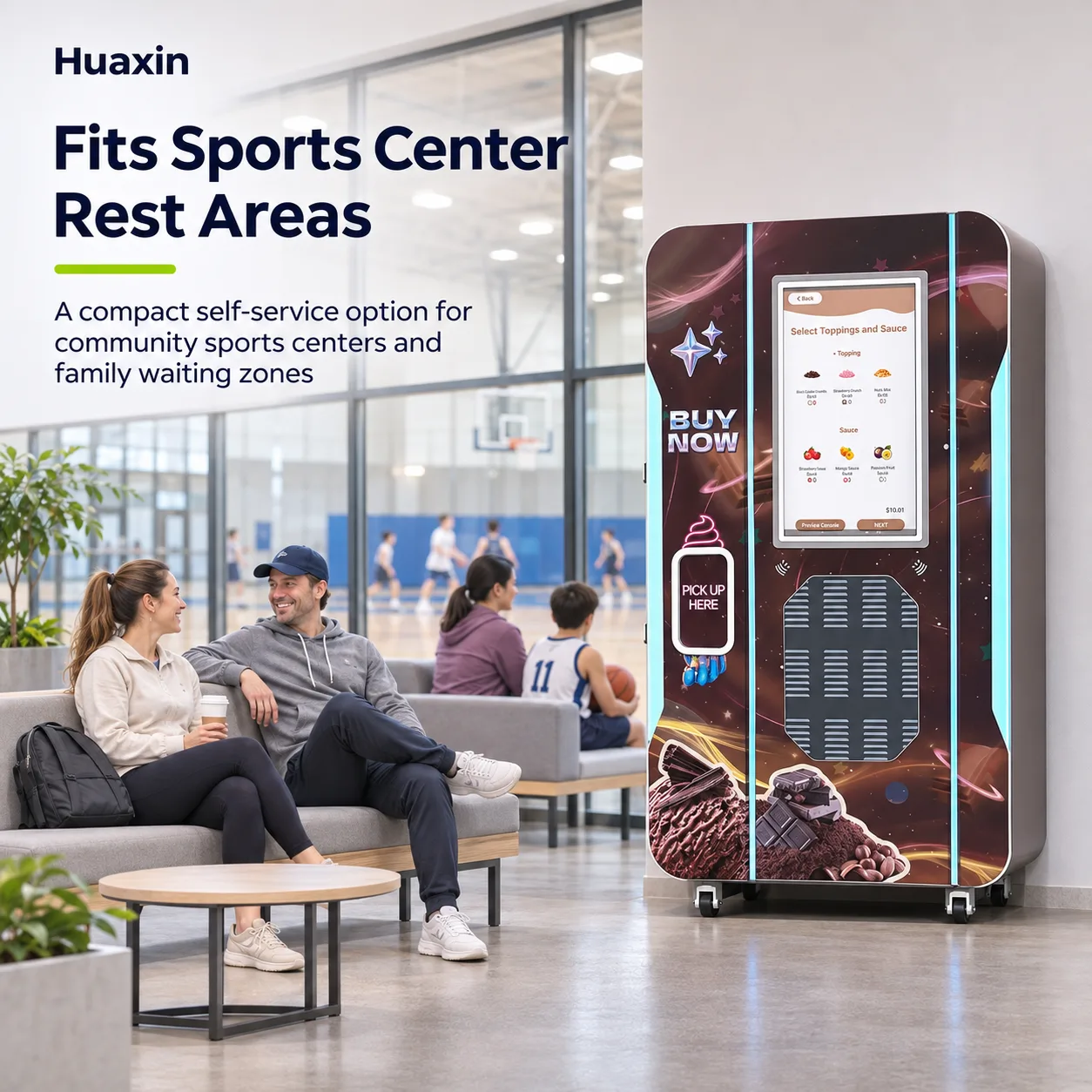
Lobby and rest areas (recreation centers) | Parents waiting for practice to end and players finishing training sit down and stay a while | Seating nearby and food allowed; keep the machine outside the playing area and the pool deck |
Open-air stadium concourse | The same traffic as an indoor concourse | Whether the roof fully covers the position, whether rain blows in from the side, and whether afternoon sun reaches the machine. This needs a separate review; see What to Confirm Before Ordering |
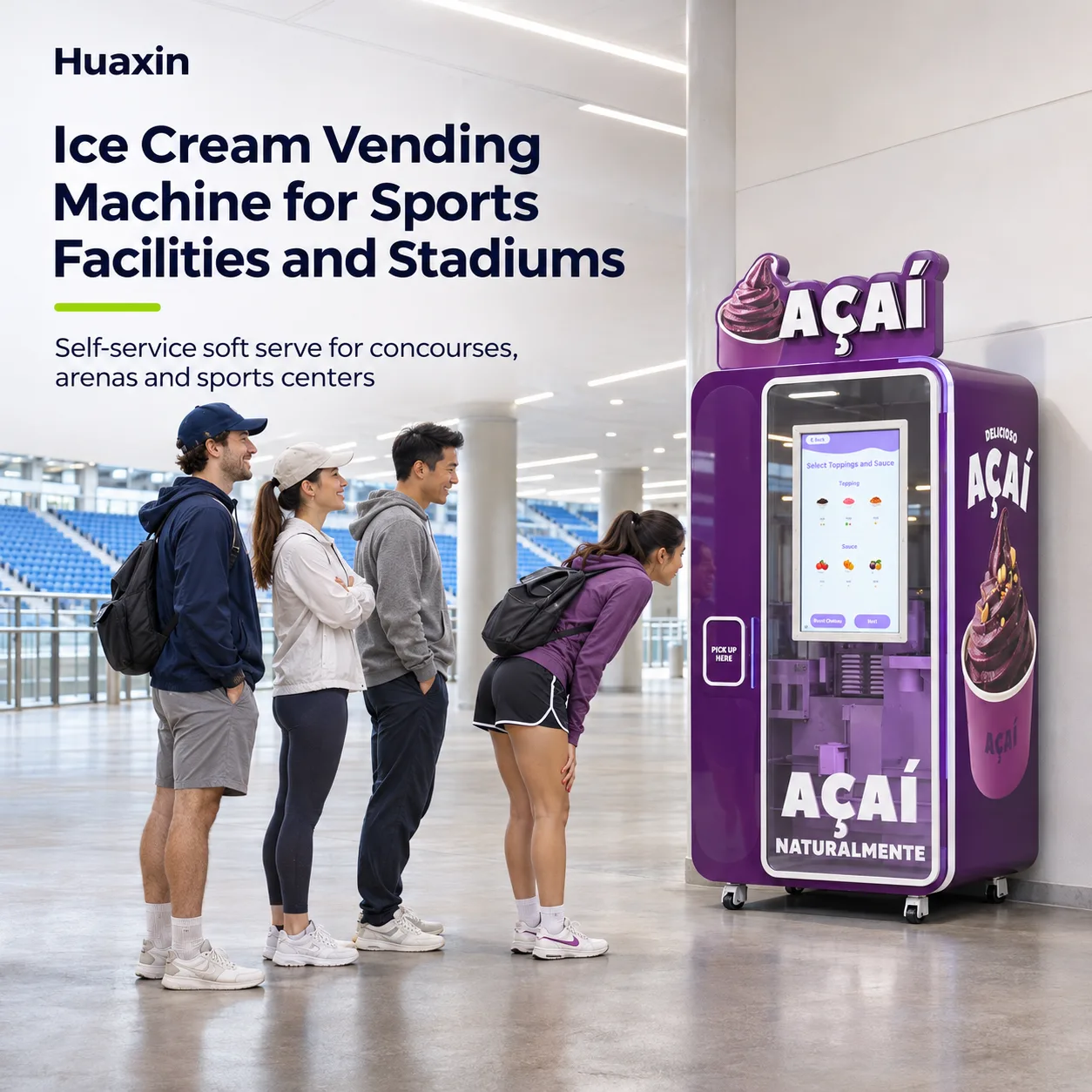
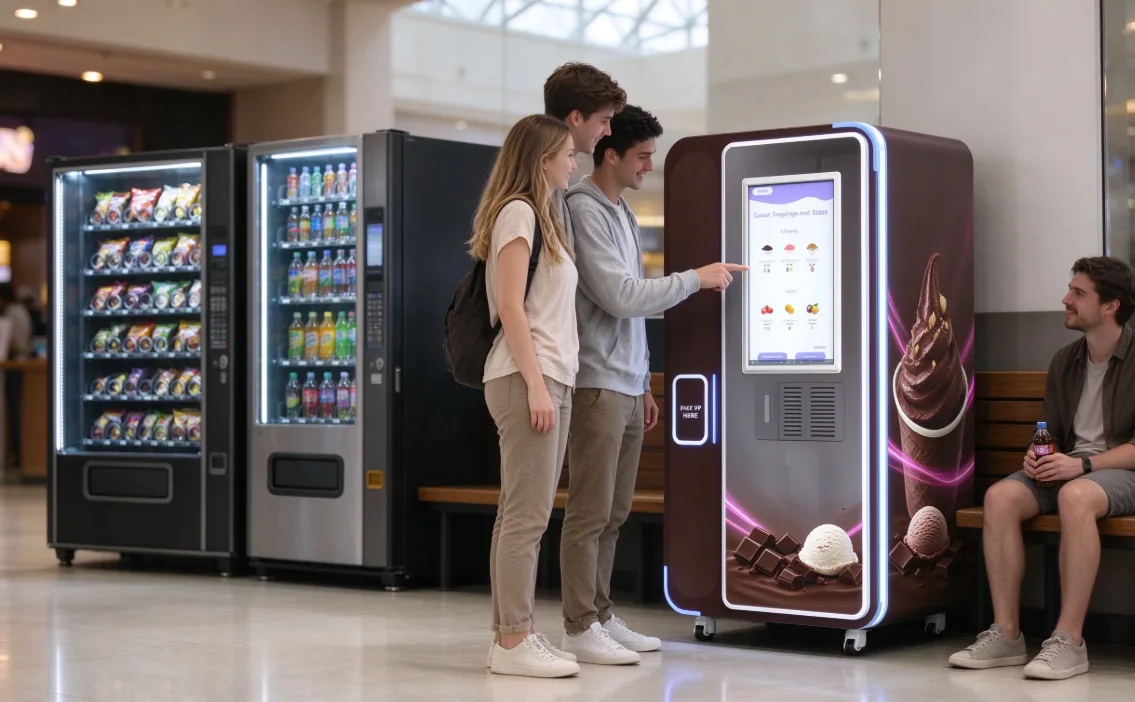
At peak times, avoid one machine with one long line. Put two or three machines side by side, or spread them across seating sections, so the crowd splits into shorter lines. Leave room in front of each machine for the queue to form along the wall, and keep the middle of the concourse clear for people walking through.
Who Approves the Position
A position in a sports venue usually needs sign-off from several parties. Start by finding out who holds the food and beverage rights. Many venues contract all catering to one concessionaire, in which case the concessionaire either runs the machine or has to agree to it. The venue’s operations and safety teams approve the layout drawing, and the facilities team confirms power and network. If the venue has an exclusive ice cream or dairy sponsor, ask which brands can appear on the machine before you design the wrap.
If you share revenue with the venue or the concessionaire, ask us whether the revenue-sharing function in Master OS works with your payment setup. Some configurations support it, and we confirm it project by project.
Peak Output: What 15–20 Seconds per Serving Means at Halftime
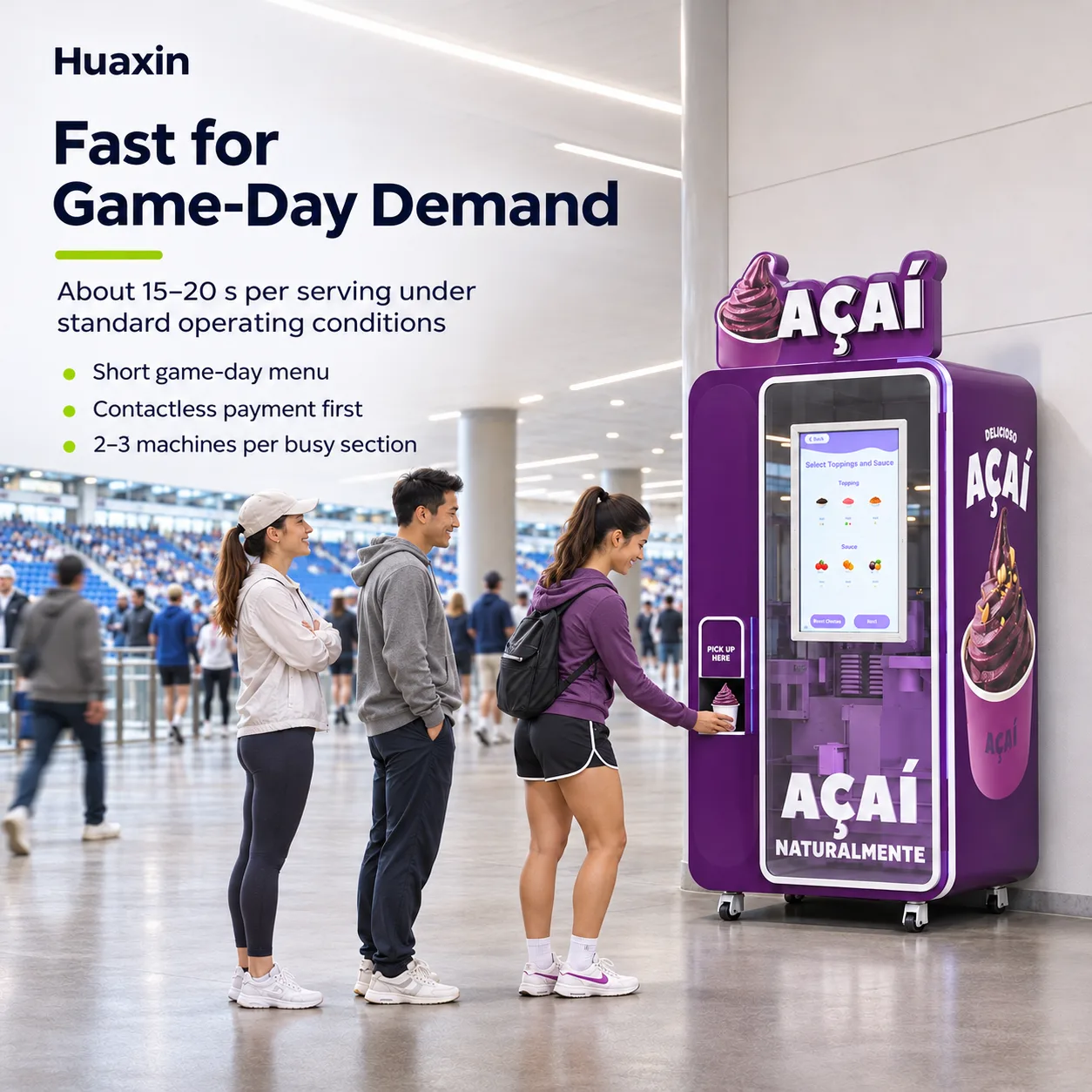
Under standard operating conditions, the B86 Max, B86 and the other B Series models with the same configuration take approximately 15–20 seconds per serving. That is the time the machine needs to make the cup. A fan who walks up also has to choose, pay and collect, so the line moves more slowly than one person every 15–20 seconds. With a break of less than 20 minutes, the number of cups you sell comes down to a few things:
Cut the game-day menu to a few items, with prices readable from the line.
Make contactless cards and mobile wallets the main way to pay.
Put two or three machines in the busiest seating sections so the lines split.
Complete the first freeze and a test serving before the gates open. After the machine is switched on, the first freeze takes about 15 minutes.
At the first game, have someone stand by the machine and watch where the line slows down: choosing, paying, making or collecting, and how many people are still waiting when the break ends. Then decide whether to add machines, move them or change the menu. We use seating capacity to plan positions and the number of machines. How many cups you sell depends on attendance, weather, price and position, and we do not estimate sales from seating capacity.
Cashless Payment in the Venue
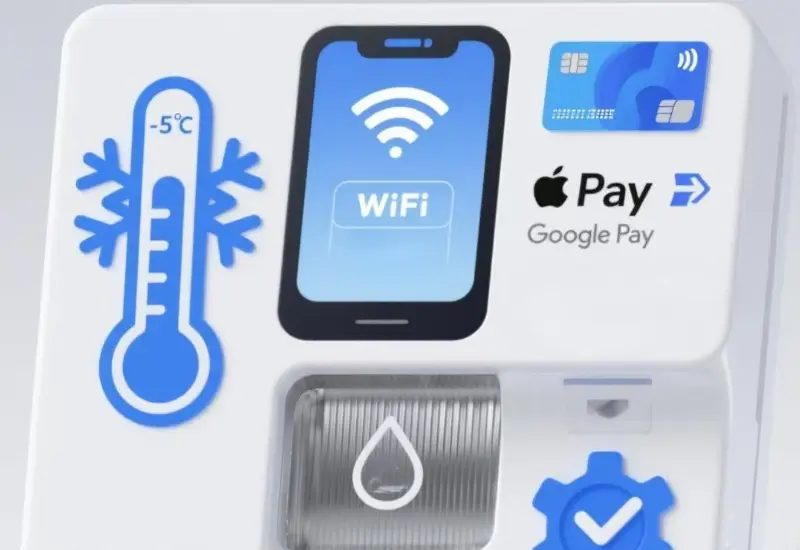
The machine can take card, contactless, mobile wallet and QR code payments, and a bill validator and coin acceptor can be added. Which of these you use depends on the venue’s rules and your local payment provider. If the venue is already fully cashless, the machine only needs a card reader.
The machine has an MDB payment interface. If you already use a terminal from a provider in your country, send us the terminal model and its interface documentation. We assess it and test the integration with your terminal at our factory, and compatibility is confirmed only once that test passes. You open the merchant account for the card reader with your local provider, in your own name; have it ready before the machine ships.
A payment technology company in Portugal contacted us with plans to place machines in shopping centers and at sports and music events. Its requirements were clear: digital payments only, with no bill validator or coin acceptor, through its own terminal certified in Portugal, accepting cards, contactless payments and a local QR code wallet. We assess terminals like this through the MDB interface: the customer supplies the terminal and its interface documentation, and our engineers handle the integration and testing.
Payment systems run by the venue itself, such as stored-value cards, a venue or team app, or season ticket accounts, need a separate integration review. Send us the provider’s system description and interface documentation, and we will confirm whether it can be connected.
Test payment when the venue is full. With thousands of people using their phones at once, the mobile network inside a venue can become congested, and a card reader that connects through a SIM card may slow down. Before ordering, ask the venue’s IT team whether the machine and the card reader can use Wi-Fi, and run a test payment during a sold-out game. To compare payment methods, see our ice cream vending machine payment systems guide.
Refilling and Cleaning Around the Event Schedule
Game Days
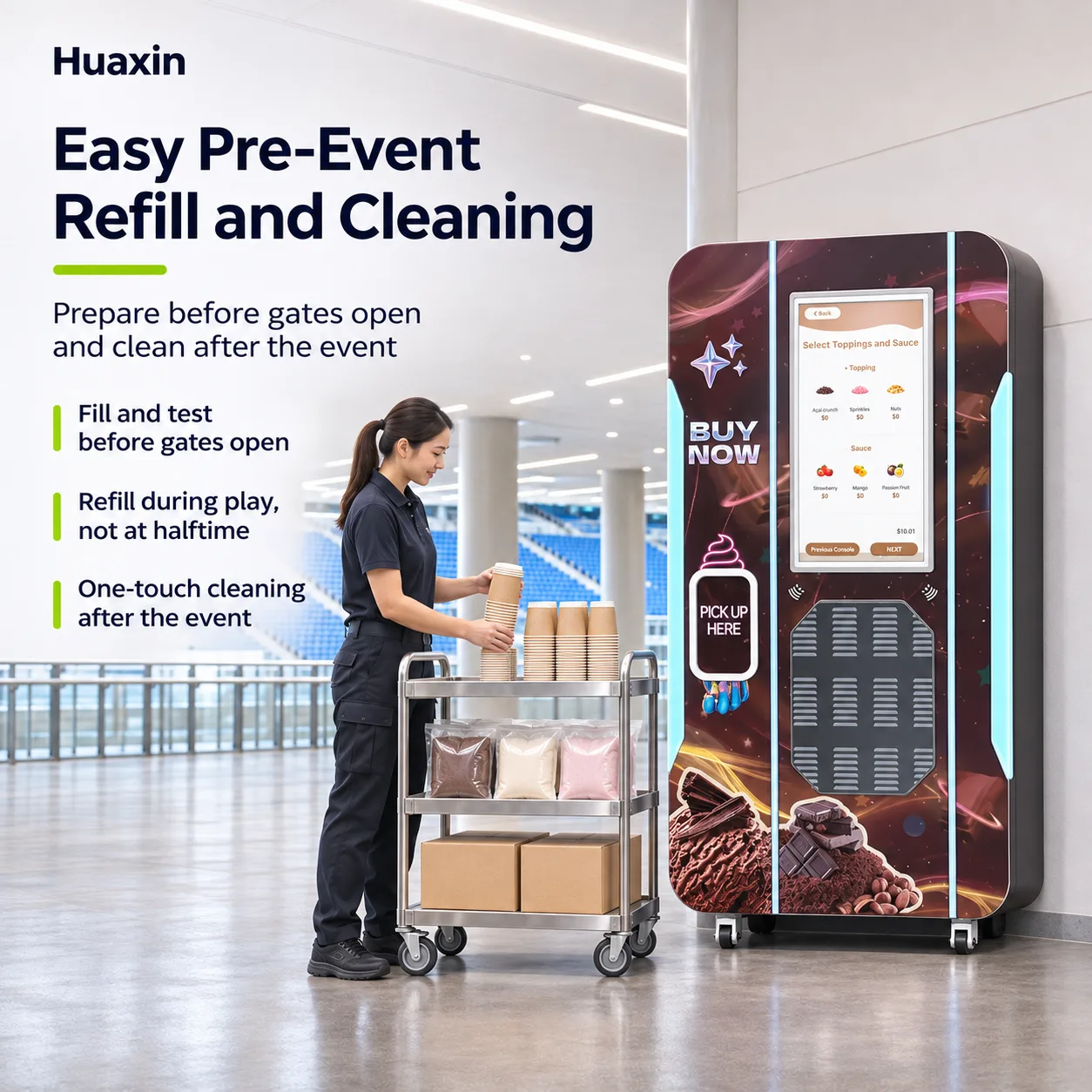
Before the gates open: fill the mix, cups, sauces and dry toppings, start the first freeze and make a test serving. Mix, cups and toppings run out at different times, so check each one.
During play: refill while the concourse is quiet, not at halftime. Keep spare mix and cups close to the machine, stored as your mix supplier requires, and check beforehand that a refill trolley can reach the machine while the game is on.
Who responds: networked machines send an alert when supplies run low or a fault occurs. Decide in advance who receives the alerts and who goes to the machine during the game. The person watching the back office can be in an office; the person refilling cups has to be in the venue.
After the event: run the one-touch cleaning program. The operator adds clean water and the machine runs an automatic rinse cycle. Then clean the dispensing outlet and drip area by hand, following the operating manual.
Between Events
At a stadium with a week or more between games, how long the mix can stay in the machine, and whether to empty it, depends on your mix supplier’s instructions and local food regulations. B Series machines can be ordered with optional pasteurization. If your event schedule is irregular, confirm this option with us when you order.
Training Days
A recreation center has people every day, so set the refill interval from actual consumption. Use the first two weeks of sales records to schedule visits, then check whether weekend tournaments need an extra round of supplies.
Sales and Status by Machine
Once the machines are online, Master OS shows sales and operating status for each one. After a few games, compare machines in different seating sections and decide where to add a machine and where to remove one. Remotely you can review data and change some settings; refilling, cleaning and repairs still need someone on site. For the data you can see remotely, read remote monitoring for ice cream vending machines.
Recommended Models: B86 Max and B86
The B86 Max and B86 are both floor-standing B Series fully automatic ice cream vending machines. Their internal configuration is the same; they differ in the front door.
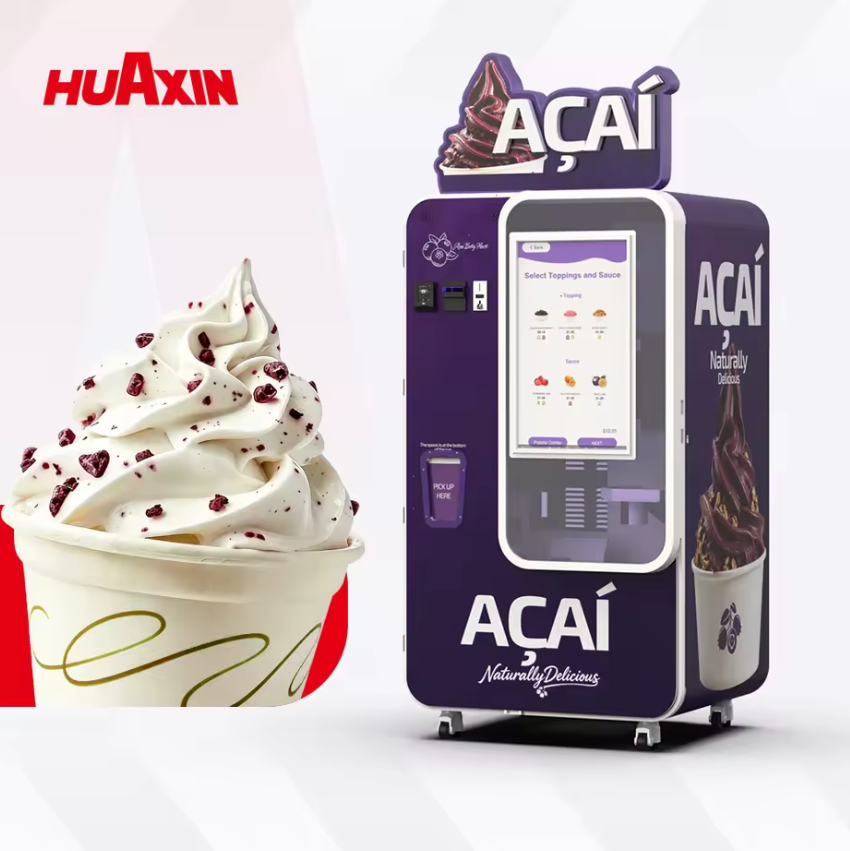
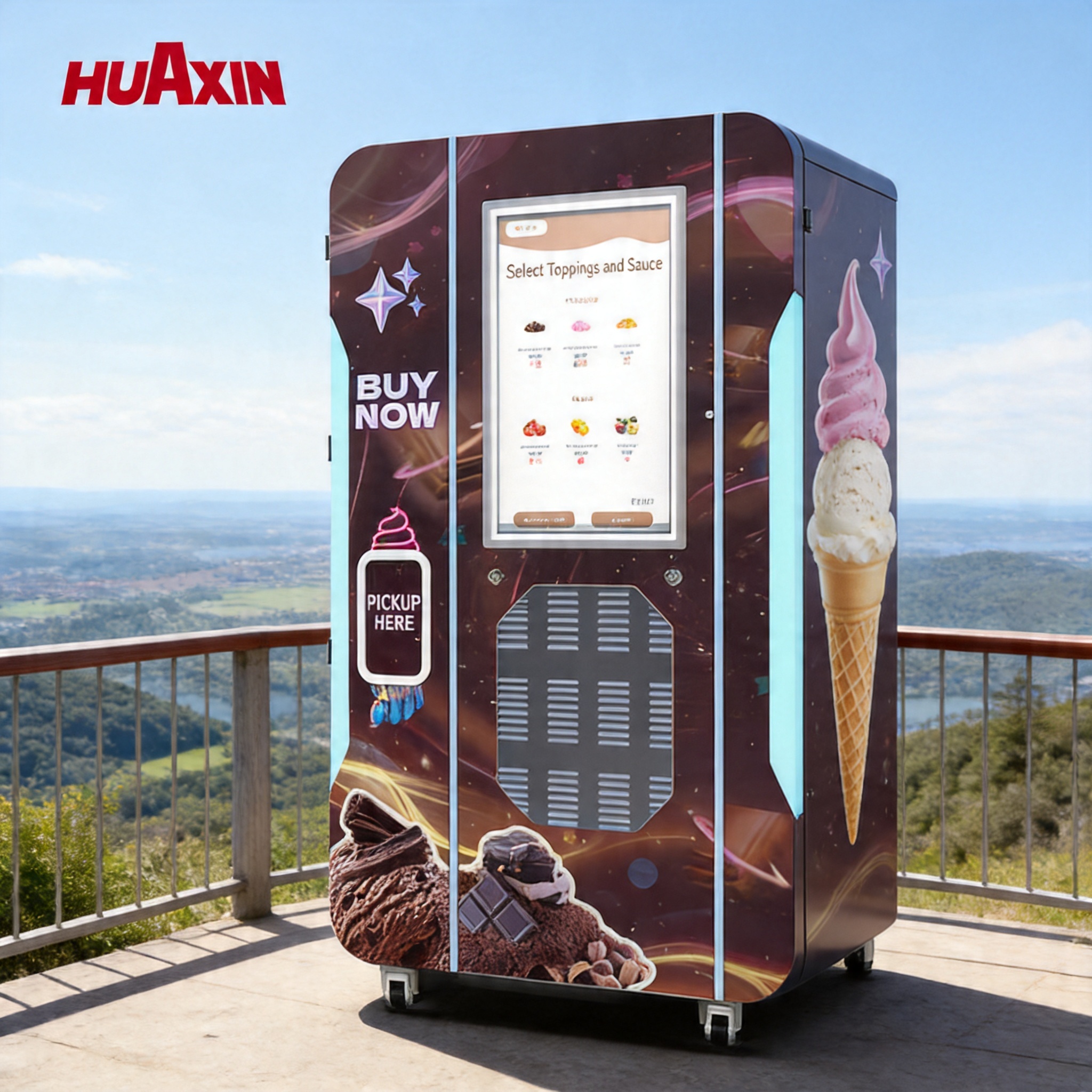
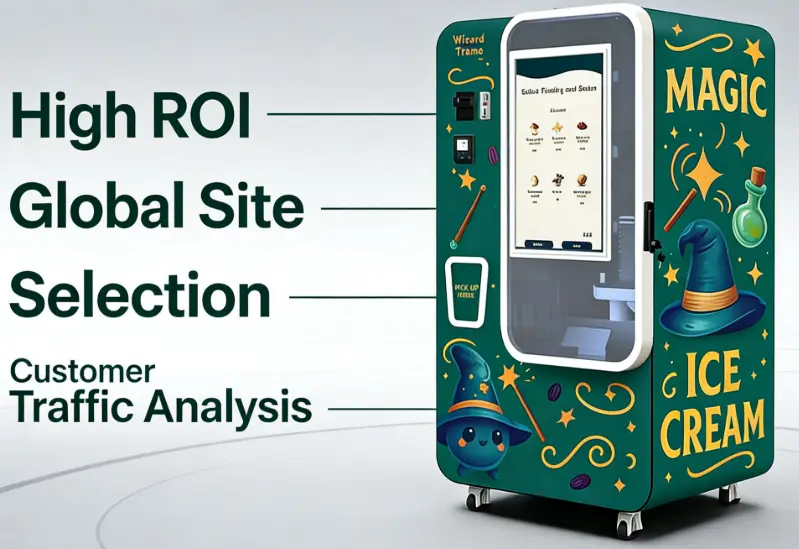
B86 Max: full-height window front door. About two-thirds of the front is a full-height glass window, with the touchscreen at the top inside the window and the production area below it, so people in line can watch the cup ahead of them being made. In the 110 V / 60 Hz configuration, the B86 Max is certified to NSF/ANSI 6 by SGS North America for commercial indoor use. For a US venue that requires NSF, choose the B86 Max in this configuration.
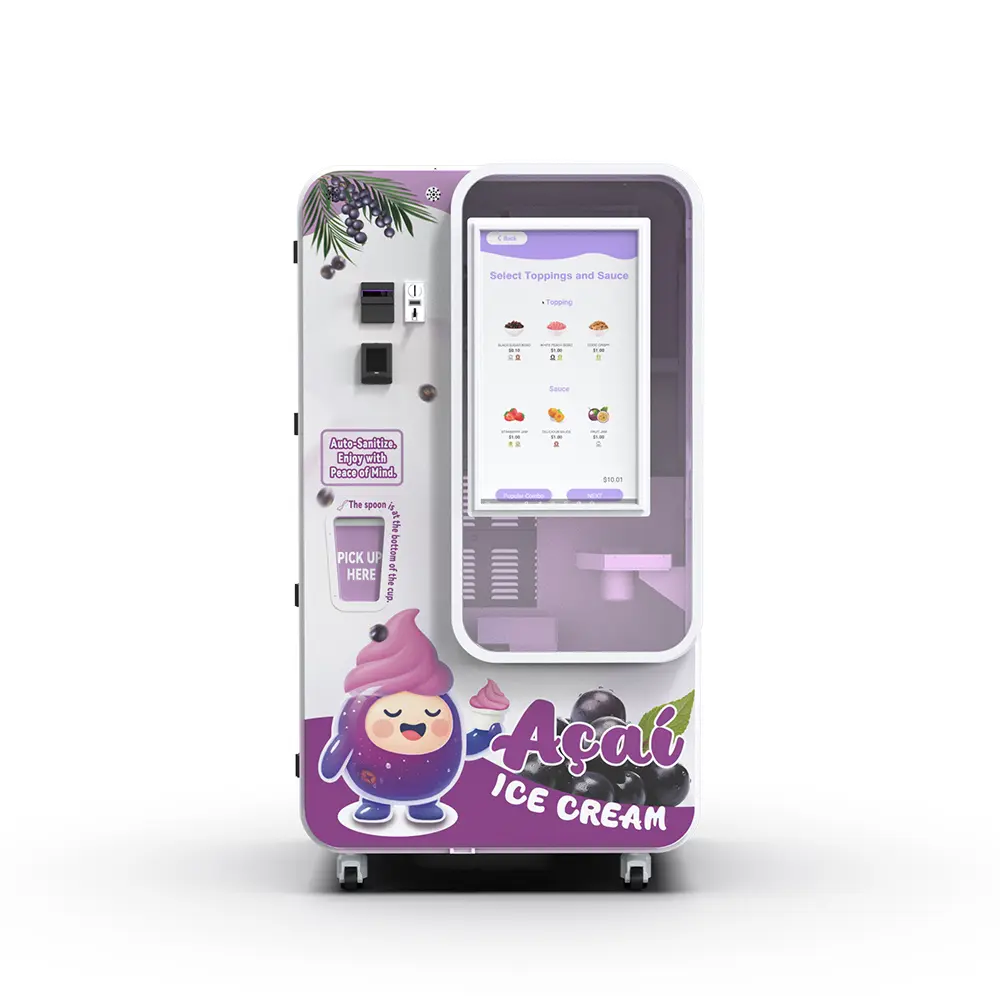
B86: closed front. The front carries the touchscreen, a grille panel and the pickup port, and the production process is not visible from outside. The front is divided into three panels, and the left and right panels can carry the venue’s or team’s colors.
If you are looking for a robotic soft serve vending machine: the model we present as our robot ice cream vending machine is the B85. It has the same configuration as the B86 Max and B86, and it also differs only in the front door.
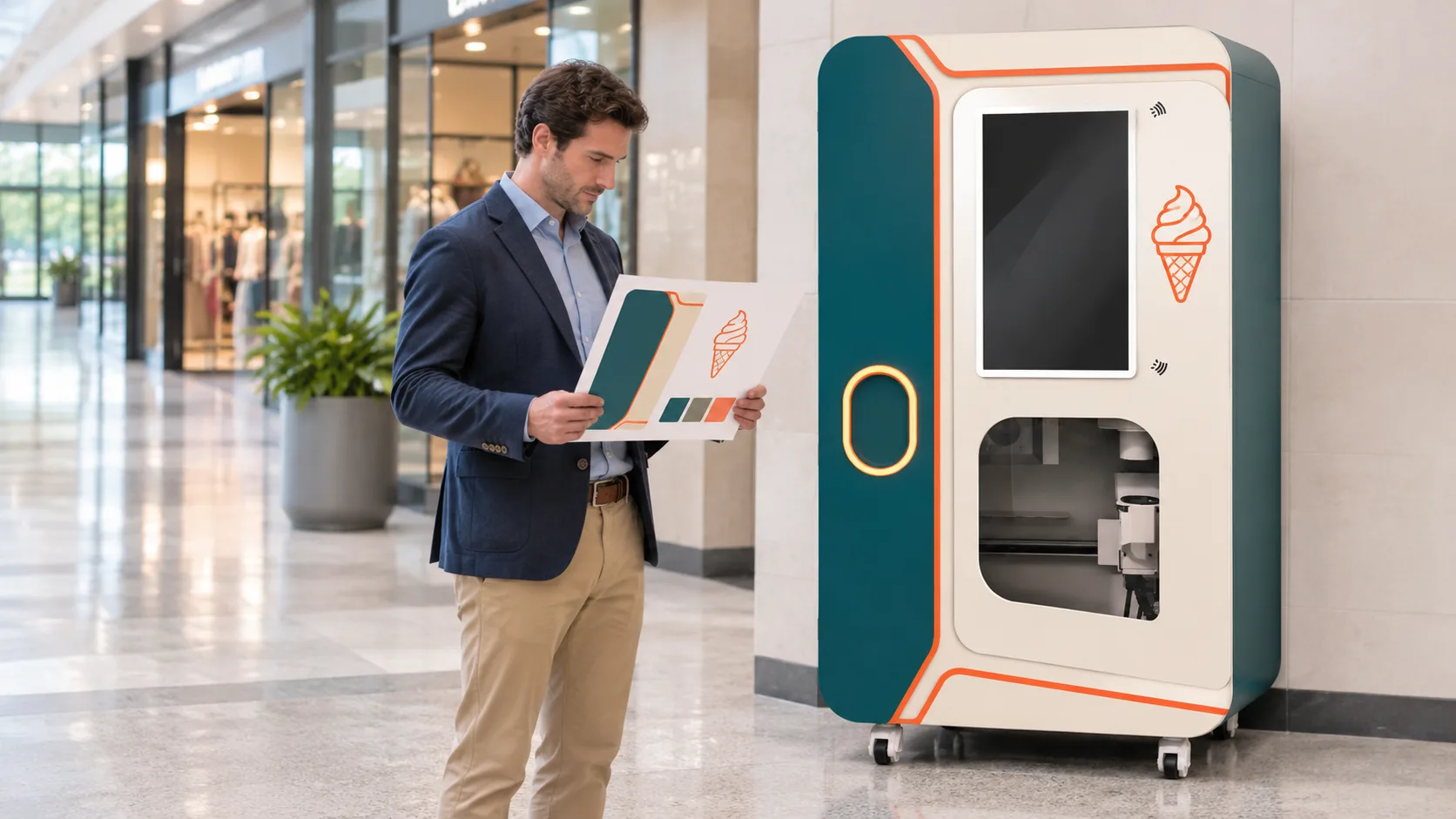
The exterior can carry the venue’s or team’s colors and logo. Team, league or sponsor marks need written permission from the rights holder.
Shared Configuration
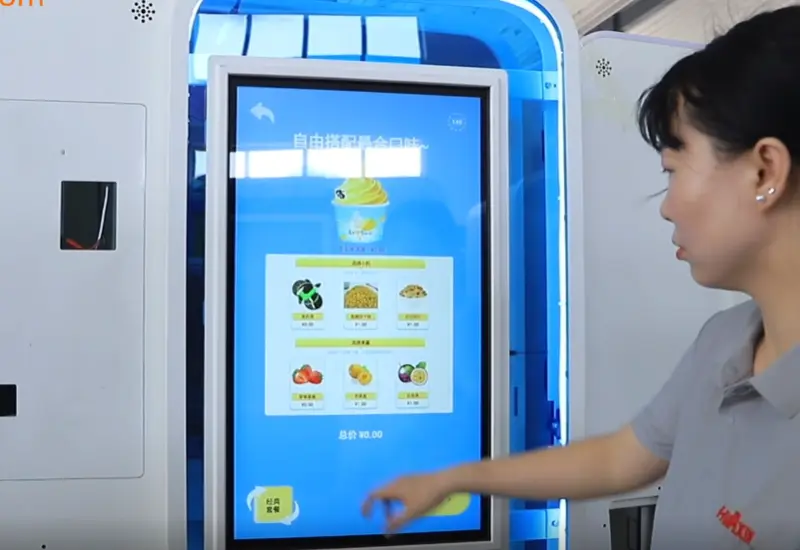
32-inch touchscreen
Approx. 20 L mix capacity and storage for approx. 160 cups, depending on cup type
One base mix at a time, with menu combinations from compatible sauces and dry toppings; with compatible formulations tested on the machine, it can also serve frozen yogurt, sorbet and açaí-style frozen desserts
Serving time: see Peak Output above
220 V / 50 Hz standard, 110 V / 60 Hz optional; rated power 1,700 W
Dimensions (H × L × W): B86 approx. 1950 × 1080 × 940 mm, approx. 362 kg; B86 Max approx. 1950 × 1080 × 954 mm, approx. 396 kg; footprint approx. 0.91 m²
One-touch cleaning program; optional pasteurization
Remote management through Master OS when the machine is online
Customizable wrap, logo and interface language
Delivery Into the Venue and Lead Time
The machine stands about 1.95 m tall and weighs about 360–400 kg. It must stay upright throughout transport and handling; never tilt it or lay it down. Before delivery, check the freight elevator’s load limit and door height, the door widths, ramps and floor loading along the route, and the delivery times the venue allows. Once in position, the machine must stand upright for 24 hours before it is powered on, so it needs to be in place at least a day before the first game.
Machines are made to order. Production for standard models takes about 30 days from order confirmation, and the actual date is set in the quotation and contract. If the machines have to be ready for the start of a season, work back from that date and allow for production, sea freight, customs clearance, venue approval and the 24-hour standing time. Full specifications for both models are on the B86 and B86 Max page.
What to Confirm Before Ordering
Item | What to confirm | Who confirms |
|---|
Position and approval | A layout drawing showing the machine, the queue area and space to open the door for service, with about 50 cm between the back of the machine and the wall for ventilation; food and beverage rights and any sponsor restrictions | You and the venue; we supply the installation dimensions of the chosen model |
Indoor or open-air | For an open concourse: roof cover, rain from the side, direct sunlight, temperature, dust and protection of the power supply. If these conditions cannot be met, choose an indoor position | You send photos of the position; we review them |
Electrical | Voltage, frequency and plug, fixed before ordering; the machine cannot switch on site. A grounded outlet or dedicated circuit near the position, with no cable across a walkway | You give the destination country and the venue’s electrical details; we build to them |
Network | How the machine and the card reader each connect; one test with a full house | You and the venue’s IT team |
Payment | Country, currency, payment provider, terminal model and merchant account; venue stored-value cards or app payments reviewed separately; a third-party terminal is confirmed compatible after integration testing | You provide the details; we assess and test the integration |
Certifications | B Series machines hold third-party CE certificates of compliance (LVD, EMC, RED), a RoHS certificate and an IECEE CB Test Certificate; the B86 Max in the 110 V / 60 Hz configuration is certified to NSF/ANSI 6. Huaxin also holds an ETL certificate. Other documents required by the venue or local authorities are confirmed before ordering | Ask your account manager for certificate copies for your model |
Exterior rights | Permission to use team, league or sponsor marks | You |
Price: What Changes the Quote
This page does not list fixed prices. We quote on your country, quantity and configuration, and the main factors are:
Model: B86 Max or B86
Payment: whether we supply the card reader or you provide it, and whether you need a bill validator or coin acceptor
Optional configurations, such as pasteurization
Exterior: wrap and logo
Quantity
Trade terms: CIF, DDP or other Incoterms
A single machine is a practical way to test one position at a recreation center and check the location, flavors and payment. To cover several seating sections in a stadium, or several venues in one city, we recommend planning around our 10-unit plan. Every machine shares one configuration, with payment and language confirmed once; the order can ship as a full container, spreading freight across the machines; and a local set of wear parts is easier to justify.
FAQ
Do you charge a franchise fee or take a share of sales?
No. We are the equipment manufacturer. You buy the machines and run them under your own brand; we charge no franchise fee and take no share of your sales. Any revenue share with the venue or the concessionaire is agreed between you and them.
Can we sell our own mix, frozen yogurt or açaí?
With compatible formulations that have been tested on the machine, it can serve soft serve, frozen yogurt, sorbet and açaí-style frozen desserts. We do not sell ingredients outside China. Buy mix locally from a supplier that meets your food regulations, and send us a sample before you order so we can test it on the machine.
Who handles a fault during a game?
Your staff handle anything on site, so someone needs to be able to reach the machine on game days. Our after-sales team starts with remote diagnosis using photos, videos, fault codes and back-office data, then provides online guidance, repair videos and spare parts. Whether on-site service is available depends on your market and local partners, and is confirmed during purchasing. We recommend keeping a set of wear parts locally.
Get a Model and Quantity Recommendation for Your Venue
Tell us:
Venue type: stadium, arena, sports center or recreation center
Seating capacity, or daily visitors for a sports center
How many positions you plan, and whether they are indoors or on an open concourse
Country and city
Payment needs: your current provider and terminal, or the payment methods you want to accept
Whether you are the venue, a concessionaire or an operator
When you plan to start, for example which season
We will reply with a model recommendation, a suggested number of machines for each position and a quotation.